

After testing 8 UK trading platforms with funded accounts, my top picks are eToro for beginners and copy trading, Capital.com for beginner CFD trading and IG for all-round trading. I compared spreads and commissions, FX costs, order tickets and risk tools, execution speed, and access to TradingView, MT4, MT5 and ProRealTime.

- CopyTrading lets you mirror experienced investors' trades
- Multi-asset access: stocks, crypto, ETFs, forex, commodities
- Beginner-friendly interface with social/community sentiment feed
Capital at risk. T&Cs apply.
How I tested and ranked these platforms
I tested each platform with a funded UK account in September 2026. I placed CFD, spread-betting and share trades where available, set stop-losses and guaranteed stops, and checked whether margin, maximum loss and overnight costs were shown before confirming each order.
- 8 platforms, 11 funded UK accounts
- £4,400 deposited
- 200 timed orders across four execution tests
- Spreads recorded around 3 major news events
- 4 withdrawals tested
- Tested on iPhone, Android, Windows and Mac
I then weighted costs 25%, order tickets and risk tools 20%, platforms and charting 15%, execution 10%, market and product range 15%, and ease of getting started 15%. FCA authorisation was a must, not a scoring factor.
Watch – Top best trading platforms in the UK explained
If you prefer a quick overview, watch our video explaining the best trading platforms in the UK. The video breaks down which platform is best for beginners, low fees, and advanced trading.
Best trading platforms UK: comparison table
| Platform | Best for | Real shares | CFDs | Forex | Spread betting | Demo | Key differentiator |
|---|---|---|---|---|---|---|---|
| eToro | Beginners & copy trading | ✓ | ✓ | ✓ | — | ✓ | CopyTrader |
| Capital.com | Beginner CFD trading | — | ✓ | ✓ | ✓ | ✓ | Clear risk ticket |
| IG | All-round trading | ✓ | ✓ | ✓ | ✓ | ✓ | 17,000+ markets + multiple platforms |
| CMC Markets | Advanced analysis | ✓ | ✓ | ✓ | ✓ | ✓ | 21,000+ instruments + 115+ indicators |
| Pepperstone | Forex & active trading | — | ✓ | ✓ | ✓ | ✓ | MT4/MT5/cTrader/TradingView |
| XTB | Charting & analysis | ✓ | ✓ | ✓ | — | ✓ | xStation research |
| Trading 212 | Low-cost shares | ✓ | ✓ | ✓* | — | ✓ | 0.15% FX + £0 commission |
| Plus500 | Simple CFDs | —** | ✓ | ✓ | — | ✓ | Simple proprietary platform |
Which trading platform is right for you?
| If you want to… | Platforms to consider | Why |
|---|---|---|
| Start trading as a beginner | Capital.com, eToro | Capital.com got me to a first trade in 12 minutes, with margin, maximum loss and overnight fee on every ticket. eToro took four taps to buy a share and has a $100,000 demo. |
| Trade forex | Pepperstone, IG, Capital.com | All three showed 0.6 points on EUR/USD. Pepperstone adds Razor raw spreads from 0.0 pips plus £2.25 per lot per side. |
| Trade actively or scalp | Pepperstone, Capital.com | Fastest median fills in my timed test: 27ms at Capital.com and 51ms at Pepperstone, with no negative slippage at Pepperstone. |
| Trade CFDs | Capital.com, IG, CMC Markets, Pepperstone | Tight spreads, full risk tools and a wide market choice. |
| Spread bet | IG, CMC Markets, Pepperstone, Capital.com | The only four platforms here that offer spread betting. Spread-betting profits are generally free of CGT for most UK traders |
| Buy real shares | Trading 212, IG, XTB, eToro | £0 commission at Trading 212, IG and XTB (up to €100,000 a month). eToro charges $1–2 per stock trade. |
| Buy US shares cheaply | Trading 212, XTB | Lowest FX in the test: 0.15% at Trading 212, against 0.5% at XTB and 0.7% at IG. |
| Use MT4 or MT5 | Pepperstone, CMC Markets, IG | Pepperstone and CMC offer both MT4 and MT5. IG offers MT4. Capital.com’s MT4 is CFD-only. |
| Use TradingView | IG, Pepperstone, CMC Markets, Capital.com | All four connected in my test. Pepperstone allows stakes from £0.10 per point via TradingView. |
| Use advanced charting | CMC Markets, XTB, IG | CMC has 115+ indicators and a pattern scanner, XTB has screeners and per-instrument news, and IG has ProRealTime backtesting. |
| Use guaranteed stops | CMC Markets, IG, Capital.com, Plus500 | CMC refunds the premium if the stop isn’t triggered, while IG and Capital.com only charge it if the stop is hit. Plus500 widens the spread instead. |
| Copy other traders | eToro | CopyTrader filters by risk score, drawdown and holding period, with a $200 minimum per trader. |
| Trade inside an ISA | Trading 212, IG, XTB, eToro | All four offer a Stocks & Shares ISA alongside their trading accounts. IG and Trading 212 also offer a SIPP. |
| Trade simply on your phone | Plus500, Capital.com, Trading 212 | Plus500 had the shortest order ticket. Capital.com lets you drag stops on the chart. Trading 212 had the fastest bank transfer. |
If most of your trading happens on your phone, I’ve ranked the platforms on mobile alone in my guide to the best trading apps in the UK.
Best trading platforms UK: quick verdict
- eToro: Best for beginners & copy trading
- Capital.com: Suited to beginner CFD trading
- IG: Best all-round trading platform
Best trading platforms UK: 8 platforms tested
1. eToro – Best for beginners and copy trading
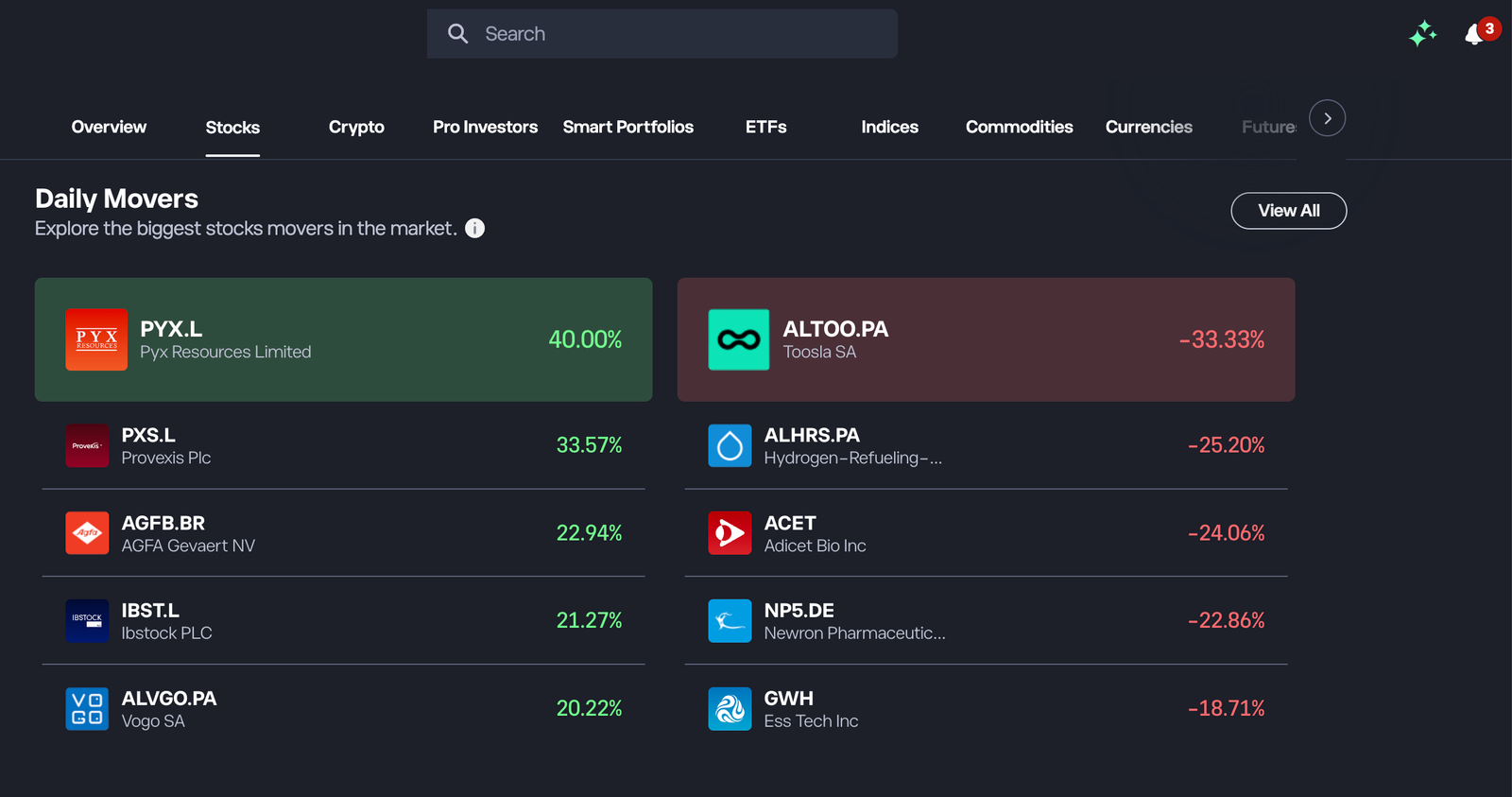
eToro was the easiest platform I tested for buying real shares and using copy trading, while also offering CFDs in the same app. CopyTrader is the reason to choose it. It isn’t the cheapest: most stock trades carry a $1–$2 commission, and anything priced in dollars costs 0.5% to convert from GBP.
| Feature | Information |
|---|---|
| Best for | Beginners, social trading and copy trading |
| Markets | Real shares, ETFs, CFDs (including forex) |
| Spread betting | No |
| Stock commission | $1–$2 per side, depending on the exchange |
| ETF commission | £0 |
| Currency conversion | 0.5% in my test (varies by deposit method and Club tier) |
| Copy trading | CopyTrader; no extra copy fee; $200 minimum per trader |
| Minimum first deposit | $50 for UK clients in my test |
| Withdrawal fee | £0 from a GBP account ($5 from a USD account) |
| Inactivity fee | $10 monthly inactivity fee after 12 months of no login |
| Demo | Yes, $100,000 virtual portfolio |
| Platforms | eToro web and app only; no MT4, MT5 or TradingView |
| ISA | Yes (stocks and shares ISA), via a separate Moneyfarm-powered account |
| FCA | eToro (UK) Ltd, FRN 583263 |
| FSCS | Eligible claims up to £85,000, subject to the applicable rules |
What I tested: September 2026, I funded a GBP account with £800 by bank transfer and tested eToro on a Samsung Galaxy S25 (Android 16, app v612.0.1). I bought £300 of Lloyds shares and £150 of an S&P 500 UCITS ETF on its GBP line, previewed a £200 Amazon order, used the CopyTrader filters to copy one trader with $200 and a Copy Stop Loss for 10 days, held a $1,000 EUR/USD CFD for two nights, and withdrew £200 to the same bank account.
What was it like trading on eToro?
My hands-on test started with £800 in a GBP account. Verification took 14 minutes, and the bank transfer was credited 6 minutes after I sent it. The first thing I noticed was the home screen: it opens on a social feed of posts and trade updates, which feels more like a social network than a broker. That’s useful if you want to see what other traders are doing, and distracting if you just want a price.
Buying shares was the simplest workflow in the test. For £300 of Lloyds, I searched, typed the amount and confirmed: four taps. The ticket showed a £1 commission, £1.50 of stamp duty (the usual 0.5% on UK shares) and no currency charge, because Lloyds trades in sterling. I then bought £150 of an S&P 500 ETF on its London GBP line, which had no commission and no conversion at all. Finally, I previewed £200 of Amazon. That ticket showed a $1 commission plus a £1 conversion charge at 0.5%.
One thing beginners need to watch: on eToro, the same stock can be bought as a real share or as a leveraged CFD. If you add leverage or go short, you’re trading a CFD, not owning the share. The ticket labels this, but it’s an easy distinction to miss. If you’re not sure how the two differ, my guide on how to trade CFDs in the UK explains margin, leverage and overnight fees in plain terms.
My $1,000 EUR/USD CFD needed $33.33 of margin at 30:1 leverage. The ticket showed a 1-pip spread and an overnight fee of $0.11 a night before I confirmed. I held it for two nights and closed it for a $1.30 loss after costs. The ticket showed margin and the overnight fee, but the stop appeared only as a percentage, not as a maximum loss in pounds, so I had to work out the worst case myself. Capital.com, IG, CMC and XTB all showed it in pounds.
How good is eToro’s CopyTrader?
CopyTrader was the feature that most clearly separated eToro from every other platform in this test. I filtered traders by risk score (4 or lower), maximum drawdown (under 20% over 12 months) and average holding period (over two weeks). That cut the list to 23 traders and dropped the high-turnover accounts quickly, so I could focus on a style I could follow. I copied a risk-score-4 trader with the $200 minimum, about £149 after conversion.
The setup screen included a Copy Stop Loss, which I set to close the whole copy if it lost 25%. That mattered to me more than any single trade stop. The copy opened 11 positions in proportion to the trader’s portfolio, and after 10 days it was up 1.8%. The catch is capital: copying three traders properly takes $600 before you’ve bought anything yourself.
How much does eToro charge?
eToro charges $1 or $2 per side on stock trades, depending on the exchange, and £0 on ETFs. Converting GBP to USD cost 0.5% in my test. CopyTrader has no extra fee; copied positions pay the same spreads and overnight fees as manual trades. My £200 withdrawal from the GBP account was free and arrived two working days after I requested it.
Who is eToro best for?
eToro is best for beginners who want to buy real shares and ETFs and learn from (or copy) other traders in the same app. For CFD and spread-betting traders who care about tools, it’s weaker: there’s no MT4, MT5, TradingView or spread betting. eToro also offers crypto in the same app, but dedicated exchanges are usually cheaper. See my pick of the best crypto exchanges in the UK.
Read the complete eToro review here.
Pros and cons
- Commission-free stock and ETF trading
- Extremely beginner-friendly platform
- CopyTrader filters by risk score, drawdown and holding period
- Copy Stop Loss protects the whole copy, not one trade
- Fewest steps to buy a share in the test
- Real shares, ETFs and CFDs in one account
- $1–$2 commission on most stock trades
- 0.5% conversion on USD assets
- No MT4, MT5, TradingView or spread betting
- $200 minimum per copied trader
- Ticket shows the stop as a percentage, with no maximum loss in pounds
2. Capital.com: Suited to beginner CFD trading
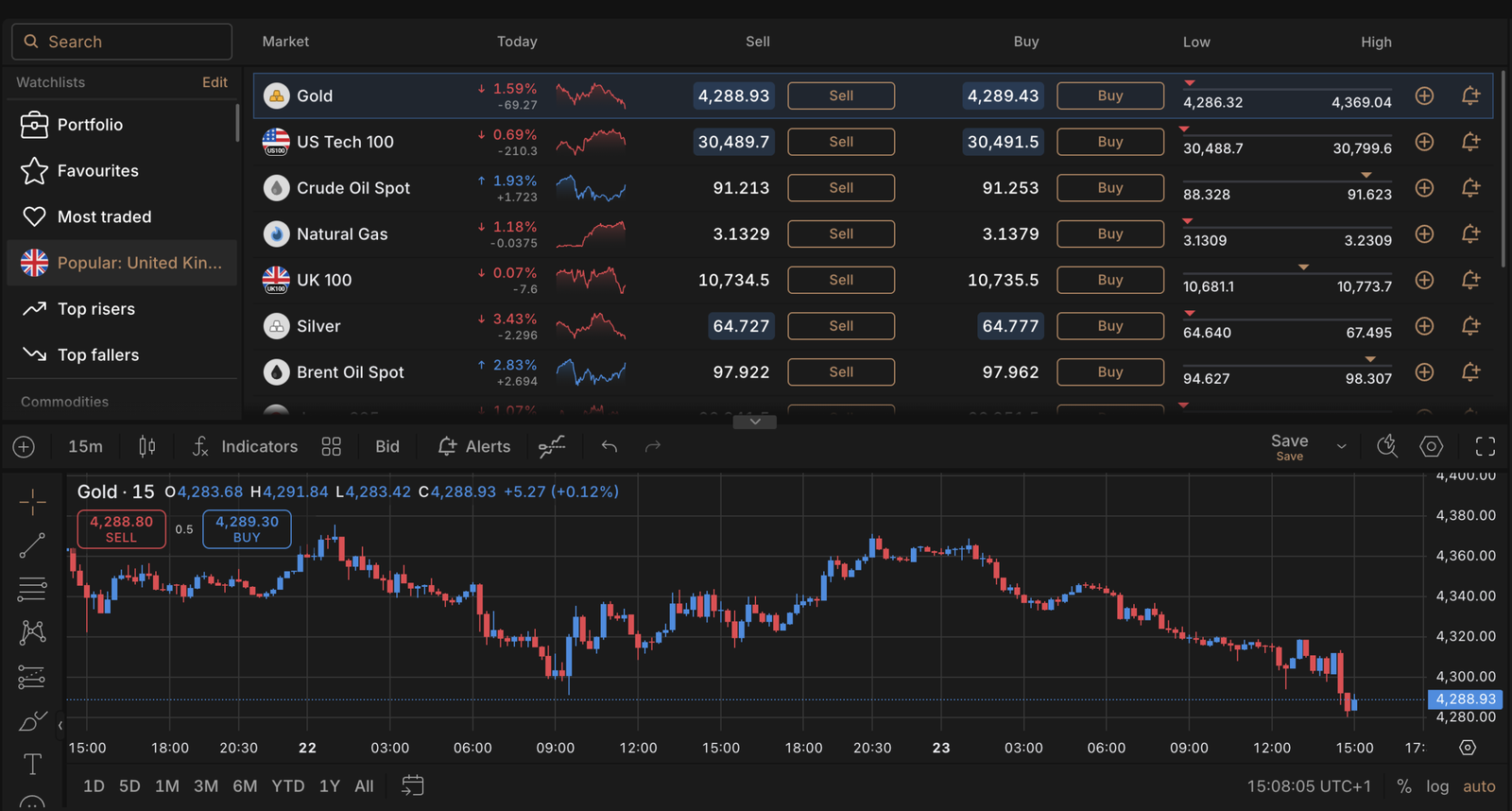
Of the eight platforms I tested, Capital.com was the easiest starting point for CFDs or spread betting. It also features in our guide to CFD trading platforms in the UK. I placed my first trade 12 minutes after starting the application, every ticket showed my potential loss before I confirmed, and orders filled in 27ms on median. The trade-offs: no real shares for UK clients, and a 0.7% conversion fee on anything not priced in GBP.
| Feature | Information |
|---|---|
| Suited to | Beginner CFD traders and spread bettors |
| Markets | CFDs and spread bets on forex, indices, shares, commodities |
| Real shares | No (UK clients) |
| Commission | £0; costs are in the spread |
| EUR/USD spread | 0.6 points in my test (1.2 around NFP) |
| Currency conversion | 0.7% |
| Minimum deposit | £20 |
| Deposit / withdrawal fees | None |
| Guaranteed stops | Yes; premium shown before you confirm and charged only if triggered |
| Platforms | Capital.com web and app, TradingView, MT4 (CFDs only) |
| Demo | Yes |
| FCA | Capital Com (UK) Ltd, FRN 793714 |
| FSCS | Eligible claims up to £85,000, subject to the applicable rules |
What I tested: September 2026, I opened a GBP account with CFDs and spread betting on a Samsung Galaxy A56 (Android 16), deposited £20 by debit card and topped up to £250 by bank transfer. I traded EUR/USD (a 10p-per-point spread bet), US 500 (£1 per point) and a two-share Apple CFD, using stop-losses, take-profits and a guaranteed stop. I also timed 50 EUR/USD orders, recorded the spread around US non-farm payrolls on 4 September, and connected TradingView and MT4 on a Windows laptop.
How quickly can you start trading on Capital.com?
I started the application on my phone, and the automated ID check passed in 4 minutes. I deposited £20 by debit card and placed my first trade 12 minutes after starting. That was a 10p-per-point EUR/USD spread bet, which is about as small as a meaningful forex position gets, and a sensible size if you’re still learning how to trade forex. I topped the account up by £230 by bank transfer, which arrived in 3 minutes, for £250 in total.
What does the Capital.com order ticket show?
The ticket showed my margin (£39 on that first EUR/USD bet), my potential loss if the stop was hit (£2 at a 20-point stop) and the overnight fee (£0.03 a night), all before I pressed confirm. That’s the main reason Capital.com ranks second: a beginner can see the worst case in pounds, rather than having to work it out from points and leverage. On a £1-per-point US 500 trade, I set the stop-loss and take-profit by dragging lines directly on the chart, and the loss figure updated as I moved them.
When I switched on a guaranteed stop, the £0.60 premium appeared on the ticket before I committed, and it’s only charged if the stop is triggered, so there was no surprise charge. A two-share Apple CFD needed about £69 of margin at 5:1, and the ticket flagged the 0.7% conversion because Apple is priced in dollars.
How did Capital.com perform on execution and spreads?
Capital.com was the fastest broker I timed. Across 50 orders, the median fill was 27ms, with the fastest at 18ms and the slowest at 61ms, and there were no requotes. EUR/USD sat at 0.6 points in normal hours but doubled to 1.2 points around the September payrolls release, before settling back to 0.6 within about 4 minutes. If you trade the news, that’s the cost to plan for. I also connected TradingView, which took about 2 minutes and worked first time, and logged into MT4. MT4 is CFD-only here, so spread bettors are limited to the Capital.com platform and TradingView.
How much does Capital.com charge?
Capital.com charges no commission and no deposit or withdrawal fees; its costs are built into the spread. EUR/USD cost 0.6 points in my test. Trading anything priced in another currency, such as an Apple CFD, adds a 0.7% conversion fee. Overnight funding applies to positions held past the daily cut-off, and guaranteed stops carry a premium that’s shown upfront and only charged if the stop is triggered.
Who is Capital.com suited to?
Capital.com is suited to beginners who want to learn CFDs or spread betting with small stakes and clear risk information. Anyone who also wants to own real shares in the same account should look at IG or CMC Markets instead.
Read the complete Capital.com review here.
Pros and cons
- First trade 12 minutes after starting the application
- Margin, maximum loss and overnight fee on every ticket
- 27ms median execution, no requotes
- £20 minimum deposit; TradingView, spread betting and guaranteed stops
- Strong mobile and web platforms
- No real shares for UK clients
- MT4 is CFD-only
- 0.7% conversion fee
- EUR/USD spread doubled around NFP
65% of retail investor accounts lose money when trading spread bets and CFDs with this provider. You should consider whether you can afford to take the high risk of losing your money.
3. IG – All-round UK trading, shares, ISAs, SIPPs, and research
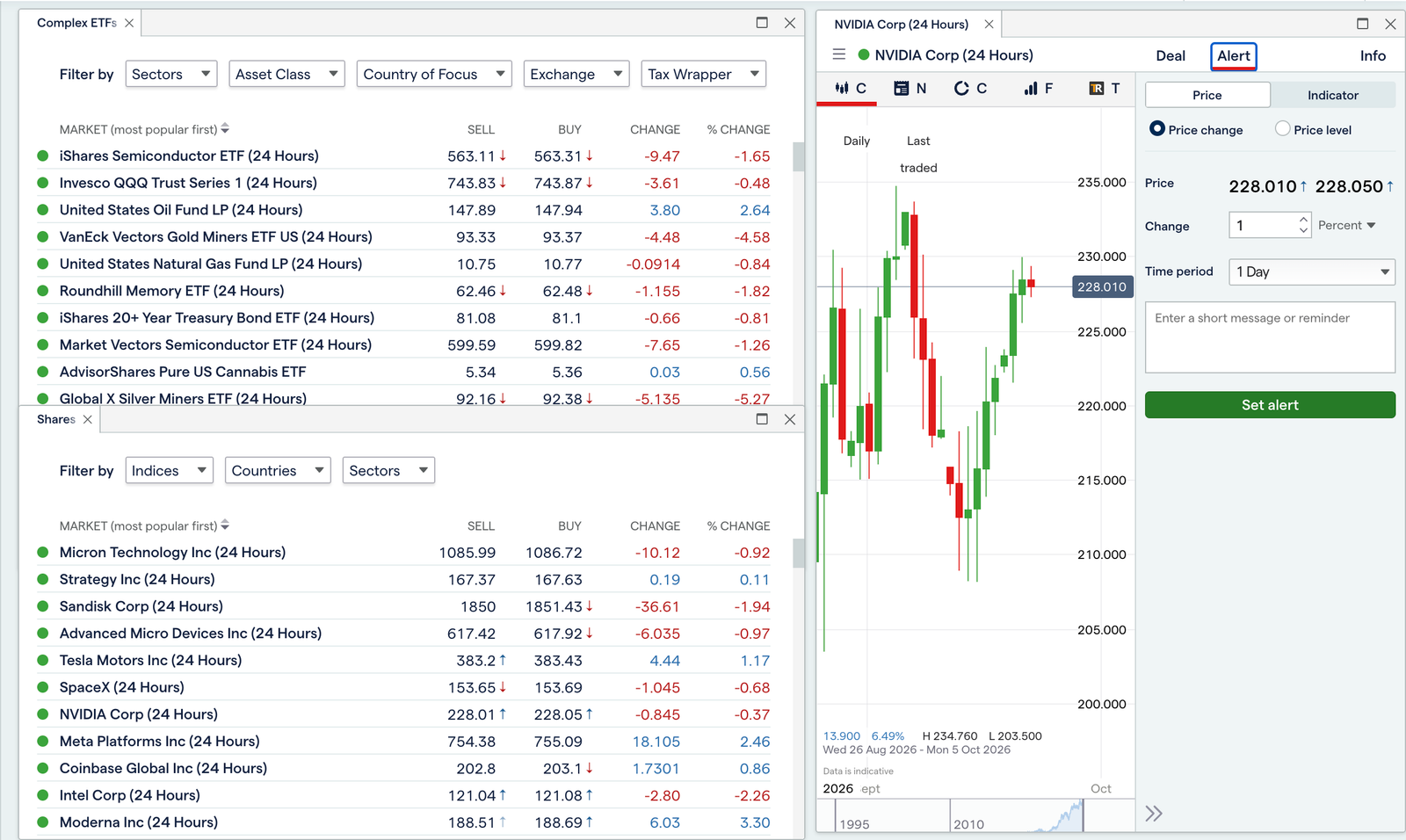
IG is the most complete trading platform in the UK. One login gave me real shares, CFDs, spread betting, 17,000+ markets and three serious third-party platforms: TradingView, ProRealTime and MT4. The price of that breadth is a steeper learning curve than Capital.com, and spreads that widen considerably in the evening.
| Feature | Information |
|---|---|
| Best for | All-round trading |
| Markets | 17,000+ |
| Products | Real shares, CFDs, spread betting, forex |
| Spread betting commission | £0 |
| Minimum spreads | EUR/USD 0.6 points; FTSE 100 1 point |
| Share dealing | £0 commission; 0.7% FX on non-GBP shares |
| Minimum stake | £0.50 per point on FTSE 100 daily funded bet |
| Guaranteed stops | Yes; premium charged only if triggered |
| Platforms | IG web and app, TradingView, ProRealTime, MT4 |
| ProRealTime | Free with 4+ trades a month, otherwise £30/month |
| ISA / SIPP | Yes |
| Demo | Yes |
| FCA | IG Markets Ltd, FRN 195355 |
| Inactivity fee | None |
| FSCS | Eligible claims up to £85,000, subject to the applicable rules |
What I tested: September 2026, I opened a GBP spread-betting account on an iPhone 16 and IG’s web platform on a MacBook Pro, and deposited £500 by card. I placed a £2-per-point FTSE 100 daily funded bet with a 40-point stop and a guaranteed stop, traded EUR/USD, timed 50 EUR/USD orders and checked FTSE spreads at 10:30, 19:30 and 22:00. I also connected TradingView, built and backtested a strategy in ProRealTime, and logged into MT4.
What was it like spread betting on IG?
I opened the account in 19 minutes and my £500 card deposit was credited instantly. My first trade was a £2-per-point FTSE 100 daily funded bet. The ticket showed 5% margin, my 40-point stop distance and the maximum loss in pounds (£80), which is what I want from any leveraged ticket. The ticket also showed the overnight funding cost for the daily funded bet before I confirmed. When I upgraded to a guaranteed stop, the ticket showed a £2 premium, 1 point at my stake, payable only if the stop was triggered. It wasn’t, so I paid nothing.
Timing mattered more than I expected. The FTSE spread was 1 point at 10:30, 2 points at 19:30 and 4 points at 22:00. At £2 per point, that’s the difference between paying £2 and £8 to open the same trade. If you can only trade in the evening after work, that’s worth knowing before you choose IG for index trading.
Which trading platforms can you use with IG?
IG gave me more platform choice than any other broker here except Pepperstone. TradingView connected in about 4 minutes, so I could trade from the charts I already use. ProRealTime was the stand-out for strategy building: I built a simple 20/50-day moving-average crossover on FTSE daily data and backtested it over five years in about 15 minutes, without writing code. It’s free if you place four or more trades a month, otherwise £30 a month. MT4 is available too. In practice, this means you can start on IG’s own app and move to a more advanced platform later without opening a new account.
How fast is IG’s execution?
IG filled my 50 EUR/USD orders at a median of 88ms, with no requotes. The fastest fill was 61ms and the slowest 174ms. That’s reliable, but slower than Capital.com (27ms) and Pepperstone (51ms) in the same test. For swing trades, the difference won’t matter. For scalping, it might.
How much does IG charge?
IG charges no commission on spread bets; costs are in the spread, from 0.6 points on EUR/USD and 1 point on the FTSE 100. Share dealing costs £0 in commission, with a 0.7% FX fee on non-GBP shares. Overnight funding applies to daily funded bets held past the cut-off, and guaranteed stop premiums are only charged if the stop is triggered.
Who is IG best for?
IG is best for traders who want one account for shares, CFDs and spread betting, and room to grow into TradingView, ProRealTime or MT4. Complete beginners may find Capital.com quicker to learn.
Read the complete IG review here.
Pros and cons
- 17,000+ markets across shares, CFDs and spread betting
- TradingView, ProRealTime and MT4
- Ticket shows margin, stop distance, maximum loss and overnight cost
- ISA and SIPP alongside trading accounts
- Steeper learning curve
- FTSE spread rose from 1 to 4 points by 22:00
- 0.7% FX on share dealing
- 88ms execution, slower than Capital.com and Pepperstone
4. CMC Markets: Best for advanced charting and market range
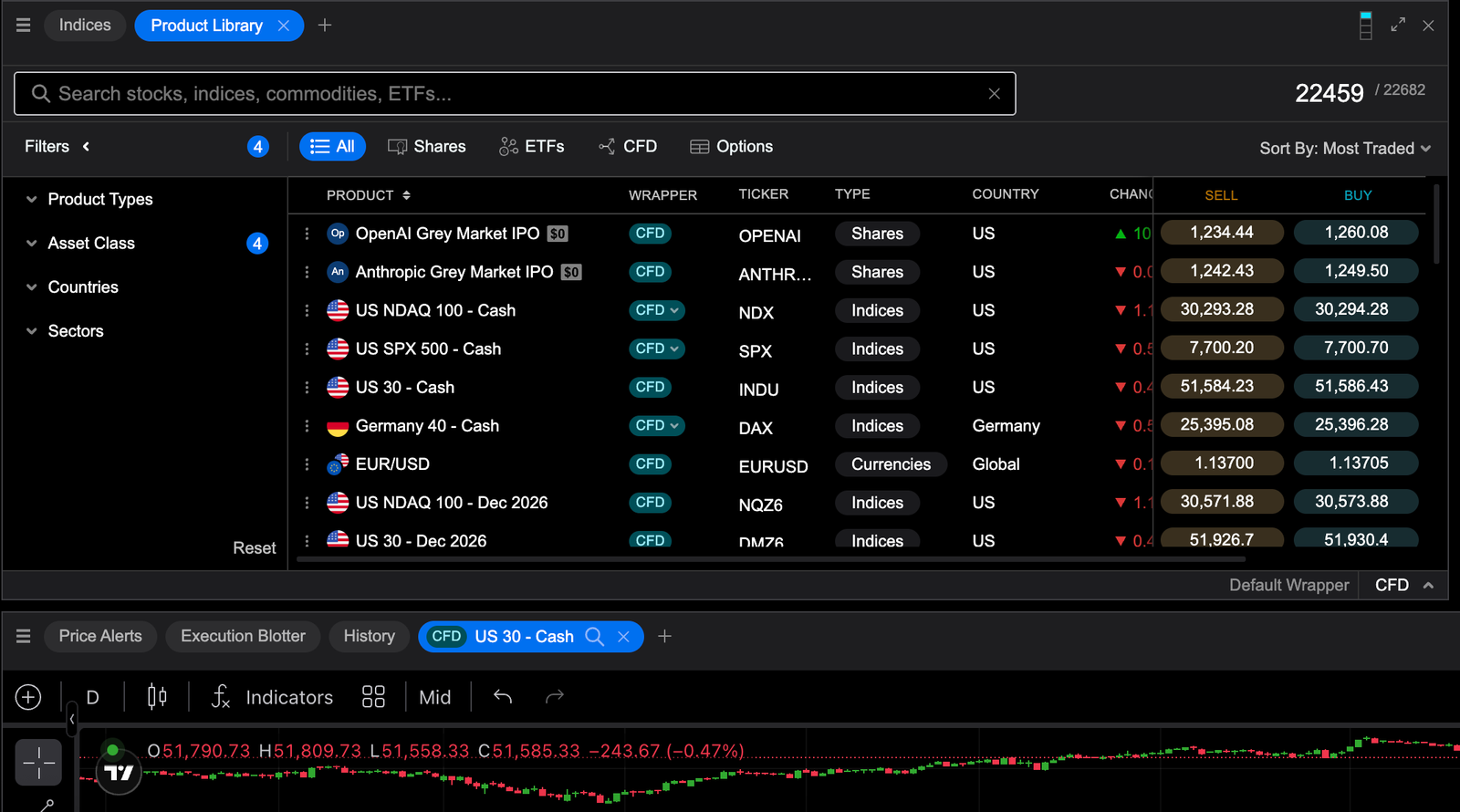
CMC Markets has the deepest analysis tools I tested: 21,000+ instruments, 115+ indicators and a pattern-recognition scanner, all inside one platform. The trade-offs are complexity, spreads that widened sharply around the Bank of England decision, and the slowest execution of the brokers I timed.
| Feature | Information |
|---|---|
| Best for | Advanced analysis and market range |
| Instruments | 21,000+ CFD/spread-bet instruments; 16,000 stocks and ETFs via CMC Invest |
| Products | CFDs, spread betting, forex; real shares via CMC Invest |
| Spread betting commission | £0 |
| EUR/USD spread | 0.7 points average in my test (1.6 around the BoE decision) |
| Minimum deposit | £0 |
| Guaranteed stops | Yes; premium refunded if not triggered |
| Charting | 115+ indicators, pattern-recognition scanner |
| Platforms | Next Generation (web), app, MT4, MT5, TradingView |
| Inactivity fee | £10 per month after 12 months |
| Demo | Yes |
| FCA | CMC Markets UK plc, FRN 173730 |
| FSCS | Eligible claims up to £85,000, subject to the applicable rules |
What I tested: September 2026, I opened a GBP spread-betting account on an iPhone 15 and the Next Generation web platform, and deposited £600 by debit card. I used the pattern-recognition scanner, RSI and moving averages to find a £2-per-point GBP/USD trade, placed a £1-per-point UK 100 bet with a guaranteed stop, and took £150 of exposure to an AIM-listed small cap. I also timed 50 EUR/USD orders and recorded EUR/USD and GBP/USD spreads around the Bank of England decision on 17 September.
What was it like analysing and trading on CMC Markets?
I opened the account in 22 minutes, deposited £600 by debit card and spent most of my first session in the charts rather than trading. The pattern-recognition scanner was the tool I came back to most. It flagged chart patterns (breakouts, triangles, head-and-shoulders setups) across markets I wouldn’t have checked manually, and it was how I found a GBP/USD setup worth trading: an ascending triangle on the four-hour chart. I confirmed it with RSI and two moving averages, then placed a £2-per-point spread bet from the same screen with a 30-point stop. The ticket also showed the overnight funding cost before I confirmed. With 115+ indicators and news built in, I never had to leave the platform to do my research.
The range also stood out. Beyond the usual indices and FX pairs, I found and traded an AIM-listed small cap with £150 of exposure. The spread was about 1.5% and margin was 20%, but it’s the sort of market that many CFD platforms simply don’t offer.
How do CMC Markets’ guaranteed stops work?
CMC shows the guaranteed stop premium on the ticket before you confirm, and refunds it if the stop isn’t triggered. I placed a guaranteed stop on a £1-per-point UK 100 position, which carried a £0.70 premium. I closed the trade manually in profit, and the premium came back to my account. That makes guaranteed stops far easier to justify on CMC than on platforms that keep the premium either way.
How did CMC Markets’ spreads and execution compare?
EUR/USD averaged 0.7 points in my test, but widened to 1.6 points around the Bank of England decision on 17 September, more than double. GBP/USD moved more, from 0.9 to 2.2 points, and took about 6 minutes to settle. Across 50 orders, the median execution was 97ms (fastest 64ms, slowest 210ms), the slowest of the four brokers I timed. Neither figure is a problem for analysis-led swing trading, but news traders and scalpers will find better conditions at Pepperstone or Capital.com.
How much does CMC Markets charge?
CMC Markets charges no commission on spread bets, and there’s no minimum deposit. EUR/USD cost 0.7 points on average in my test. Guaranteed stops carry a premium that’s refunded if the stop isn’t hit. A £10 monthly inactivity fee applies once an account has been dormant for 12 months.
Who is CMC Markets best for?
CMC Markets is best for experienced traders who build trades from technical analysis and want the widest choice of markets, including smaller UK stocks. Beginners will find it more demanding than Capital.com or eToro.
Read the complete CMC makets review here.
Pros and cons
- 21,000+ instruments, including AIM small caps
- 115+ indicators and a pattern-recognition scanner
- Guaranteed stop premium refunded if not triggered
- MT4, MT5 and TradingView; real shares via CMC Invest
- Ticket shows margin, maximum loss and overnight cost
- £10 monthly inactivity fee after 12 months
- EUR/USD widened from 0.7 to 1.6 points around the BoE
- 97ms median execution, the slowest I timed
- Complex for beginners
5. Pepperstone – Low-cost forex, scalping, and algorithmic trading
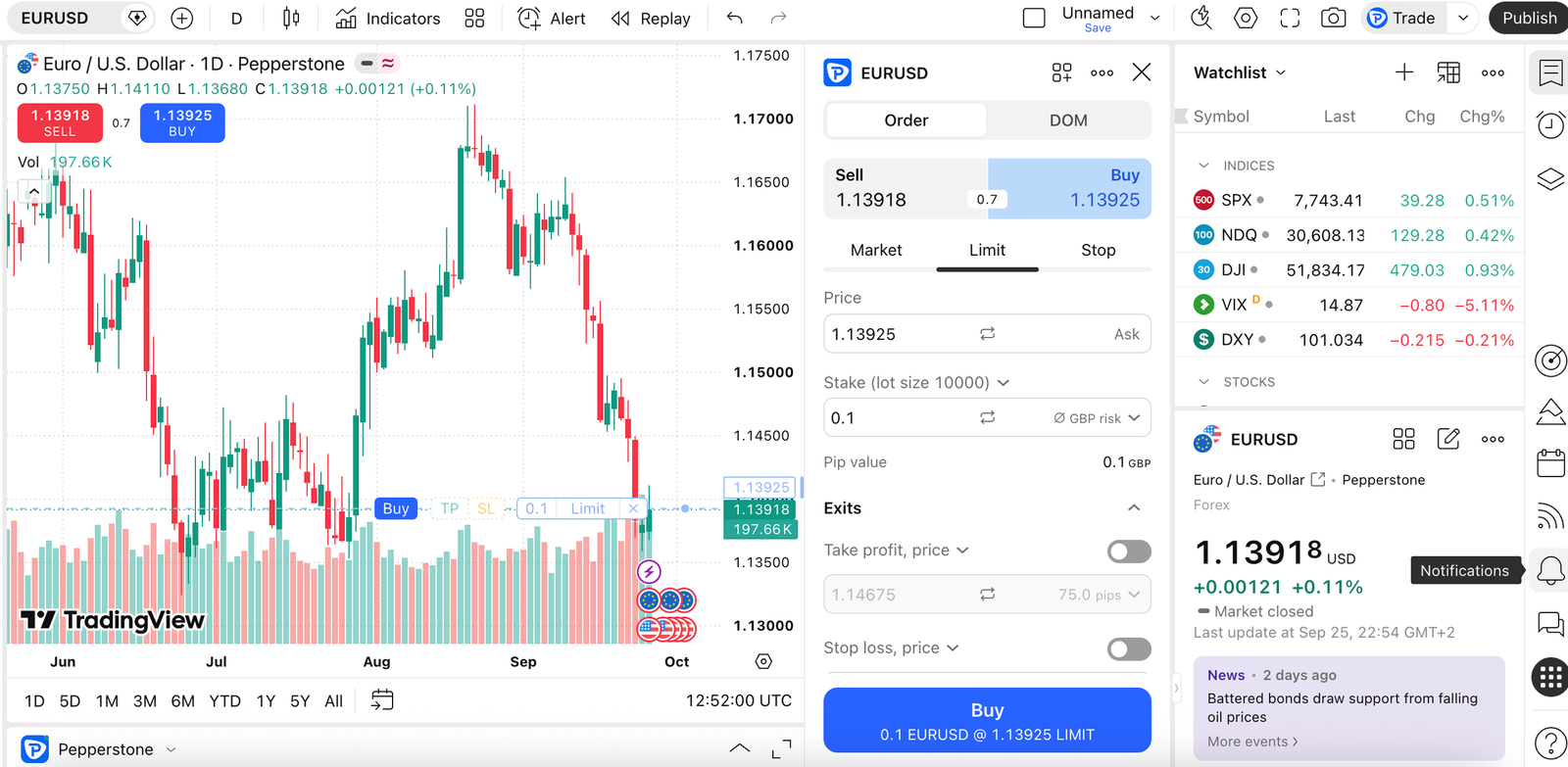
Pepperstone is the platform I’d choose for active forex trading, and one of the top forex brokers in the UK. It filled my MT5 orders in 51ms with no negative slippage, offers raw spreads from 0.0 pips, and supports MT4, MT5, cTrader and TradingView. The trade-offs: the slowest onboarding in the test, no real shares and no guaranteed stops.
| Feature | Information |
|---|---|
| Best for | Active forex and index traders |
| Markets | 1,350+ CFDs and spread bets |
| Real shares | No |
| Account types | Standard (spread only), Razor (raw spread + commission), spread betting |
| Standard / spread bet EUR/USD | 0.6 points in my test |
| Razor pricing | From 0.0 pips + £2.25 per lot per side |
| Minimum deposit | £10 |
| Minimum stake | £0.10 per point via TradingView (tested) |
| Guaranteed stops | No |
| Platforms | MT4, MT5, cTrader, TradingView, Pepperstone app |
| Demo | Yes |
| FCA | Pepperstone Ltd, FRN 684312 |
| FSCS | Eligible claims up to £85,000, subject to the applicable rules |
What I tested: September 2026, I opened a GBP spread-betting account and a Razor CFD account on an iPhone 16 and funded them with £400 by bank transfer (£250 and £150). I compared EUR/USD and USD/JPY pricing across both accounts, timed 50 orders on MT5, placed five limit orders on cTrader, and connected TradingView to test the minimum stake.
How long does it take to open a Pepperstone account?
Pepperstone took the longest of any platform I tested. The application asked more detailed questions about my trading experience and finances than the others. I applied at 17:10, and approval arrived at 09:25 the following morning rather than within minutes. My £400 bank transfer then took 25 minutes to credit. For an active trader that’s a one-off cost, but it’s not where to open an account if you want to trade tonight.
Is Pepperstone’s spread betting or Razor account cheaper for forex?
On EUR/USD, the two came out almost level in my test. I split the £400 between the two accounts (£250 spread betting, £150 Razor) and priced the same trade side by side. The £1-per-point spread bet cost 0.6 points with no commission. Razor showed 0.1 pips plus £2.25 per lot per side, and £4.50 per lot round trip works out to roughly 0.6 pips, so about 0.7 pips all-in. USD/JPY showed the same pattern: 0.8 points on the spread bet against 0.2 pips plus commission on Razor.
Razor pulls ahead on pairs where the raw spread is wider, and when you want MT5 or cTrader. Spread betting has a different advantage for UK traders: profits are currently free of Capital Gains Tax (tax treatment depends on your circumstances and can change).
How fast is Pepperstone’s execution?
Pepperstone filled my 50 MT5 orders in 51ms on median, with the fastest at 34ms and the slowest at 112ms. Three orders filled 0.1 points better than requested, and none filled worse. That was the strongest fill result among the four platforms I timed, and a big reason Pepperstone ranks among the top MT5 brokers in the UK. Capital.com was faster on raw speed, but it doesn’t offer MT5 or cTrader. I also placed five limit orders on cTrader, and all five filled at the set price. When I connected TradingView, the minimum stake was 0.1, or £0.10 per point. That’s useful for testing a strategy with very small risk.
How much does Pepperstone charge?
Pepperstone charges no commission on Standard and spread-betting accounts; EUR/USD cost 0.6 points in my test. Razor accounts charge raw spreads from 0.0 pips plus £2.25 per lot per side. The minimum deposit is £10. Overnight swaps apply to positions held past the daily rollover; I found them in the MT5 contract specifications rather than on the order ticket.
Who is Pepperstone best for?
Pepperstone is best for experienced forex and index traders who place frequent trades and want MT4, MT5, cTrader or TradingView with reliable fills. Beginners, and anyone who wants guaranteed stops or real shares, should look at Capital.com or IG.
Read the complete Pepperstone review here.
Pros and cons
- 51ms median MT5 execution; no negative slippage in 50 orders
- MT4, MT5, cTrader and TradingView
- No inactivity or withdrawal fees
- Razor raw spreads from 0.0 pips
- £0.10 per point on EUR/USD via TradingView
- No guaranteed stop losses
- No real shares
- More complex for beginners
6. XTB: Best for charting and trading tools
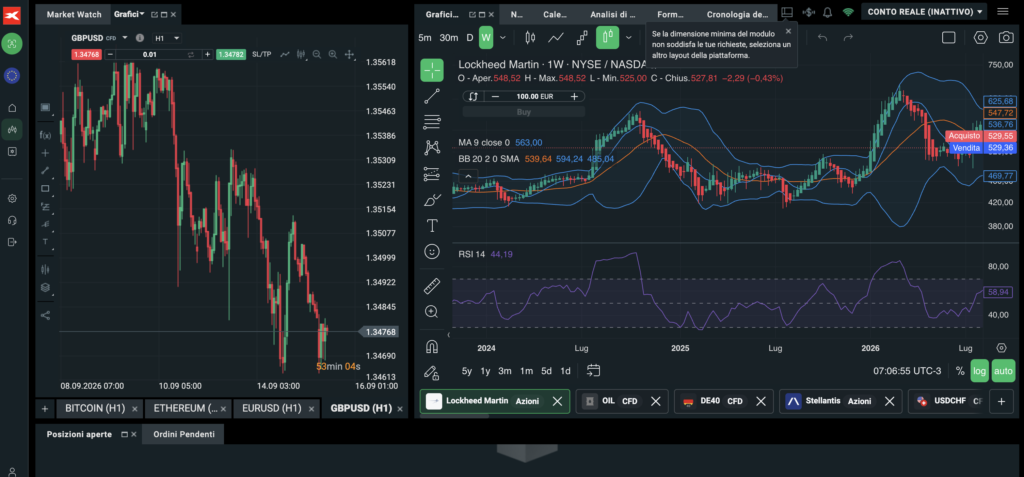
XTB is the strongest hybrid platform I tested for someone who wants real shares and CFDs alongside serious charting, screeners and news, all in xStation. Shares and ETFs are commission-free up to €100,000 a month. The main trade-offs are a 0.5% FX fee, no spread betting, and search results where shares and CFDs are easy to confuse.
| Feature | Information |
|---|---|
| Best for | Charts, screeners and technical analysis |
| Products | Real shares and ETFs, CFDs (including forex) |
| Spread betting | No |
| Share/ETF commission | 0% up to €100,000 monthly turnover (0.2% above, minimum €10) |
| Fractional shares | From £1 |
| Currency conversion | 0.5% |
| EUR/USD spread | 0.9 pips in my test |
| Minimum deposit | £0 |
| Platform | xStation (web, desktop, app); no MT4, MT5 or TradingView trading |
| ISA | Yes (stocks and shares ISA) |
| Demo | Yes |
| FCA | XTB Limited, FRN 522157 |
| FSCS | Eligible claims up to £85,000, subject to the applicable rules |
What I tested: September 2026, I opened an ISA and a general account on a Google Pixel 9 (Android 16) and deposited £1,000 by bank transfer. I bought £400 of Nvidia as a fractional share, compared the share and CFD versions in search, used the ETF screener to buy £150 of a global ETF, and checked the charts and instrument news. On the CFD side, I opened a 0.05-lot EUR/USD position with a stop-loss and a 0.1-lot US 500 position from the chart, checked the overnight swap, and withdrew £200.
What was it like trading on XTB?
I opened the account in 25 minutes, added an ISA in three more, and deposited £1,000 by bank transfer, which credited in 12 minutes. When I searched for Nvidia, the real share and the Nvidia CFD appeared together in the results. Both were labelled, but the labels were small enough to overlook, and a beginner could open a leveraged position when they meant to buy the stock. I bought £400 of the real share as a fractional holding in the ISA. The ticket showed no commission and a £2 FX charge at 0.5%.
Where XTB stood out was the research. xStation’s charts had far more indicators than the simpler share apps, and each instrument had its own news feed. In the ETF screener, I filtered for global equity, accumulating funds with ongoing charges under 0.2%, which left 14 results, and bought £150 of one on its GBP line with no commission or FX. On Trading 212, I’d have needed a separate research site for most of that.
What does the XTB CFD order ticket show?
For a 0.05-lot EUR/USD position, the ticket showed about £145 of margin at 30:1 leverage, the 0.9-pip spread and the pip value. When I set a 20-pip stop, xStation converted it into a GBP risk figure of roughly £7.40, which is exactly what I want to see before confirming. The gap was the overnight swap: it wasn’t on the ticket, and I had to open the instrument specifications to find it (about £0.28 a night on my long position). I also opened a 0.1-lot US 500 CFD directly from the chart, which is quicker than going back to a separate trade screen.
How much does XTB charge?
XTB charges 0% commission on real shares and ETFs up to €100,000 of monthly turnover, and 0.5% on currency conversion. CFD costs are in the spread; EUR/USD was 0.9 pips in my test. There’s no minimum deposit, and my £200 withdrawal was free and arrived the next working day. Overnight swaps apply to CFDs held past rollover.
Who is XTB best for?
XTB is best for traders who want to research and trade both real shares and CFDs from one charting platform, including within an ISA. Traders who want spread betting, MT4/MT5 or TradingView execution should look at IG, CMC Markets or Pepperstone.
Read the complete XTB review here.
Pros and cons
- Strong charting, screeners and per-instrument news
- Real shares, CFDs and an ISA in one platform
- 0% share commission up to €100,000 a month
- CFD ticket converts stops into a GBP risk figure
- 0.5% FX
- Shares and CFDs are easy to confuse in search
- Overnight swap not shown on the ticket
- No spread betting, MT4, MT5 or TradingView execution
7. Trading 212: Best for low-cost share trading
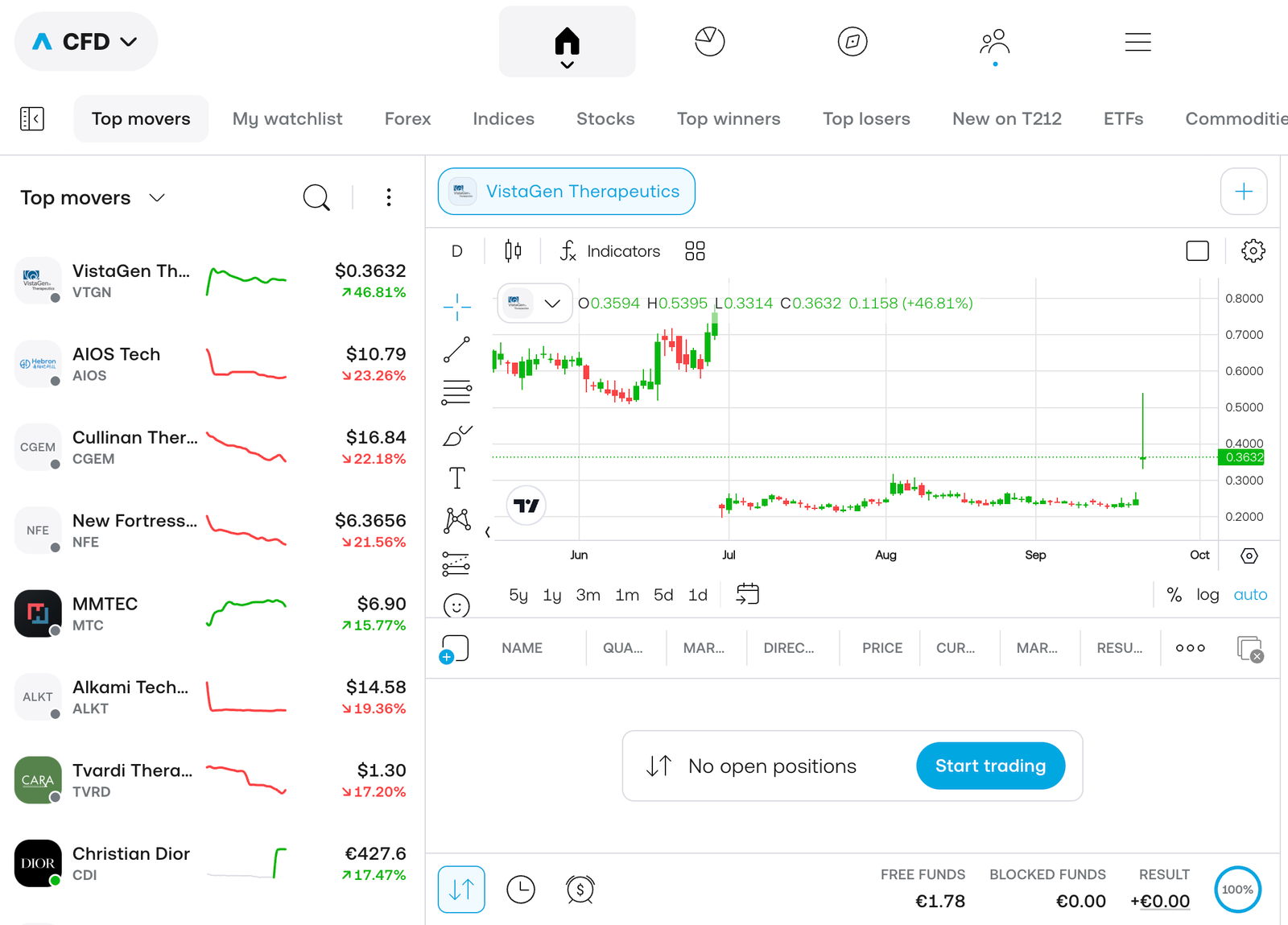
Trading 212 is the best fit if trading means buying and selling real shares and ETFs from your phone as cheaply as possible: £0 commission and 0.15% FX on the Invest and ISA accounts. The trade-offs show up when you go beyond shares: weak research tools, a separate CFD account and no spread betting.
| Feature | Information |
|---|---|
| Best for | Low-cost mobile share trading |
| Products | Real shares and ETFs; CFDs in a separate account |
| Forex | FX CFDs only |
| Spread betting | No |
| Commission | £0 |
| Currency conversion | 0.15% Invest/ISA; 0.5% CFD |
| Fractional shares | From £1 |
| Automation | Pies and AutoInvest |
| Minimum deposit | £1 |
| ISA / SIPP | Yes |
| Platforms | Trading 212 app and web; no third-party platforms |
| Demo | Yes |
| FCA | Trading 212 UK Ltd, FRN 609146 |
| FSCS | Eligible claims up to £85,000, subject to the applicable rules |
What I tested: September 2026, I deposited £500 into a Trading 212 ISA on an iPhone 16 Pro, bought £250 of Microsoft as a fractional share, built a three-ETF Pie and set £100 a month of AutoInvest. I checked the key statistics, news and analyst ratings, then funded a separate CFD account with £200 to open a US 500 CFD at 20:1 with a stop-loss and track the overnight interest. I also withdrew £100 from the ISA.
What was it like trading shares on Trading 212?
I opened the account in 9 minutes, and my £500 bank transfer reached the ISA in about two minutes, the fastest bank transfer in the test. I bought £250 of Microsoft as a fractional share. The ticket showed £0 commission and 37p of FX, against £1.25 at XTB’s 0.5% rate and £1.75 at IG’s 0.7%. On a small trade the gap is pennies; for someone trading US shares every week, it adds up.
I then built a three-ETF Pie (60% global, 25% S&P 500, 15% emerging markets) in under four minutes and set £100 a month of AutoInvest. It took fewer taps than the equivalent setup on XTB.
Is Trading 212 good for researching shares?
Not especially. I could see key statistics, news and analyst ratings for Microsoft, but there’s no stock screener and no way to compare companies’ fundamentals side by side. XTB, IG and CMC Markets all gave me more to work with. If you already know what you want to buy, it won’t matter. If you use the platform to find ideas, it will.
What is Trading 212’s CFD account like?
Trading 212’s CFD account is a separate account, so I had to fund it separately with £200. I opened a US 500 CFD using £100 of margin at 20:1 leverage, about £2,000 of exposure. The overnight cost on that position was roughly 35p a night, and I could only add a stop-loss after the position was open, not on the original ticket. Currency conversion on CFDs is 0.5%, not 0.15%.
How much does Trading 212 charge?
Trading 212 charges no dealing commission and 0.15% FX on its Invest and ISA accounts. On the CFD account, costs are in the spread, with 0.5% FX and overnight interest on positions held past the cut-off. Deposits start from £1 and bank transfers are free. My £100 withdrawal from the ISA had no fee and arrived the next working day.
Who is Trading 212 best for?
Trading 212 is best for traders who mainly buy and sell real shares and ETFs, especially US stocks, and want the lowest costs inside an ISA. Anyone who wants spread betting, deep research or third-party platforms should look at IG or XTB.
Read the complete Trading212 review here.
Pros and cons
- £0 commission and 0.15% FX on shares
- Bank transfer credited in about 2 minutes
- ISA, SIPP, fractional shares, Pies and AutoInvest
- Fewest taps to set up recurring investing
- No stock screener or side-by-side fundamentals
- CFDs need a separate, separately funded account
- Stop-loss added only after a CFD position is open
- No spread betting or third-party platforms
8. Plus500: Best for simple CFD trading
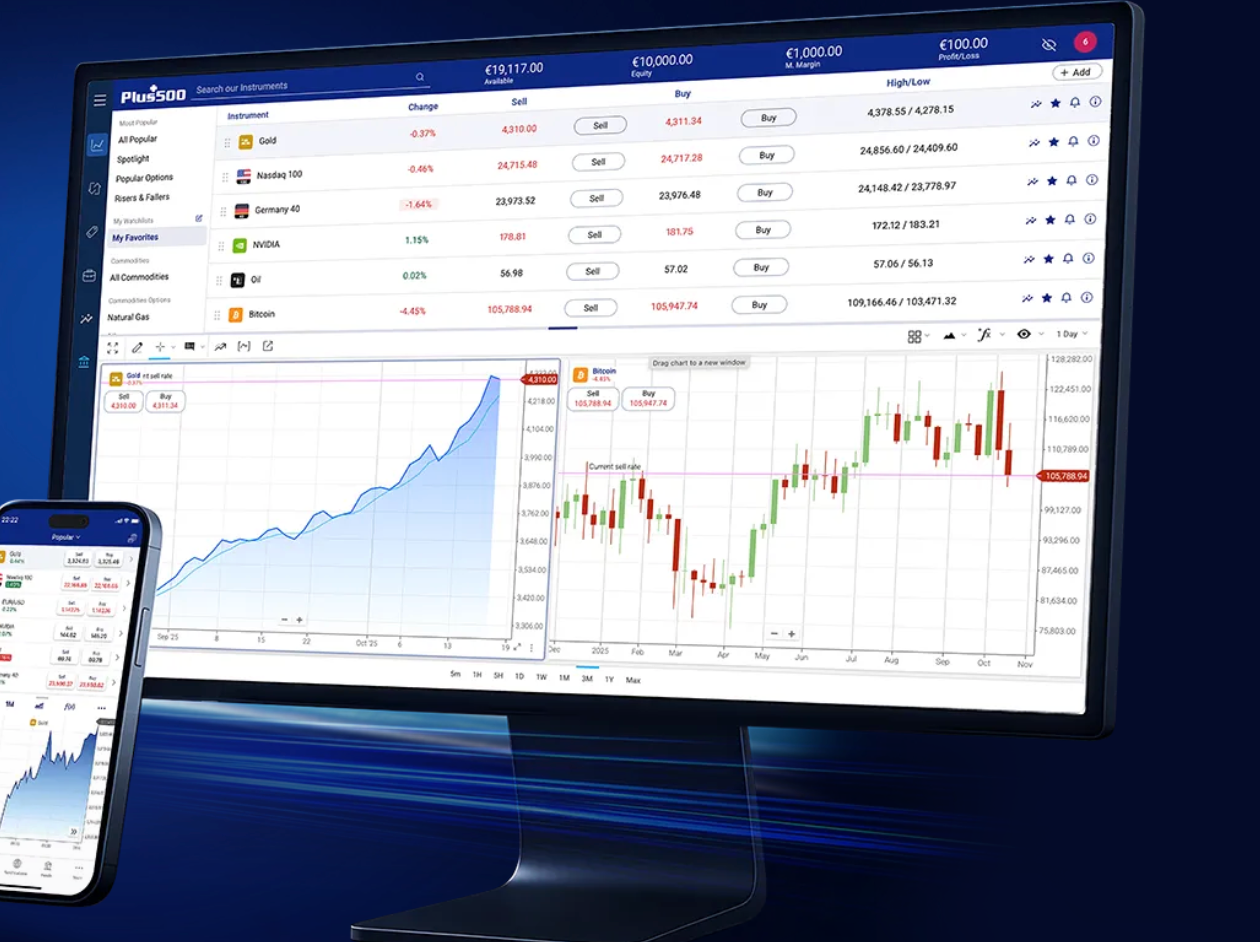
Plus500 is the simplest CFD platform I tested, with the shortest order ticket, guaranteed and trailing stops, and an unlimited free demo. It suits occasional traders who don’t need MT4, TradingView or advanced charting. The trade-offs are wider spreads than the specialist brokers, an overnight fee that isn’t on the ticket, and an inactivity fee after only three months.
| Feature | Information |
|---|---|
| Best for | Simple, occasional CFD trading |
| Products | CFDs (including forex); real shares via the separate Plus500 Invest app |
| Spread betting | No |
| Commission | £0; costs are in the spread |
| EUR/USD spread | 1.3 pips in my test (2.8 around the FOMC decision) |
| Currency conversion | Up to 0.7% |
| Minimum deposit | £100 |
| Deposit / withdrawal fees | None |
| Stops | Stop-loss, take-profit, trailing stop, guaranteed stop (via wider spread) |
| Inactivity fee | £10 per month after 3 months |
| Platforms | Plus500 web and app only; no MT4, MT5, TradingView or automation |
| Demo | Yes, no time limit |
| FCA | Plus500UK Ltd, FRN 509909 |
| FSCS | Eligible claims up to £85,000, subject to the applicable rules |
What I tested: September 2026, I deposited £150 by debit card and tested Plus500 on an iPhone 15 Pro, a Samsung Galaxy S24 and the Windows 11 web platform. I traded UK 100 at 20:1, EUR/USD, US 500 and a two-share Tesla CFD, using stop-losses, take-profits, a trailing stop and a guaranteed stop. I also recorded the EUR/USD spread around the FOMC decision on 16 September, checked overnight funding and currency conversion, tried the demo, price alerts and live chat, and withdrew £100.
What was it like trading CFDs on Plus500?
I placed my first trade 31 minutes after starting the application, having deposited £150 by debit card against the £100 minimum. It was a UK 100 CFD at 20:1 leverage, and the order ticket was the shortest in the comparison: size, margin, leverage and stop options on a single screen.
I set a trailing stop on a US 500 position from my iPhone, and the same position appeared immediately on the Android app and the Windows web platform. I also set a price alert on EUR/USD, which arrived as a push notification within seconds of the level being hit. The demo account opened straight away and has no time limit, which makes it a reasonable place to practise before funding.
How much does a guaranteed stop cost on Plus500?
On Plus500, a guaranteed stop costs you a wider spread rather than a separate premium. When I added one to my UK 100 trade, the spread widened from 1.6 to 2.6 points. That’s simple to understand, but you pay it whether or not the stop is triggered, unlike CMC Markets, which refunded my unused premium.
How much does Plus500 charge?
Plus500 charges no commission and no deposit or withdrawal fees; its costs are in the spread. EUR/USD cost 1.3 pips in normal hours and 2.8 pips around the FOMC decision, wider than Capital.com, IG and Pepperstone. Trading a two-share Tesla CFD exposed me to currency conversion of up to 0.7%.
Overnight funding applies, but it isn’t on the order ticket; I had to open the instrument details to find it (about £0.18 a night on my UK 100 position). When I asked live chat about funding, I had an answer in about 4 minutes. My £100 withdrawal arrived in two working days. A £10 monthly inactivity fee starts after three months without logging in.
Who is Plus500 best for?
Plus500 is best for occasional CFD traders who want a clean app, guaranteed stops and an unlimited demo, and who don’t need third-party platforms. Active traders will pay less at Pepperstone or Capital.com, and anyone who wants spread betting, TradingView or automation will need another platform.
Pros and cons
- Shortest order ticket in the test
- Guaranteed and trailing stops
- Unlimited free demo
- Live chat answered in about 4 minutes
- Wider spreads: EUR/USD 1.3 pips, 2.8 around FOMC
- No MT4, MT5, TradingView or automation
- No spread betting
- Overnight cost not on the ticket; £10 inactivity fee after 3 months
Trading platform fees compared
| Platform | Commission | EUR/USD spread | FX | Overnight cost on ticket? | Inactivity fee | Guaranteed stops |
|---|---|---|---|---|---|---|
| eToro | $1–2 stocks; £0 ETFs | 1 pip | 0.5% | Yes | $10/month after 12 months | No |
| Capital.com | £0 | 0.6 (1.2 news) | 0.7% | Yes | None | Yes, charged if triggered |
| IG | £0 spread bets | 0.6 | 0.7% | Yes | None | Yes, charged if triggered |
| CMC Markets | £0 spread bets | 0.7 (1.6 news) | — | Yes | £10/month after 12 months | Yes, refunded if not triggered |
| Pepperstone | £0; Razor £2.25/lot/side | 0.6 | — | No | None | No |
| XTB | 0% shares up to €100k/month | 0.9 | 0.5% | No | £10/month after 12 months | No |
| Trading 212 | £0 | — | 0.15% (0.5% CFD) | Yes | None | No |
| Plus500 | £0 | 1.3 (2.8 news) | Up to 0.7% | No | £10/month after 3 months | Yes, via wider spread |
Cost example: buying £10,000 of US shares
| Platform | Commission | FX cost | Total to buy |
|---|---|---|---|
| Trading 212 | £0 | £15 (0.15%) | £15 |
| XTB | £0 | £50 (0.5%) | £50 |
| IG | £0 | £70 (0.7%) | £70 |
| eToro | $1–2 | £50 (0.5%) | About £51–£52 |
| Capital.com, Pepperstone, Plus500 | No real shares for UK clients on these platforms (Plus500 offers them through its separate Invest app) | | |
| CMC | CMC Markets: real shares via the separate CMC Invest, not tested here | | |
Cost example: 20 EUR/USD trades a month at £1 per point
| Platform | Spread per trade | Monthly cost | Yearly cost |
|---|---|---|---|
| Capital.com | 0.6 | £12 | £144 |
| IG | 0.6 | £12 | £144 |
| Pepperstone (spread bet) | 0.6 | £12 | £144 |
| CMC Markets | 0.7 | £14 | £168 |
| Pepperstone (Razor) | 0.1 + commission ≈ 0.7 | £14 | £168 |
| XTB | 0.9 | £18 | £216 |
| eToro | 1.0 | About £20 | About £240 |
| Plus500 | 1.3 | £26 | £312 |
How to place a trade on a UK trading platform?
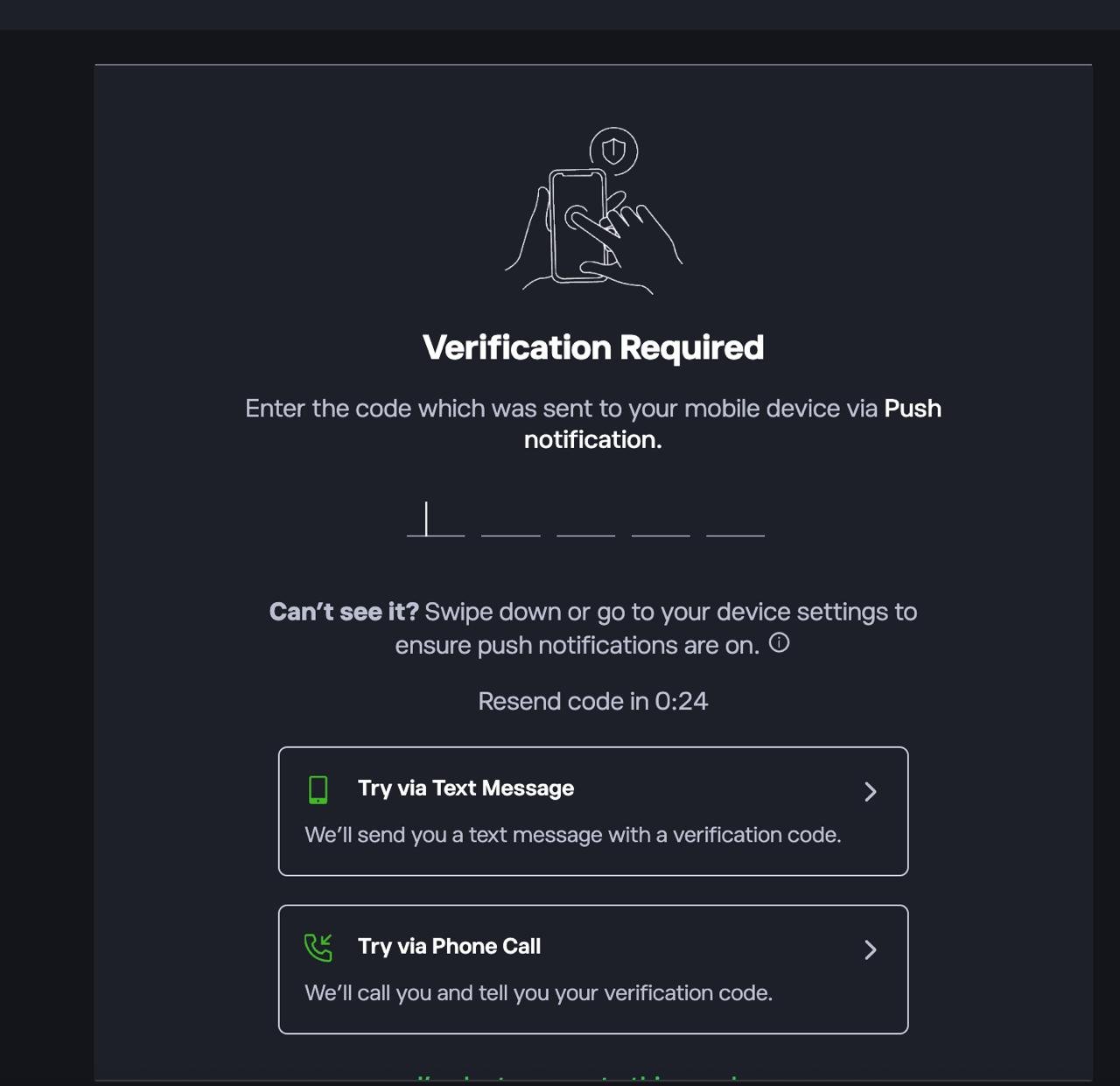
1. Log in to the platform
If prompted, complete 2FA by entering the code sent via push notification, SMS, or phone call.
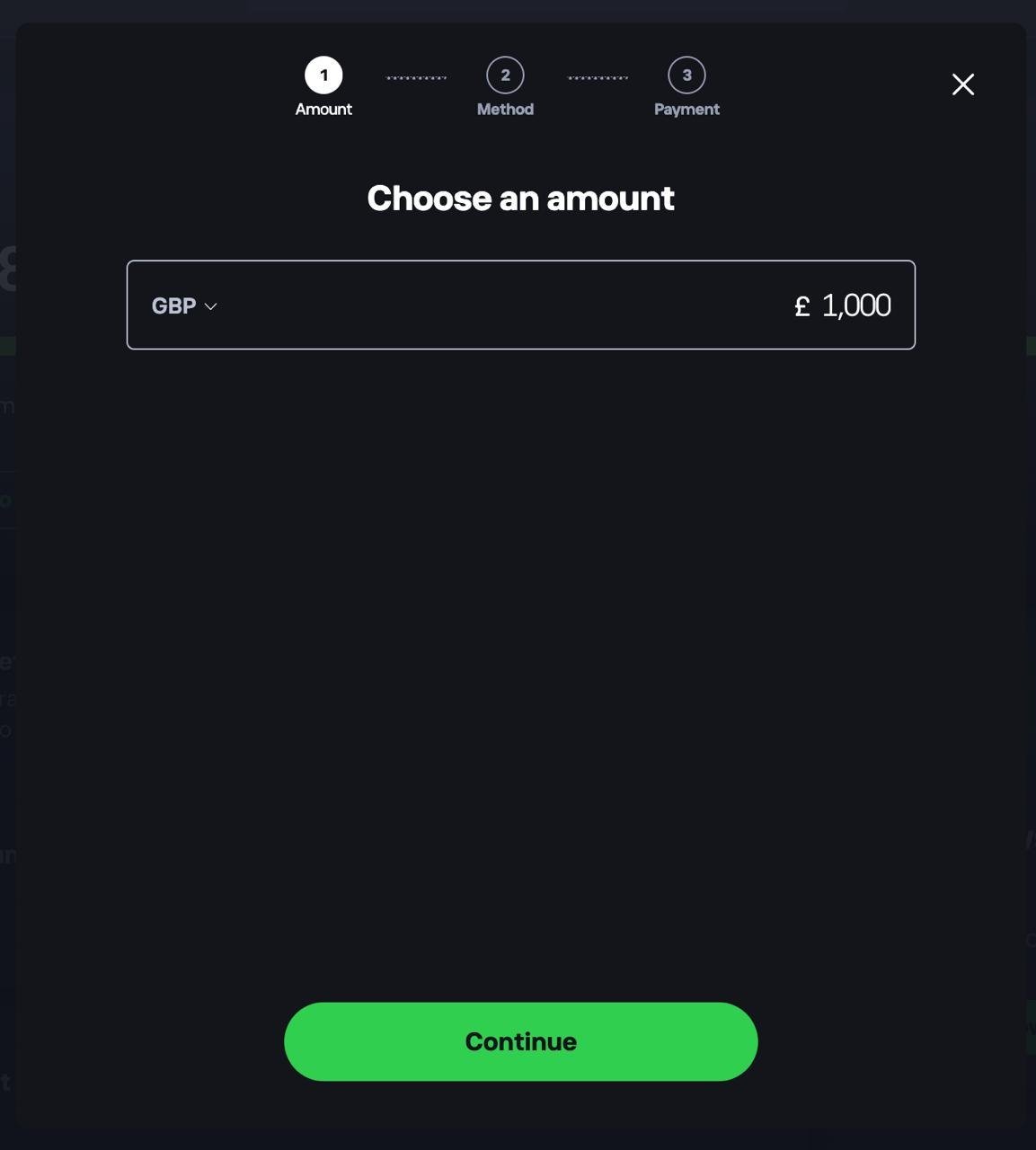
2. Deposit funds into your account
Head to your dashboard and choose to add funds. Select your currency, enter the amount you want to deposit, tap Continue, then choose a payment method.
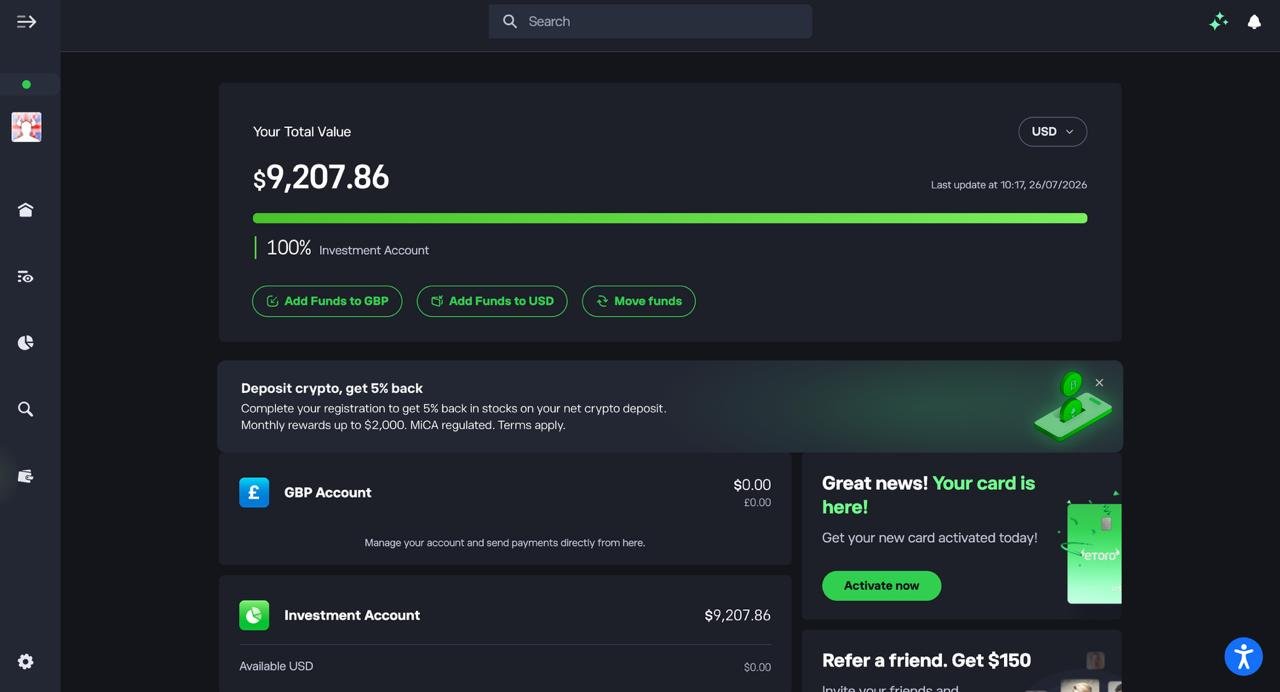
3. Confirm your funds are available
Check your dashboard to make sure your deposit has landed in your Investment Account before you start trading.
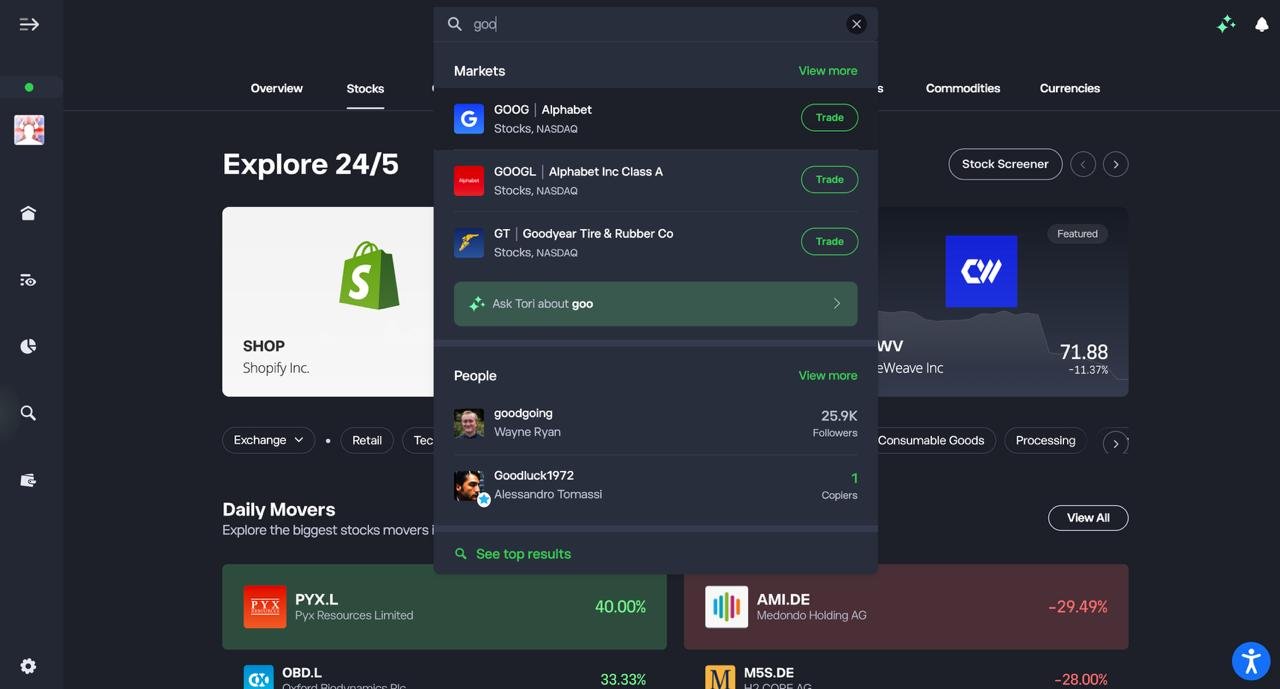
4. Search for the stock you want to trade
Use the search bar to type in the ticker or company name, then select it from the Markets results.
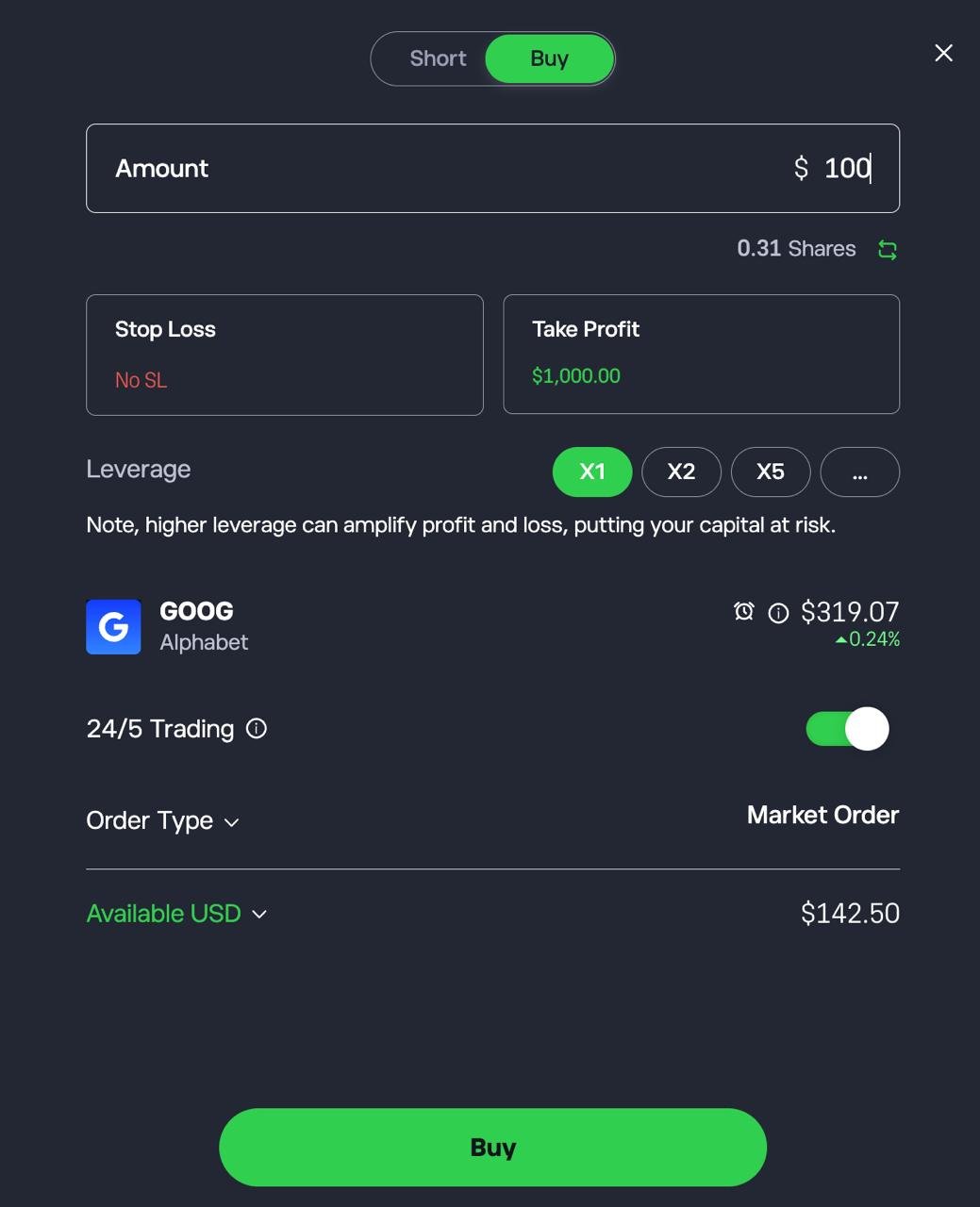
5. Set up and confirm your trade
Choose Buy or Short, enter the amount you want to invest, optionally set a Stop Loss and Take Profit, then tap Buy or Short to confirm.
How I scored and ranked the best trading platforms in the UK
This guide builds on the research behind my full Psyfi Money platform reviews. Here I’ve weighted it for one reader: a UK trader, often new to leverage, choosing where to trade CFDs, spread bets, forex or shares. Any Psyfi Money review rating shown for a platform is a separate assessment, and the weights below only decide the order on this page.
Our ranking is use-case weighted rather than based simply on the number of markets or trading tools. We give significant weight to costs, risk information and ease of getting started, which is why a simpler platform such as eToro can rank above a more advanced broker such as IG. eToro’s ticket doesn’t show maximum loss in pounds and it has no MT4, MT5 or TradingView, but it ranks first for beginners on ease of getting started and CopyTrader.
| Ranking factor | Weight | What I assessed |
|---|---|---|
| Trading costs | 25% | EUR/USD spreads (0.6 points at Capital.com, IG and Pepperstone up to 1.3 pips at Plus500), Pepperstone Razor’s £2.25 per lot per side, eToro’s $1–2 stock commission, FX from 0.15% to 0.7%, overnight funding, and inactivity fees (Plus500 after 3 months, CMC after 12) |
| Order tickets and risk tools | 20% | Whether margin, maximum loss in GBP and overnight cost appear before confirming; stop-loss, trailing and guaranteed stops, and how the guaranteed-stop premium is charged (refunded at CMC, charged only if triggered at IG, built into a wider spread at Plus500, not offered at Pepperstone) |
| Product range | 15% | Real shares, CFDs, spread betting and forex under one login; market counts from 1,350+ (Pepperstone) to 21,000+ (CMC) |
| Platforms and charting | 15% | TradingView, MT4, MT5, cTrader and ProRealTime access, CMC’s 115+ indicators and pattern scanner, XTB’s screeners |
| Ease of getting started | 15% | Time from application to first trade (12 minutes at Capital.com up to the next morning at Pepperstone), minimum deposits from £0 to £100, demo accounts, and how clearly real shares are kept apart from CFDs |
| Execution | 10% | Median fill, requotes and slippage across 50 orders each at Capital.com (27ms), Pepperstone (51ms), IG (88ms) and CMC (97ms) |
The comparison that separated the platforms most was the cost of the same £1-per-point EUR/USD trade, in normal hours and during a news release. It cost about 60p to open at Capital.com, IG and Pepperstone, 70p at CMC, 90p at XTB and £1.30 at Plus500. The spreads I tested around payrolls, the Bank of England decision and the FOMC roughly doubled. I also checked every ticket for margin, maximum loss and overnight cost.
Costs and risk tools take 45% of the weight because leveraged positions can lose money fast, and a newer trader needs to see the full cost and the worst case before opening one. Execution gets 10% because only four platforms were timed, and FCA authorisation, UK availability and a demo account were entry requirements rather than points. These weights set the order of this guide and don’t replace any wider Psyfi Money platform rating.
Trading platforms I considered but didn’t include
I also looked at seven other FCA-authorised platforms that UK traders often compare. Each one does something well, but either it isn’t built for leveraged trading or it didn’t beat a platform already on the list on the factors I weighted most: cost, order tickets and risk tools, platform choice and product range.
| Platform | Why I didn’t include it |
|---|---|
| Interactive Brokers | Excellent global share access, but less suited to the CFD/spread-betting focus of this guide. |
| Saxo | Strong multi-asset platform, but doesn’t offer UK spread betting and wasn’t part of my funded testing. |
| StoneX Trading | Recently transitioned from City Index; I’d like to test the new setup before including it. |
| Spreadex | Strong spread-betting specialist, but lacks real shares and third-party platforms. |
| Hargreaves Lansdown | Better suited to long-term investing than leveraged trading. |
| AJ Bell | Investment-focused rather than CFD/forex/spread-betting focused. |
| Freetrade | Share/ETF investing platform rather than a leveraged trading platform. |
Trading platform vs investment platform
Not every platform described as a “trading platform” is designed for the same type of activity. Some let you buy and own shares and ETFs, while others primarily offer CFDs, forex or spread betting. Before comparing fees, decide whether you want to own investments or speculate on short-term price movements. If owning investments is what you’re after, my guides to the best investment platforms and best investment apps in the UK are a better starting point.
| Details | Investing platform | Trading platform |
|---|---|---|
| Main goal | Long-term growth | Shorter-term price movements |
| Products | Shares, ETFs, funds | CFDs, forex, spread bets, shares |
| Leverage | Usually no | Often available |
| Main costs | Platform, dealing, FX | Spread, commission, FX, overnight funding |
| Key tools | Research, regular investing | Charts, orders, alerts, execution |
What is the best trading platform for beginners?
eToro is the best trading platform for beginners in my test. Buying a share took four taps, the demo account comes with $100,000 of virtual funds, and CopyTrader lets you copy experienced traders with a stop-loss on the whole copy. The trade-off is cost: stocks carry a $1–2 commission and USD trades cost 0.5% in FX. If you’re still learning how to trade and want to start with CFDs or spread betting, Capital.com is the better first step, because every ticket shows your margin, maximum loss and overnight fee before you confirm.
How to choose a trading platform in the UK
1. Products. Start with what you want to trade. In this comparison, spread betting is only available at IG, CMC Markets, Pepperstone and Capital.com, all of which also rank among the top spread betting platforms in the UK. For real shares and CFDs in one account, look at IG, eToro or XTB.
2. Regulation. Check the provider’s FCA number on the FCA register. FCA rules cap retail leverage and stop you losing more than your deposit. FSCS protection covers up to £85,000 if the firm fails, but not trading losses.
3. Spreads. The spread is usually your main cost, so if you trade currencies often it’s worth comparing the lowest-spread forex brokers. EUR/USD cost 0.6 points at Capital.com, IG and Pepperstone in my test, against 1.3 pips at Plus500, and most spreads roughly doubled around major news releases.
4. Commission. Most CFD and spread-betting accounts charge no commission. Raw-spread accounts like Pepperstone Razor charge £2.25 per lot per side instead, and eToro charges $1–2 per stock trade.
5. FX. Currency conversion ranged from 0.15% (Trading 212) to 0.7% (IG, Capital.com). On £10,000 of US shares, that’s £15 against £70 each way.
6. Overnight financing. Leveraged positions held overnight pay funding, so check whether the cost is shown before you confirm. In my test it was on the order ticket at Capital.com, eToro, IG, CMC Markets and Trading 212. At XTB and Plus500 I had to open the instrument details, and at Pepperstone it was in the MT5 specifications.
7. Order types. Check how guaranteed stops are charged. CMC refunds the premium if the stop isn’t triggered, IG and Capital.com only charge it if the stop is hit, Plus500 builds it into a wider spread, and Pepperstone doesn’t offer them. That makes the cost easy to see on CMC, though IG and Capital.com also only charge if the stop is hit. Plus500 builds the cost into a wider spread whether or not the stop is triggered.
8. Charting. IG, CMC, Pepperstone and Capital.com all connect to TradingView. Pepperstone adds MT4, MT5 and cTrader (it’s one of the leading MT4 brokers), and IG adds ProRealTime.
9. Execution. In my timed test, median fills ranged from 27ms (Capital.com) to 97ms (CMC). That matters for scalping, news trading and anyone learning how to day trade, not for swing trades.
10. Deposits and withdrawals. Minimum deposits ranged from £0 to £100. All four withdrawals I tested were free. Watch for inactivity fees, which start after only three months at Plus500.
11. Demo. Every platform here has a free demo account, and Plus500’s has no time limit. Use it to place the exact trade you’re planning, stop-loss included, before funding a live account.Pepperstone’s MT4 and MT5 demos expire after 60 days.
Are trading platforms safe in the UK?
Every platform in this guide is authorised by the FCA. FCA authorisation provides regulatory protections, but it does not remove the risk of losing money when trading.
FCA authorisation. Check the exact legal entity and its FRN on the FCA register before you deposit, so you don’t end up with a clone firm or an overseas sister company. The FCA also caps retail leverage at 30:1 on major forex pairs, 20:1 on major indices and 5:1 on shares.
Client money. FCA rules require brokers to keep your money in segregated client accounts, separate from the firm’s own money. If the broker fails, that money shouldn’t be used to pay its creditors.
FSCS. If an authorised firm fails and can’t return your money or assets, the FSCS may compensate eligible claims, usually up to £85,000 per person per firm for investment business. Whether you’re covered depends on which entity holds your account and which products you hold. It never covers losses from markets moving against you.
Negative balance protection. Retail CFD and spread-betting clients can’t lose more than the money in their account. A fast market can still wipe out your whole balance, though.
CFDs vs real shares. When you buy a real share, you own it. A CFD or spread bet is a leveraged contract with the broker, so you own nothing, losses are magnified, and most retail accounts lose money. On platforms that offer both, check which one the order ticket says you’re buying.
Trading platform taxes in the UK
Tax depends on your circumstances and the rules can change. This is only a quick overview.
Shares and CGT. Profits from selling shares are subject to Capital Gains Tax above the £3,000 annual exemption. Losses can be offset against gains.
Dividends. Dividends above the £500 dividend allowance are taxed at your dividend tax rate.
Stamp duty. Buying UK shares usually carries 0.5% stamp duty. It doesn’t apply to UK-listed ETFs, AIM shares, CFDs or spread bets.
ISA. Shares and ETFs held in a Stocks & Shares ISA are free of CGT and dividend tax, up to the £20,000 annual allowance. CFDs and spread bets can’t be held in an ISA.
Spread betting. Spread betting profits are currently free of CGT and stamp duty for most UK traders (depending on the nature of your activity and circumstances), but you can’t offset losses against other gains. HMRC may treat profits differently if trading is your main source of income.
CFDs. CFD profits are subject to CGT, but CFD losses can be offset against other gains. That’s the main tax reason some traders choose CFDs over spread betting.
FAQs
Which is the best trading platform in the UK?
It depends on how you trade. eToro is my top pick for beginners and copy trading. IG is the most complete all-round platform, with shares, CFDs, spread betting and 17,000+ markets.
What is the cheapest trading platform in the UK?
For real shares, Trading 212: £0 commission and 0.15% FX. For CFDs and spread betting, Capital.com, IG and Pepperstone, which all had 0.6-point EUR/USD spreads in my test.
What is the best trading platform for beginners?
eToro for buying shares and copying other traders. Capital.com if you want to learn CFDs or spread betting, because every ticket shows your margin and maximum loss before you confirm.
What is the best trading platform for forex?
Pepperstone. It had a 0.6-point EUR/USD spread, raw Razor spreads from 0.0 pips, a 51ms median fill, and MT4, MT5, cTrader and TradingView.
What is the best trading platform for CFDs?
Capital.com for beginners and IG for range. CMC Markets suits traders who want advanced charting.
Which trading platform has the lowest spreads?
In my test, Capital.com, IG and Pepperstone tied at 0.6 points on EUR/USD. Pepperstone Razor goes lower, from 0.0 pips, but adds £2.25 per lot per side.
Which UK trading platforms offer spread betting?
Out of these 8 I compared, IG, CMC Markets, Pepperstone and Capital.com
Which trading platforms offer MT4?
IG, CMC Markets, Pepperstone and Capital.com (Capital.com’s MT4 is CFD-only). Pepperstone and CMC also offer MT5.
Can I trade US shares from the UK?
Yes. Trading 212, IG, XTB and eToro all offer US shares. FX fees vary from 0.15% at Trading 212 to 0.7% at IG.
Are trading platforms FCA regulated?
Every platform in this guide is FCA authorised. Check the provider’s legal entity and FRN on the FCA register before depositing.
Are trading profits taxable in the UK?
Usually, yes. Share and CFD profits are subject to Capital Gains Tax above the £3,000 annual exemption. Spread betting profits are currently free of CGT for most traders, and shares held in an ISA are tax-free.
How much money do I need to start trading?
Very little. Minimum deposits range from £0 at CMC and XTB, £1 at Trading 212 and £20 at Capital.com, up to £100 at Plus500. Only trade with money you can afford to lose.
