

After comparing 7 UK ETF platforms, my top picks are InvestEngine for most long-term ETF investors and Trading 212 for anyone who also wants shares or USD-listed ETFs. InvestEngine charges £0 to hold and trade ETFs in DIY mode, adds no FX charges, and offers both an ISA and a SIPP with drawdown.
I compared the full first-year cost of holding ETFs, ISA and SIPP options, regular investing and automation, ETF choice, FX charges on non-GBP lines, and how clearly each platform shows that you’re buying the real ETF rather than a CFD.
- Social investing with real-time insights
- Ready-made portfolios for diversified investing
- Tax-free savings with a competitive 4.8% AER Cash ISA
Capital at risk. T&Cs apply.
How I tested and ranked these platforms
I funded a live UK account on each platform in September 2026 and ran the same tests on all seven. My five standard ETFs were VWRP, CSPX (or its GBP line CSP1), SWDA, AGBP and EQQQ. On every platform, I searched for all five plus 10 less common ETFs, priced VWRP on a live order ticket, and made a £50 withdrawal.
On five platforms, I also priced £1,000 of CSPX. It cost between £1.50 and £12.50 in FX and dealing, while the same exposure through CSP1 cost £0 on InvestEngine.
- 7 funded UK accounts
- 15 ETFs searched on every platform
- VWRP priced on every platform, and CSPX on five
- First-year costs modelled on £10,000 plus £100 a month
- A £50 withdrawal from every platform
Every figure in the cost tables is labelled tested, modelled or published, and each review says which costs came from an order ticket rather than a completed trade.
I weighted holding costs 30%, tax wrappers 20%, regular investing 15%, ETF choice 15%, FX 10% and buying the right product 10%. FCA authorisation, FSCS cover, a Stocks & Shares ISA and access to the real ETF rather than a CFD were requirements, not scoring factors. InvestEngine tied with Trading 212 on cost but came first for its SIPP drawdown and automation.
Best ETF platform quick comparison
| Platform | Best for | ETF dealing | FX fee | Platform fee | ISA | SIPP |
|---|---|---|---|---|---|---|
| InvestEngine | Most ETF investors | £0 DIY | None (GBP-listed ETFs only) | £0 DIY; 0.25% Managed | ✓ | ✓ (with drawdown) |
| Trading 212 | ETFs and shares in one app | £0 | 0.15% | £0 | ✓ | ✓ (no drawdown yet) |
| IG | ETF research and tools | £0 with instant FX conversion | 0.7% | £0 GIA and ISA; SIPP £210/yr | ✓ | ✓ |
| XTB | Active, hands-on ETF investors | £0 up to €100,000/month; 0.2% (min £10) above | 0.5% | £0 | ✓ | — |
| AJ Bell | Larger ISA and SIPP portfolios | £5 online; regular investing free | 0.75% on the first £10,000 | 0.25%, capped at £42/yr (ISA) and £120/yr (SIPP) | ✓ | ✓ (with drawdown) |
| eToro | Beginners and multi-asset investing | £0 commission; spread applies | 0.75% (lower with eToro Club) | £0 | ✓ | — |
| Interactive Brokers | Advanced and global ETF investors | £3 per UK trade (fixed pricing) | 0.002% (min $2) | £0; ISA £3/month minimum activity fee | ✓ | Via third-party administrators |
Published pricing, checked September 2026. Tested order-ticket costs are in the cost comparison below.
Which ETF Platform Is Best For You?
| If you want… | Consider | Why |
|---|---|---|
| Most ETF investors | InvestEngine | No platform, dealing or FX fees in DIY mode, an ISA and a SIPP with drawdown, and the best automation I tested. |
| ETFs and shares in one app | Trading 212 | £0 to hold ETFs, the lowest FX of the app-first platforms (0.15%), an ISA and SIPP, and a Pie that took under two minutes to set up. |
| ETF research and tools | IG | Its web screener filters 3,000+ ETFs by ISA eligibility, the best screener in my tests. |
| Active, hands-on ETF investing | XTB | £0 commission up to €100,000 a month, xStation charting and an ETF scanner, and interest on uninvested ISA cash. |
| Larger ISA or SIPP portfolio | AJ Bell | ISA custody is capped at £42 a year, alongside a SIPP with drawdown. |
| Beginner-friendly multi-asset investing | eToro | 22 minutes from sign-up to owning an ETF, with shares, bonds and funds in the same app. |
| Global ETF access | Interactive Brokers | The only platform to find all 10 of my test ETFs, with an FX commission of 0.002% ($2 minimum). |
Reviews of the Best ETF Platforms in the UK
Below is a detailed breakdown of the best ETF platforms in the UK, with key fees, what I found when testing each one, and who each platform suits.
1. InvestEngine – Best for most ETF investors
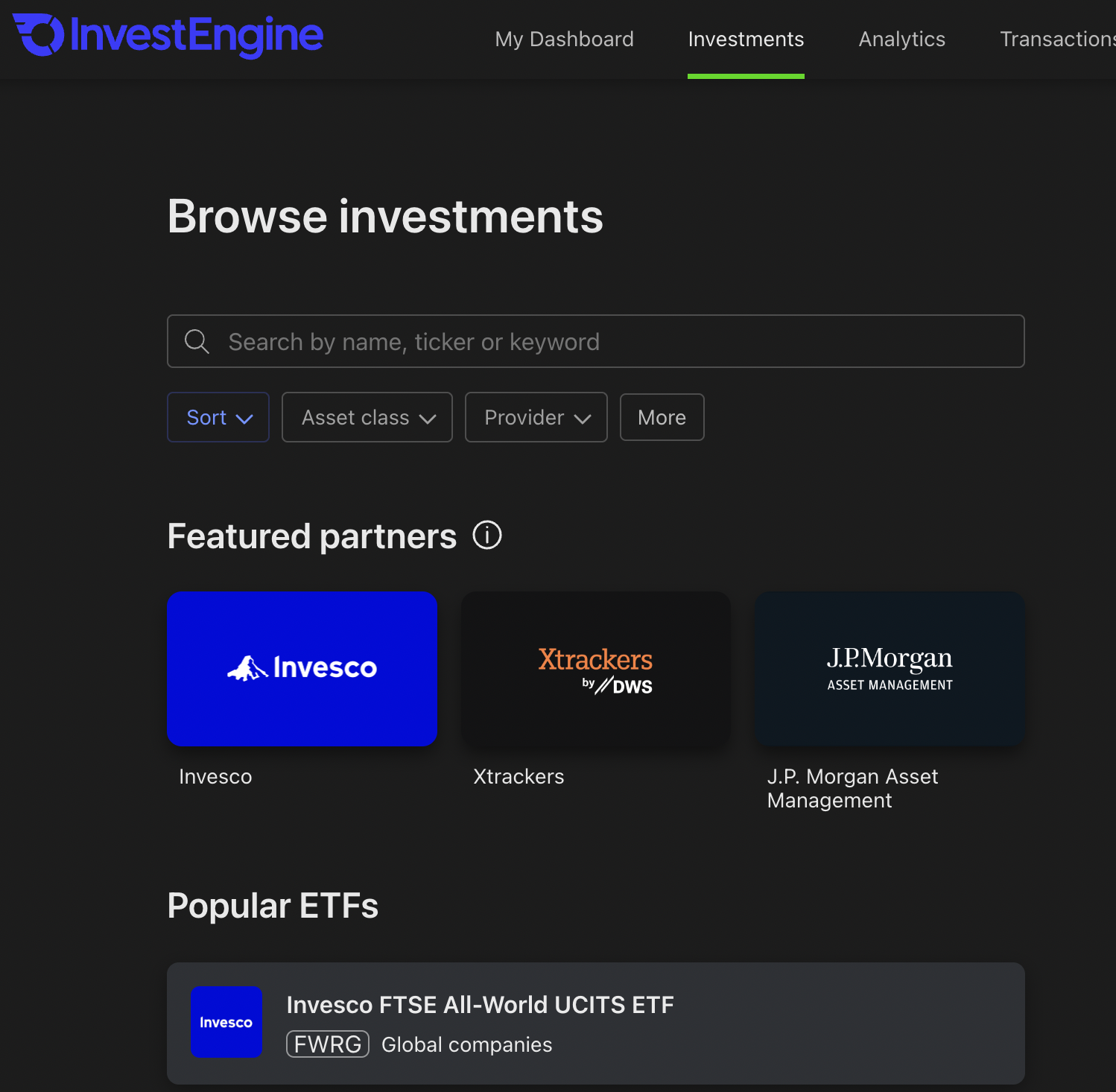
InvestEngine is my top pick for most ETF investors because it scores best on the factors that carry most weight in this ranking: cost of holding, tax wrappers and automation.
It only offers ETFs, and in DIY mode it charges nothing to hold or trade them in a GIA, ISA or SIPP, and the SIPP offers drawdown. It’s the cheapest way on this list to run a long-term ETF portfolio, and its automation is the best here.
The trade-off is scope and speed: there are no shares, trusts or funds, orders go through dealing windows rather than live, and uninvested cash earns no interest.
| Feature | Information |
|---|---|
| Best for | Most ETF investors, especially long-term DIY investors who only want ETFs |
| UK entity | InvestEngine (UK) Limited |
| FCA status | FCA-authorised (FRN 801128) |
| ETFs | 700+, GBP-listed only. Found 6 of my 10 test ETFs |
| Minimum investment | £100; SIPP £100 then £50/month or £20/week |
| ETF dealing fee | £0 |
| Platform fee | £0 DIY; 0.25% a year for Managed portfolios |
| FX fee | None |
| Accounts | GIA, Stocks & Shares ISA, SIPP (drawdown available; personal contributions only) |
| Fractional ETFs | Yes |
| Automation | Savings Plans, AutoInvest, one-click rebalancing |
| FSCS | Eligible investments up to £85,000 |
| Key differentiator | £0 platform cost across ISA and SIPP, with automatic rebalancing |
What I tested: In September 2026, I used an InvestEngine DIY Stocks & Shares ISA on the web platform on a MacBook Air, then in the app on an iPhone 16. I deposited £1,000, built a 60/25/15 portfolio of VWRP, the GBP line of iShares Core S&P 500 (CSP1) and AGBP, set a £500 monthly Savings Plan with AutoInvest, rebalanced after drift, and withdrew £50.
Test results (September 2026):
- £1,000 deposit arrived in about 20 minutes; all five standard ETFs found (CSP1 as the S&P 500 line)
- Order placed at 9:40am filled in the afternoon dealing window, about 4.5 hours later
- Only cost on the purchase: a spread of about 0.05%
- One tap on Rebalance took the portfolio from 55/25/20 back to 60/25/15, at no charge
- Found 6 of the 10 ETFs on my breadth list
- £50 withdrawal took two working days
What was it like building an ETF portfolio on InvestEngine?
InvestEngine is the cost benchmark for this page, so I used it the way a monthly investor would. My £1,000 deposit arrived in about 20 minutes. The filters for asset class, provider and accumulating or distributing are simple, and each ETF page shows the OCF upfront. I found all five standard ETFs, using CSP1 because there’s no USD line.
I placed the order at 9:40am. It didn’t fill until the afternoon dealing window, about four and a half hours later. InvestEngine batches orders rather than executing live. A monthly investor won’t care, but a trader will. The only cost on the purchase was a spread of about 0.05%.
Automation is where InvestEngine beats the rest. I set a £500 monthly Savings Plan, and AutoInvest spreads every deposit across the three ETFs at target weights, with fractional units so every pound is invested. I let the portfolio drift to 55/25/20, and one tap on Rebalance brought it back to 60/25/15 at no charge. My £50 withdrawal took two working days.
How much does InvestEngine cost?
At platform level in DIY mode, nothing: no platform fee, no dealing fee and no FX. You pay only each ETF’s ongoing charge, which comes out of the fund. For my portfolio, with VWRP at 0.19%, CSP1 at 0.07% and AGBP at 0.10%, the blend is about 0.15% a year. That’s roughly £15 on £10,000, and all of it goes to the fund managers.
Is InvestEngine’s ETF range big enough?
It’s enough for investing in index funds through ETFs, but not for niche exposure. It had six of the 10 less common ETFs on my breadth list, fewer than any platform here except eToro.
Who is InvestEngine best for?
InvestEngine is best for investors who want to buy a handful of index ETFs monthly, rebalance once a year, and hold them in an ISA or SIPP at close to zero platform cost.
Who should consider an alternative to InvestEngine?
If you want individual shares alongside ETFs, look at Trading 212 or AJ Bell. If you want niche funds, look at IBKR. If you like to trade during the day, InvestEngine’s dealing windows won’t suit you, and one of the leading day trading platforms will fit better.
Pro & cons
- £0 platform, dealing and FX costs in DIY GIA, ISA and SIPP
- Best automation and one-click rebalancing in my tests
- SIPP with drawdown and no account fee
- ETFs only
- Best automation and one-click rebalancing in my tests
- No interest on uninvested cash; no employer SIPP contributions
Read the complete InvestEngine review here.
2. Trading 212 – Best for ETFs and shares in one app
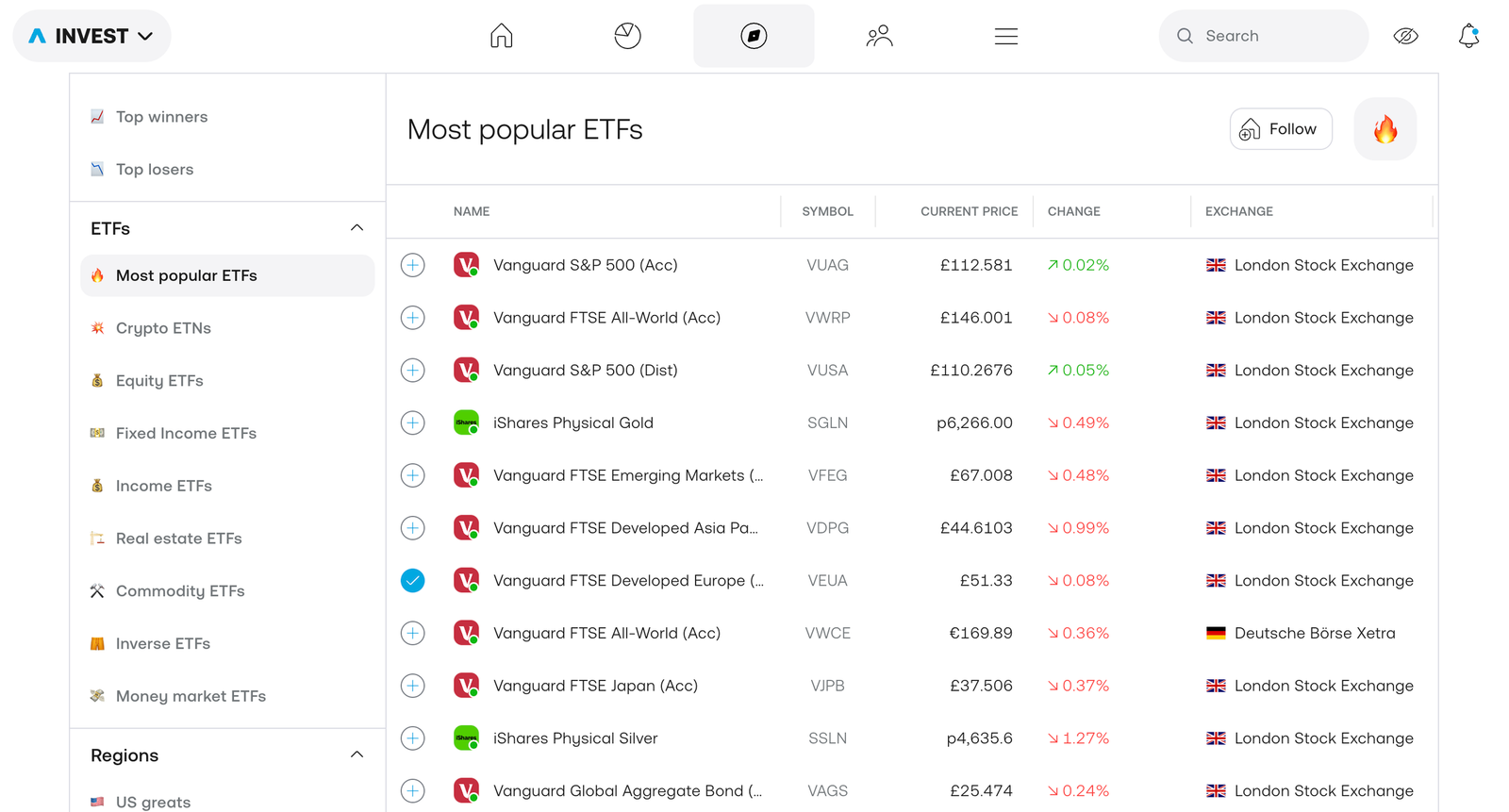
Trading 212 finished a close second to InvestEngine, and it’s the better choice if you want shares or USD-listed ETFs alongside your index funds. It charges no commission and no custody fee, and its only charge is 0.15% FX, the lowest of the most popular investment apps I tested.
Pies and AutoInvest make it one of the easiest ways to automate £100 a month into ETFs. The trade-off is research: there’s no dedicated ETF screener, and the new SIPP doesn’t offer drawdown yet.
| Feature | Information |
|---|---|
| Best for | Investors who want ETFs and shares in one app, especially small, monthly and automated ones |
| UK entity | Trading 212 UK Ltd |
| FCA status | FCA-authorised (FRN 609146) |
| ETFs | Around 2,000. Found 7 of my 10 test ETFs |
| Minimum investment | £1 deposit and £1 order |
| ETF dealing fee | £0 (exchange fees and taxes can still apply) |
| Platform fee | £0 in Invest, ISA and SIPP |
| FX fee | 0.15%, the only fee Trading 212 charges |
| Accounts | Invest, Stocks & Shares ISA, Cash ISA, SIPP |
| SIPP | Administered by Platform One; no platform, dealing or trustee fee; no drawdown as of September 2026 |
| Fractional ETFs | Yes |
| Automation | Pies + AutoInvest |
| FSCS | Eligible investments up to £85,000 |
| Key differentiator | Fully invested, fractional ETF Pies from £1 |
What I tested: In September 2026, I used a Trading 212 Stocks & Shares ISA in the app on a Google Pixel 8, and viewed the Pie schedule on the web platform. I deposited £100 by bank transfer, built an 80/20 Pie of VWRP and AGBP with a £100 monthly AutoInvest, took a £1,000-equivalent CSPX (USD) order to the Review Order screen to check the FX display, and withdrew £50.
Test results (September 2026):
- £100 deposit arrived in about three minutes
- VWRP was the top search result, labelled with ticker, exchange and GBP
- 80/20 Pie with £100 monthly AutoInvest built in 1 minute 40 seconds, the quickest setup I timed
- CSPX: £1.50 FX on £1,000 shown as its own line before confirming
- Searching “S&P 500” returned several listings in different currencies; no benchmark on the instrument page
- £50 withdrawal arrived the next working day
What was it like investing in ETFs on Trading 212?
I tested Trading 212 as a £100-a-month investor, because that’s who it suits best. The £100 deposit arrived in about three minutes. When I searched for Vanguard FTSE All-World, VWRP was the top result, labelled with ticker, exchange and GBP.
Building the Pie took 1 minute 40 seconds, the quickest setup I timed: 80% VWRP, 20% AGBP, with AutoInvest set for £100 on the first of each month. Fractional ownership means the whole £100 is invested at the exact split. New deposits top up whichever holding is underweight first, so the Pie rebalances gradually without selling anything.
On CSPX, the Review Order screen showed the £1.50 FX charge as its own line before confirming. That’s the lowest conversion fee of the app-first brokers here. The weak spot was research. Searching “S&P 500” returned several listings in different currencies with little to separate them.
The instrument page showed OCF and fund size but no benchmark, and accumulating or distributing appeared only in the fund name. A beginner could easily buy a USD line without noticing. My £50 withdrawal arrived the next working day.
How much does Trading 212 charge for ETFs?
Trading 212 charges no dealing commission or custody fee and 0.15% FX. A GBP-listed ETF costs nothing from the platform, only the ETF’s own ongoing charge. A USD-listed ETF costs £1.50 per £1,000 in FX, or £15 on £10,000.
Is the Trading 212 SIPP worth using?
Yes, for building a pot, though you can’t draw from it yet. There’s no platform, dealing or trustee fee, only the 0.15% FX. The SIPP is administered by Platform One. As of September 2026 there’s no drawdown, so taking an income means transferring out.
Who is Trading 212 best for?
Trading 212 is best for investors starting with £50–£500 a month who want to automate a few ETFs and pay almost nothing.
Who should consider an alternative to Trading 212?
If you choose ETFs by screening on index, fund size and holdings, research on IG. If you’re approaching retirement and need drawdown, AJ Bell or InvestEngine is the better SIPP.
Pro e cons
- £0 commission and custody; 0.15% FX is the lowest of the app-first brokers
- Quickest automation setup I timed (1 minute 40 seconds)
- FX shown as its own line before you confirm
- No dedicated ETF screener; benchmark not shown on instrument pages
- SIPP has no drawdown yet
- Support is app and email only
Read the complete Trading 212 review here.
3. IG – Best for ETF research and tools
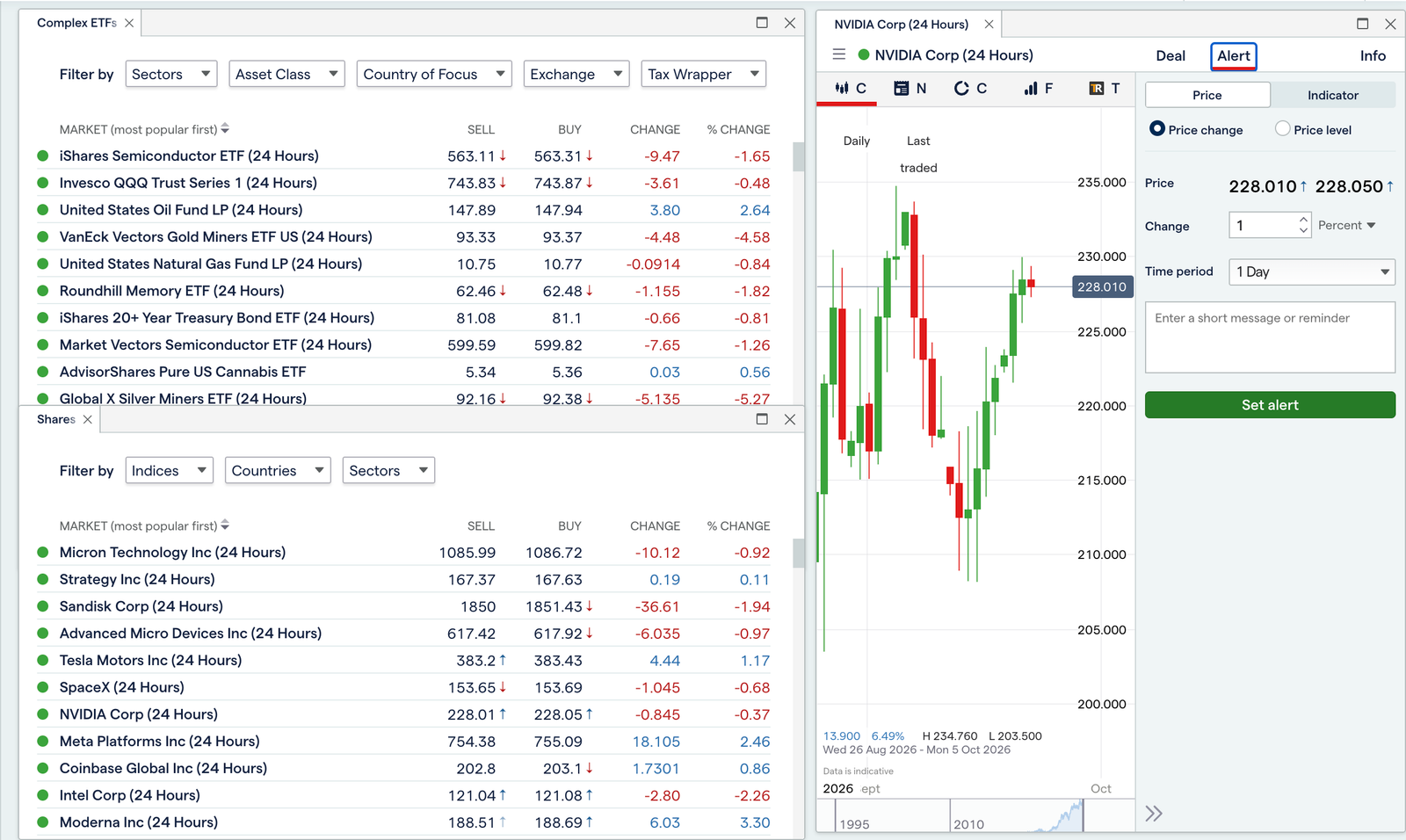
IG has the best ETF research tools on this list. Its web screener filters 3,000+ ETFs by asset class, country and ISA eligibility, and dealing is commission-free in the GIA, ISA and SIPP. The trade-offs are 0.7% FX on non-GBP lines, a fixed £210-a-year SIPP admin fee, no fractional ETFs, and CFD and spread-betting accounts in the same ecosystem.
| Feature | Information |
|---|---|
| Best for | Research-led and experienced ETF investors |
| UK entity | IG Markets Ltd |
| FCA status | FCA-authorised (FRN 195355) |
| ETFs | 3,000+, filterable by ISA eligibility. Found 9 of my 10 test ETFs |
| Minimum investment | One whole ETF unit (no fractional ETFs) |
| ETF dealing fee | £0 with instant FX conversion; choosing manual conversion removes commission-free dealing |
| Platform fee | £0 in GIA and ISA (custody fee removed January 2026); SIPP £210/yr to Options UK |
| FX fee | 0.7% (a temporary 0.49% promotional rate had ended by my test) |
| Accounts | Share dealing GIA, Stocks & Shares ISA, Junior ISA, SIPP |
| Fractional ETFs | No (fractional shares on stocks only) |
| Cash interest | 3.75% AER variable up to £100,000, subject to an activity condition |
| FSCS | Eligible investments up to £85,000 |
| Key differentiator | Web ETF screener with ISA-eligibility filter |
What I tested: In September 2026, I used an IG share dealing Stocks & Shares ISA on IG’s web platform on a MacBook Pro and the IG app on an iPhone 15. I deposited £1,500 by debit card and screened for ISA-eligible, global, accumulating equity ETFs. I priced £1,000-equivalent orders on VWRP and CSPX, searched for an S&P 500 tracker on mobile, tried a £50 VWRP order and withdrew £50.
Test results (September 2026):
- £1,500 debit card deposit credited instantly
- Web screener (ISA-eligible, equity, global, accumulating) returned a shortlist of 38 ETFs
- VWRP: £0 plus a spread of about 0.07%; CSPX: £7.00 FX (0.7%) on £1,000
- Mobile search for an S&P 500 tracker: 3 of the first 10 results were leveraged or inverse ETPs
- I tried to invest £50 in VWRP and the order was rejected: IG deals ETFs in whole units only, and one unit cost about £125
- £50 withdrawal arrived the next working day
What was it like buying ETFs on IG?
IG is where I’d choose ETFs, so I started in the web screener, not the app. My £1,500 debit card deposit was credited instantly. Filtering for ISA-eligible, equity, global and accumulating gave a shortlist of 38 ETFs, which I sorted by ongoing charge.
OCF and fund size were shown in the results, and the benchmark was one click away on each factsheet. That shows how many near-identical global trackers exist, and comparing their costs side by side before buying is research most platforms here don’t let you do.
VWRP cost nothing beyond a spread of about 0.07%. On CSPX, the order ticket showed a 0.7% FX fee, £7.00 on £1,000, so the 0.49% promotion had ended by my test date.
The mobile app, which IG also pitches as one of the top trading apps, was weaker for ETF buyers. Searching for an S&P 500 tracker returned leveraged and inverse ETPs among the plain UCITS trackers: three of the first 10 results. They were labelled, but not prominently. My £50 VWRP order was rejected, because IG deals ETFs in whole units only and VWRP was about £125. My £50 withdrawal arrived the next working day.
How much does IG charge for ETFs?
IG charges no commission on ETFs with instant currency conversion and no platform fee in the GIA or ISA. FX on non-GBP lines is 0.7%: £7 on £1,000 or £70 on £10,000. The SIPP adds a flat £210 a year to Options UK. That’s 1.05% of a £20,000 pension, but only about 0.1% of £200,000.
What should you check before buying an ETF on IG’s app?
Check the product name for “3x”, “Short” or “Leveraged”, and check you’re in the share-dealing account, not a CFD or spread-betting account. IG is also one of the top spread betting platforms, so both sit alongside your ISA in the same app.
Who is IG best for?
IG is best for investors who compare ETFs by index, region and cost before buying and want one platform for their ISA and general account.
Who should consider an alternative to IG?
Anyone investing £50 a month into a single tracker, or with a small pension, will pay less at Trading 212 or InvestEngine. Anyone who regularly buys USD lines will pay less FX at Trading 212 or IBKR.
Pro e Cons
- Best ETF screener in my tests, including ISA eligibility
- 3,000+ ETFs at £0 commission
- 3.75% AER on uninvested cash (variable, activity condition)
- Best ETF screener in my tests, including ISA eligibility
- 3,000+ ETFs at £0 commission
- 3.75% AER on uninvested cash (variable, activity condition)
Read the complete IG review here.
4. XTB – Best for active, hands-on ETF investors
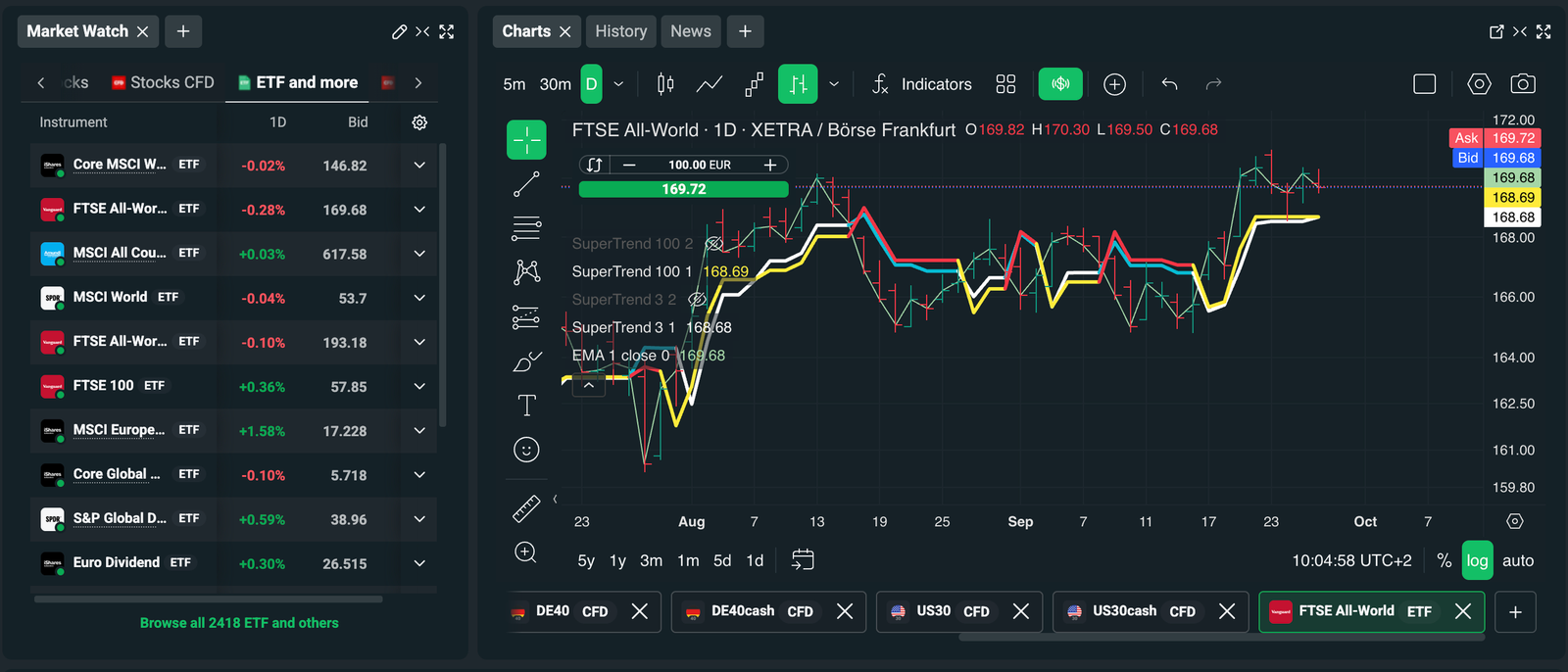
XTB combines zero-commission ETF dealing up to €100,000 a month with xStation, the most capable charting of the app-first brokers here, plus a solid ETF scanner. There’s no platform fee, and uninvested ISA cash earns interest. The trade-off is FX: every non-GBP purchase and sale costs 0.5%, so the listing you pick decides whether XTB is cheap. There’s also no SIPP.
| Feature | Information |
|---|---|
| Best for | Cost-conscious, hands-on ETF investors |
| UK entity | XTB Limited |
| FCA status | FCA-authorised (FRN 522157) |
| ETFs | About 1,300 in the app; ISA page lists 8,700+ stocks and ETFs. Found 7 of my 10 test ETFs |
| Minimum investment | No minimum deposit; £1 minimum order |
| ETF dealing fee | 0% up to €100,000 monthly turnover; 0.2% (minimum £10) above that |
| Platform fee | £0 |
| FX fee | 0.5% |
| Accounts | General investment account; Flexible Stocks & Shares ISA; no SIPP |
| Fractional ETFs | Yes, from £1 |
| Automation | Investment Plans (automated ETF portfolios) |
| Cash interest | 4% AER variable on uninvested ISA cash |
| FSCS | Eligible investments up to £85,000 |
| Key differentiator | ETF scanner and xStation charting at zero commission |
What I tested: In September 2026, I used an XTB Flexible Stocks & Shares ISA, researching on xStation on a Windows desktop and placing orders in the XTB app on an iPhone 16. I deposited £2,000 by Faster Payments and compared £1,000 order tickets for similar exposure on GBP, USD and EUR listings (VWRP, CSPX and SWDA’s EUR line). I also set up a 70/30 Investment Plan and withdrew £50.
Test results (September 2026):
- £2,000 Faster Payments deposit arrived in 11 minutes
- xStation’s ETF scanner found all five standard ETFs
- Searching “iShares Core S&P 500” returned four listings across GBP, USD and EUR
- VWRP (GBP): £0 plus a spread of about 0.06%; USD and EUR lines: £5.00 FX each on £1,000
- 70/30 Investment Plan set up in about four minutes; the first £200 split £140/£60 to the penny
- £50 withdrawal requested before 1pm arrived the same day
What was it like buying ETFs on XTB?
I wanted to answer one question: how cheap is XTB once FX is counted? My £2,000 Faster Payments deposit arrived in 11 minutes. I started in xStation’s ETF scanner, which filters by region, issuer and accumulating or distributing, and it found all five of my standard ETFs.
Searching “iShares Core S&P 500” returned four listings in GBP, USD and EUR. The currency is shown in the results, but it’s small. VWRP, the GBP line, cost £0 plus a spread of about 0.06%. The USD and EUR lines each showed £5.00 of FX on £1,000 before confirming. That’s the key point with XTB: most popular UCITS ETFs have a GBP line on the London Stock Exchange, and if you pick it, the 0.5% never applies.
Next I built an Investment Plan with 70% VWRP and 30% of a global bond ETF (AGBP), a low-cost way to invest in bonds. It took about four minutes, and the first £200 was split £140/£60 to the penny with fractional units. It works, but it’s less central to the app than Trading 212’s Pies. Charting, sentiment and market news put xStation on a par with the leading trading platforms, but a buy-and-hold ISA investor won’t need most of it. The mobile app is calmer. My £50 withdrawal, requested before 1pm, arrived the same day.
How much does XTB charge for ETFs?
XTB charges 0% commission up to €100,000 of monthly turnover and 0.2% (minimum £10) above that, with no platform fee. FX is 0.5% on non-GBP lines: £5 on £1,000, or £50 on £10,000 when you buy and roughly the same again when you sell. Withdrawals are free.
Is it easy to buy the wrong product on XTB?
Only outside the ISA. XTB also sells CFDs on ETFs, which let you speculate on the price without owning the fund, a different skill covered in how to trade CFDs. The ISA only allows the real ETF, but in a general account I’d check the instrument type and currency on every order.
Who is XTB best for?
XTB is best for cost-conscious ETF investors who trade or rebalance often, want real screening and charting tools, and stick to GBP listings.
Who should consider an alternative to XTB?
Anyone who needs a pension wrapper should look at Trading 212 or InvestEngine. The same goes for anyone who wants a simple set-and-forget app, or who regularly buys USD-listed ETFs, where Trading 212’s 0.15% FX is cheaper.
Pro e cons
- £0 commission up to €100,000 a month and no platform fee
- ETF scanner found all five test ETFs, with acc/dist filtering
- 4% AER on uninvested ISA cash (variable)
- 0.5% FX on non-GBP lines, both ways
- No SIPP
- CFDs sit alongside real ETFs in a general account
Read the complete XTB review here.
5. AJ Bell – Best for larger ISA and SIPP portfolios
AJ Bell costs more to hold ETFs than the app-first brokers, but it’s the most complete traditional platform here. You get an ISA, a SIPP with drawdown, a LISA and a Junior ISA, with funds and trusts alongside ETFs, and phone support that can answer pension questions.
The trade-off is cost on small portfolios: £5 per one-off deal and 0.25% custody, although the custody is capped at £42 a year in the ISA and regular investing has been free since May 2026.
| Feature | Information |
|---|---|
| Best for | Larger ISA and SIPP portfolios with ETFs alongside funds and trusts |
| UK entity | AJ Bell Securities Limited |
| FCA status | FCA-authorised (FRN 155593) |
| ETFs | 1,000+ across UK, US and European exchanges. Found 8 of my 10 test ETFs |
| Minimum investment | £25/month or £500 lump sum |
| ETF dealing fee | £5 online (£3.50 after 10+ share deals the previous month); regular investing free since May 2026 |
| Platform fee | 0.25% on shares and ETFs, capped at £42/yr in the ISA and £120/yr in the SIPP |
| FX fee | 0.75% on the first £10,000, tiered lower above |
| Accounts | Stocks & Shares ISA, Lifetime ISA, Junior ISA, SIPP with drawdown, Dealing account |
| Fractional ETFs | No |
| Support | Phone, email and secure message |
| FSCS | Eligible investments up to £85,000 |
| Key differentiator | £42/yr ISA custody cap plus the full UK wrapper range |
What I tested: In September 2026, I used an AJ Bell Stocks & Shares ISA and SIPP on AJ Bell’s web platform on a Windows laptop, with the app on an iPhone 16 for monitoring. I deposited £10,000 and bought VWRP as a lump sum, then set up £100 a month of regular investing. I priced a £1,000-equivalent CSPX order to check FX, reviewed factsheets for all five standard ETFs, phoned support with a fees question and withdrew £50.
Test results (September 2026):
- £10,000 bought 79 whole units of VWRP at about £125 each; £120 was left in cash
- Lump sum: £5 dealing charge plus a spread of about 0.06%; the £100 monthly regular investment showed no dealing charge
- CSPX: £12.50 in total on £1,000 (£5 dealing + £7.50 FX)
- Phone support answered in six minutes; the answer didn’t mention the ETF’s own ongoing charge
- £50 withdrawal took two working days
What was it like buying ETFs on AJ Bell?
It’s the traditional way to buy. There’s no fractional dealing, so my £10,000 bought 79 whole units of VWRP at about £125 each, and £120 was left in cash. The confirmation showed the £5 dealing charge, and the spread was about 0.06%. The £100 monthly regular investment into VWRP showed no dealing charge, which confirms the May 2026 fee cut.
The web factsheets were the most thorough on this list, with OCF, benchmark, top holdings and accumulating or distributing all on one page. The app is simpler, and its charting is basic. A £1,000 CSPX order ticket showed the other side of the costs: £12.50 in total on £1,000, made up of £5 dealing and £7.50 FX at 0.75%.
I also phoned support with a standard question: what would £500 a month into a global UCITS ETF in an ISA cost? I got through in six minutes. The answer covered free regular investing, 0.25% custody and the £3.50 monthly cap, and noted that FX wouldn’t apply to a GBP-listed ETF. It didn’t mention the ETF’s own ongoing charge. My £50 withdrawal took two working days.
How much does AJ Bell cost to hold ETFs for a year?
About £31 in year one for a £10,000 lump sum plus 12 × £100 regular investments. That’s £5 of dealing and about £26 of custody at 0.25%, under the £42 cap. Trading 212 or InvestEngine would cost £0 on a GBP-listed ETF.
The cap is what makes AJ Bell competitive for larger portfolios. Once your ETFs pass about £16,800, custody stops growing, so at £100,000 it’s 0.04% a year. At £5,000, AJ Bell is the most expensive platform here for a buy-and-hold investor apart from the IBKR ISA, whose £3 monthly minimum comes to £36 a year.
Who is AJ Bell best for?
AJ Bell is best for investors who want ETFs, funds and a SIPP with drawdown on one established platform, with a portfolio big enough for the £42 cap to help.
Who should consider an alternative to AJ Bell?
Anyone building a small ETF portfolio where cost comes first should look at Trading 212 or InvestEngine. Anyone who tops up or rebalances often with one-off trades will find the £5 dealing charge adds up.
Pro e contro
- Full wrapper range, including a SIPP with drawdown
- £42/yr ISA custody cap and free regular investing
- Most detailed ETF factsheets in my tests; phone support answered in 6 minutes
- Full wrapper range, including a SIPP with drawdown
- No fractional ETFs
- 0.75% FX on the first £10,000
Read the complete AJ Bell review here.
6. eToro – Best for beginners and multi-asset investing
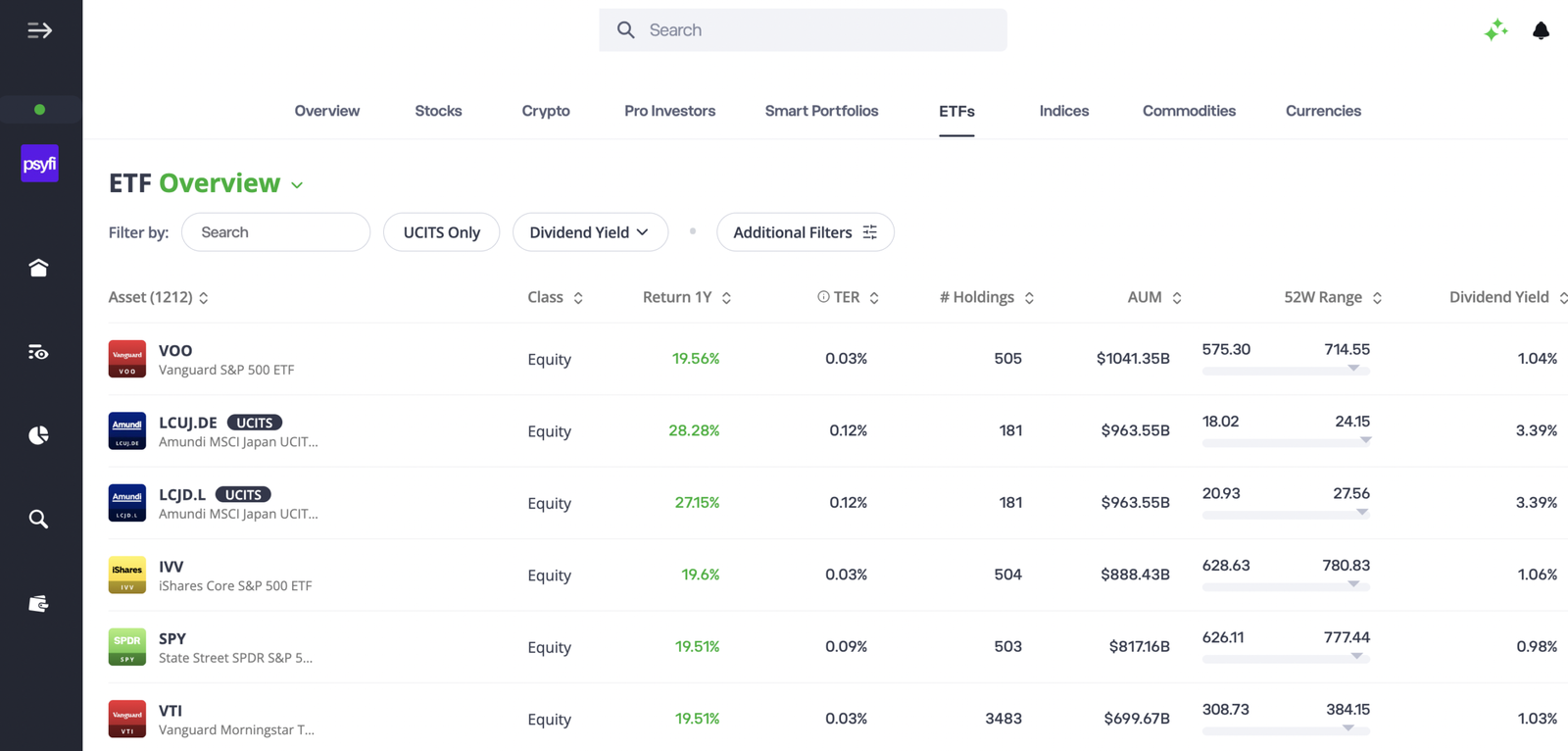
eToro is the easiest place on this list to go from sign-up to owning a real ETF, and the only one where you can see what other investors hold before you buy, which puts it among the top copy trading platforms. It charges no ETF commission and no custody fee.
The trade-off is dollars: converting to USD from the main account costs 0.75%, there’s no SIPP, and you need to check each order ticket to make sure you’re buying the real ETF, not a CFD.
| Feature | Information |
|---|---|
| Best for | Beginners and multi-asset investors buying London-listed ETFs |
| UK entity | eToro (UK) Ltd |
| FCA status | FCA-authorised (FRN 583263) |
| ETFs | About 750; ISA offers 1,000+ shares, ETFs, bonds and funds combined. Found 5 of my 10 test ETFs |
| Minimum investment | $50 first deposit (about £40) |
| ETF dealing fee | £0 commission; market spread applies |
| Platform fee | £0 on the main account; £0 in the Stocks & Shares ISA since 29 July 2026 |
| FX fee | 0.75% GBP↔︎USD from the GBP account, lower with eToro Club; 0.70% on non-GBP assets in the ISA |
| Accounts | Investing account; Cash, DIY and Managed ISAs (powered by Moneyfarm); no SIPP |
| Fractional ETFs | Yes |
| Mobile app | iOS and Android; ISA runs as a separate Moneyfarm-powered flow in the app |
| FSCS | Eligible investments up to £85,000 |
| Key differentiator | CopyTrader and public investor portfolios |
What I tested: In September 2026, I used an eToro (UK) GBP account in the eToro app on an iPhone 15, and checked the order ticket on desktop. I deposited £500 by Open Banking, made my first ETF purchase, priced £1,000-equivalent orders of Vanguard FTSE All-World (VWRP) and iShares Core S&P 500 (CSPX, USD), checked the CFD label at 1x and 2x, filtered CopyTrader for low-risk investors, opened the DIY ISA and withdrew £50.
Test results (September 2026):
- Sign-up to first ETF purchase: 22 minutes, including the ID check
- £500 Open Banking deposit arrived in about two minutes
- VWRP was the first search result, marked LSE and GBP; it cost £0 plus a spread of about 0.08%
- CSPX (USD): £7.50 conversion fee on £1,000 shown before confirming
- Switching the ticket from 1x to 2x added a “CFD” tag; it disappeared again at 1x
- DIY ISA took nine more minutes to open; £50 withdrawal arrived the next working day, no fee
What was it like buying ETFs on eToro?
eToro got me from sign-up to owning an ETF faster than any other platform I tested: 22 minutes, including the ID check. I funded the GBP account by Open Banking and the £500 arrived in about two minutes. That GBP account is what makes eToro workable for UK ETF investors. From it, a London-listed ETF needs no currency conversion.
I searched “Vanguard FTSE All-World” and the London-listed VWRP came up first, marked LSE and GBP. Before pressing Buy, I switched the ticket from 1x to 2x. A “CFD” tag appeared straight away, and it disappeared again when I went back to 1x. That tag is the first thing I’d tell a beginner to look for. eToro says leveraged and short positions open as CFDs, and some unleveraged buys can too.
VWRP cost nothing beyond a spread of about 0.08%. CSPX, the USD line, showed a £7.50 conversion fee on £1,000 before confirming, and I’d pay it again when selling. I also filtered Popular Investors by a risk score of 3 or lower. Six of the top 10 held mostly broad index ETFs, which was a useful sanity check on how others split world, US and bond exposure. Two of them also held small CFD positions.
The ISA took nine more minutes to open. It has its own declarations and sits in a separate tab rather than the main portfolio view. My £50 withdrawal from the GBP account arrived the next working day, with no fee.
How much does eToro charge for ETFs?
eToro charges no commission on ETFs and no custody fee, so a GBP-listed ETF costs only the market spread. Converting to USD costs 0.75% from the main account, before any Club discount. That’s £7.50 on £1,000 and £75 on £10,000, charged again when you sell. Inside the ISA, non-GBP assets carry 0.70%. Withdrawals from the GBP account are free, while the USD account charges $5.
Can you buy a real ETF on eToro, not a CFD?
Yes, provided you buy at 1x without leverage and don’t go short. Any position that opens as a CFD is labelled “CFD” in the trade window. Check for that label on every ticket, and remember that CopyTrader copies a trader’s whole portfolio, CFDs included.
Who is eToro best for?
eToro is best for beginners putting a few hundred pounds a month into London-listed UCITS ETFs who want to see how other investors build portfolios, and who want ETFs alongside shares, bonds and funds in one app.
Who should consider an alternative to eToro?
If you need a SIPP, look at Trading 212, InvestEngine or AJ Bell. If you mainly buy USD-listed ETFs, Trading 212’s 0.15% or IBKR’s 0.002% FX will cost you much less, a gap I break down in eToro vs Trading 212.
Pros and cons
Pros
- Fastest route to a first ETF purchase in my tests (22 minutes)
- £0 commission and £0 custody, including in the ISA
- CopyTrader shows how other investors structure ETF portfolios
Cons
- 0.75% FX on USD assets, charged when you buy and again when you sell
- No SIPP
- ETF and CFD positions share the same order ticket
Read the complete eToro review here.
7. Interactive Brokers – Best for advanced and global ETF investors
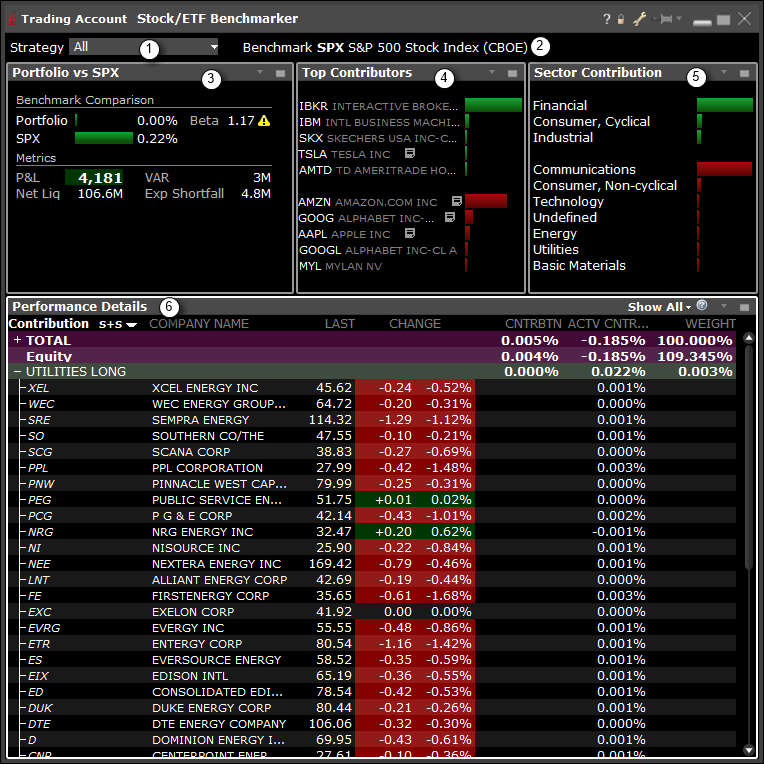
Interactive Brokers gives UK investors access to ETFs on dozens of exchanges and charges just 0.002% to convert currency ($2 minimum). No other platform here comes close on either. It’s for experienced investors who need ETFs the simpler apps don’t list.
The trade-offs are complexity and cost on small accounts: three different interfaces, the heaviest onboarding here, and a £3 monthly minimum activity fee in the ISA.
| Feature | Information |
|---|---|
| Best for | Experienced investors needing global or niche ETFs |
| UK entity | Interactive Brokers (U.K.) Limited |
| FCA status | FCA-authorised (FRN 208159) |
| ETFs | 13,000+ across 90+ markets. Found 10 of my 10 test ETFs |
| Minimum investment | £0 |
| ETF dealing fee | UK: £3 per trade on fixed pricing, 0.05% above £6,000. US: from $0.005/share fixed ($1 minimum), or $0.0005–$0.0035 tiered |
| Platform fee | £0; ISA minimum activity fee £3/month, offset by commissions |
| FX fee | 0.002% of the amount converted ($2 minimum), plus the spread |
| Accounts | GIA, Stocks & Shares ISA; SIPP via third-party administrators (fees vary) |
| Fractional ETFs | Yes on US and European lines; not UK-listed |
| Mobile app | IBKR GlobalTrader (simple) and IBKR Mobile; Trader Workstation on desktop |
| FSCS | Eligible investments up to £85,000 |
| Key differentiator | Near-interbank FX and the widest ETF access |
What I tested: In September 2026, I used an IBKR Stocks & Shares ISA, researching in Client Portal on a Windows desktop and placing orders in GlobalTrader on a Samsung Galaxy S24. I deposited £6,000 by bank transfer and searched the five standard ETFs plus a 10-ETF breadth list of less common funds. I bought VWRP on fixed pricing, converted £5,000 to USD and withdrew £50.
Test results (September 2026):
- Account approved two working days after applying, the slowest onboarding here
- Found all 10 ETFs on my breadth list; no other platform found more than nine
- £1,000 VWRP purchase: £3 commission (0.3%) plus a spread of about 0.05%
- Converting £5,000 to USD cost about £3
- £50 withdrawal (my first of the month) was free and arrived the next working day
What was it like buying ETFs on Interactive Brokers?
Getting started took the longest here. Onboarding asked about trading experience, ran knowledge checks and set permissions by product, and approval came two working days after I applied. Then I had to decide which app to use. Trader Workstation is built for professionals, Client Portal is the everyday web interface, and GlobalTrader is the simplified mobile app. I researched in Client Portal and placed orders in GlobalTrader.
Breadth is where IBKR earns its place. My 10-ETF list covered a single-country small-cap fund, a global water ETF, short-dated gilts, a European sector ETF, EM ex-China, hedged Japan, clean energy, 0–1 year US Treasuries, Indian equities and global REITs. IBKR found all 10, usually on several exchanges and in several currencies. No other platform found more than nine.
My £1,000 VWRP purchase cost £3 in commission (0.3%) plus a spread of about 0.05%. Converting £5,000 to USD cost about £3. The same conversion would have cost £25 at XTB, £35 at IG and £37.50 at eToro. My £50 withdrawal was my first of the month, so it was free, and it arrived the next working day.
How much does Interactive Brokers charge for ETFs?
On fixed pricing, IBKR charges £3 per UK ETF trade, or 0.05% above £6,000. US ETFs cost from $0.005 a share, with a $1 minimum. FX costs 0.002% of the amount converted, with a $2 minimum, plus the spread. There’s no custody fee, but the ISA has a £3 monthly minimum activity fee.
What’s the catch with the IBKR ISA?
The £3 monthly minimum. If your commissions in a month come to less than £3, IBKR charges the difference. A £100-a-month investor making one trade pays exactly £3, which is 3% of that month’s contribution.
Who is Interactive Brokers best for?
Interactive Brokers is best for experienced investors who need ETFs the UK apps don’t offer, invest in several currencies, or buy in five-figure amounts.
Who should consider an alternative to Interactive Brokers?
Anyone who wants a simple £100-a-month ISA should look at Trading 212 or InvestEngine. Beginners will find eToro far quicker to get started on, as my eToro vs Interactive Brokers comparison shows.
Pro e cons
- Found all 10 ETFs on my breadth list
- 0.002% FX commission: about £3 to convert £5,000 in my test
- Professional-grade research and PortfolioAnalyst
- Slowest onboarding in my tests (2 working days)
- £3/month ISA minimum activity fee hurts small monthly investors
- Three interfaces and a steep learning curve
Read the complete Interactive Brokers review here.
How I tested and ranked the best ETF platforms in the UK
I started from psyfi money’s full platform reviews. Then I weighted this list for one reader: a UK investor buying ETFs, usually in a Stocks & Shares ISA and often for the long term. Each platform’s review rating stays separate from its position here.
To make the list, a platform had to pass basic checks. It needed FCA authorisation, FSCS cover, a Stocks & Shares ISA, a way to buy the real ETF rather than a CFD, and prices clear enough to model. All seven passed, so none of them earned extra points for these basics.
| Ranking factor | Weight | What I assessed |
|---|---|---|
| Cost of holding ETFs | 30% | Dealing and custody fees, custody caps, ISA minimum activity fees and spreads on VWRP, modelled for a £10,000 lump sum plus £100 a month |
| Tax wrappers | 20% | Stocks & Shares ISA, SIPP, drawdown, SIPP admin fees, Lifetime ISA and Junior ISA |
| Regular investing and automation | 15% | Fractional ETFs, Pies, Savings Plans, AutoInvest, rebalancing, free regular investing and minimum order size |
| ETF choice and research | 15% | Number of ETFs, a 10-ETF list of less common funds, screener filters (accumulating or distributing, ISA eligibility) and factsheet detail |
| FX on non-GBP lines | 10% | Conversion rates from about 0.03% to 0.75%, charged on both the buy and the sell, tested on £1,000 of CSPX |
| Buying the right product | 10% | Onboarding time, how clearly the currency and exchange are shown, CFD labelling, leveraged ETPs in search results, and withdrawal time |
The comparison that told me most was the full cost of a typical first year, rather than headline commission rates. On the same modelled contributions, AJ Bell came to about £31 while Trading 212 and InvestEngine charged £0 on a GBP-listed ETF. IBKR’s £3 monthly minimum works out at 3% of a £100 contribution.
I also placed £1,000 test orders on VWRP and CSPX on every platform. That showed how much the listing matters: the same S&P 500 exposure cost between £1.50 and £12.50.
Cost and wrappers carry half the weight because most people searching this want to hold a handful of index ETFs for years. For them, a recurring 0.25% or a missing SIPP matters more than charting. FX gets only 10% because most popular UCITS ETFs have a GBP line that avoids it.
These weights set the order of this guide, and each platform’s broader Psyfi Money rating is still assessed separately.
How much does it cost to invest in ETFs?
The cheapest ETF platform isn’t necessarily the one with the lowest dealing fee, and £0 commission doesn’t necessarily mean the lowest overall cost.
What you pay depends on the size of each transaction, the ETF’s currency and the FX charged on it, dealing and platform fees, the wrapper you use and how often you trade. I compared all of these, using the prices I saw on real order tickets wherever I could.
Data labels: Tested = directly observed during my live testing. Modelled = calculated from published pricing or a defined scenario. Published = provider or other published information.
Quick cost comparison
| Platform | ETF dealing | FX fee | Platform fee | ISA | SIPP |
|---|---|---|---|---|---|
| InvestEngine | £0 DIY | None (GBP-listed ETFs only) | £0 DIY; 0.25% Managed | ✓ | ✓ (with drawdown) |
| Trading 212 | £0 | 0.15% (tested) | £0 | ✓ | ✓ (no drawdown yet) |
| IG | £0* | 0.7% (tested) | £0 GIA and ISA; SIPP £210/yr | ✓ | ✓ |
| XTB | £0* | 0.5% (tested) | £0 | ✓ | — |
| AJ Bell | £5 online; regular investing free | 0.75% on the first £10,000 (tested) | 0.25%, capped at £42/yr (ISA) and £120/yr (SIPP) | ✓ | ✓ (with drawdown) |
| eToro | £0* | 0.75% (tested) | £0 (ISA since 29 July 2026) | ✓ | — |
| Interactive Brokers | £3 per UK trade (fixed pricing) | 0.002% (min $2) | £0; ISA £3/month minimum activity fee | ✓ | Via third-party administrators (fees vary) |
What does a £1,000 ETF investment cost?
| Platform | £1,000 GBP ETF (VWRP) | £1,000 foreign-currency ETF (CSPX, USD) | Main cost |
|---|---|---|---|
| InvestEngine | £0 + ~0.05% spread (tested) | Not available (GBP lines only) | Spread only; orders go through dealing windows |
| Trading 212 | £0 + spread | £1.50 FX (tested) | FX |
| IG | £0 + ~0.07% spread (tested) | £7.00 FX (tested) | FX; the 0.49% promotion had ended by my test |
| XTB | £0 + ~0.06% spread (tested) | £5.00 FX (tested) | FX |
| AJ Bell | £5 dealing (modelled from the £10,000 test) | £12.50: £5 dealing + £7.50 FX (tested) | Dealing and FX; regular investing is free |
| eToro | £0 + ~0.08% spread (tested) | £7.50 FX (tested) | FX, charged again when you sell |
| Interactive Brokers | £3 commission (tested) | About £4.50: $4 minimum LSE commission + $2 FX minimum (modelled) | Commission |
Key findings: On a GBP-listed ETF, five of the seven platforms charged nothing beyond the spread. Only AJ Bell’s £5 one-off dealing charge and IBKR’s £3 commission added a fixed cost, 0.5% and 0.3% of £1,000. On the USD line the gap widened: the same S&P 500 exposure cost from £1.50 at Trading 212 to £12.50 at AJ Bell. If you want to invest in the S&P 500, buying a GBP line of the same fund, such as CSP1, avoids FX altogether.
What about a £10,000 investment?
Percentage FX charges grow with the amount you convert. IBKR’s figure comes from an actual £5,000 conversion, which cost me about £3. The rest scale up the FX I saw on £1,000 CSPX order tickets: Trading 212’s £1.50 becomes £15, while eToro’s £7.50 becomes £75, and at eToro and XTB it applies again when you sell.
| Platform | FX rate | FX on £1,000 of CSPX (tested) | Cost on £10,000 |
|---|---|---|---|
| Interactive Brokers | 0.002% (min $2) | n/a (converted £5,000 directly) | Not tested; about £3 on £5,000 (tested) |
| Trading 212 | 0.15% | £1.50 | £15 (modelled) |
| XTB | 0.5% | £5.00 | £50 (modelled) |
| IG | 0.7% | £7.00 | £70 (modelled) |
| eToro | 0.75% (before Club discount) | £7.50 | £75 (modelled) |
| AJ Bell | 0.75% on the first £10,000 | £7.50 | £75 (modelled) |
| InvestEngine | n/a | n/a | GBP-listed ETFs only |
Key takeaway
For small regular investments, fixed charges such as a £5 dealing fee or a £3 monthly minimum have a disproportionate impact. For larger investments in foreign-currency ETFs, FX can become the bigger cost, unless you buy the GBP line. Platform fees matter at every size: an uncapped percentage fee keeps growing with your portfolio, while flat fees weigh most on small pots.
What I found when testing the platforms
Account opening. eToro was quickest: 22 minutes from sign-up to owning an ETF, ID check included, plus nine more minutes for its separate ISA. Interactive Brokers was slowest, with knowledge checks, product permissions and approval two working days after I applied. Deposits were credited instantly by debit card at IG and took between about two and 20 minutes by bank transfer or Open Banking at eToro, Trading 212, XTB and InvestEngine.
ETF search. Searching for Vanguard FTSE All-World put VWRP first, labelled with exchange and currency, on eToro and Trading 212. Broader searches were messier: “iShares Core S&P 500” returned four listings across GBP, USD and EUR on XTB, with the currency in small print, and 3 of the first 10 S&P 500 results in IG’s app were leveraged or inverse ETPs. IG’s web screener was the standout, narrowing the field to 38 ISA-eligible global accumulating ETFs.
Buying ETFs. On the GBP line, VWRP cost nothing beyond a spread of about 0.05–0.08% at InvestEngine, XTB, IG and eToro. InvestEngine’s order filled about 4.5 hours later, in its afternoon dealing window. eToro’s ticket added a “CFD” tag as soon as I switched from 1x to 2x.
Fractional investing. Trading 212, InvestEngine and XTB invested every pound; XTB split my first £200 £140/£60 to the penny. IG and AJ Bell deal ETFs in whole units. My £50 VWRP order at IG was rejected because one unit cost about £125, and £10,000 at AJ Bell bought 79 units with £120 left in cash.
Regular investing. Trading 212’s Pie with £100 monthly AutoInvest took 1 minute 40 seconds to set up, and XTB’s Investment Plan about four minutes. InvestEngine’s one-tap Rebalance took my portfolio from 55/25/20 back to 60/25/15 at no charge. AJ Bell’s £100 monthly investment showed no dealing charge.
Customer support. I phoned AJ Bell with a standard fees question and got through in six minutes. The answer covered free regular investing, custody and FX, but didn’t mention the ETF’s own ongoing charge.
Withdrawals. My £50 test withdrawal arrived the same day at XTB (requested before 1pm), the next working day at eToro, Trading 212, IG and Interactive Brokers, and after two working days at InvestEngine and AJ Bell.
How many of my test ETFs could each platform actually find?
Headline ETF counts aren’t directly comparable, because providers define their available ETF universe differently: some include every exchange and currency listing of the same fund, and some publish one figure for ETFs and shares combined.
So I searched every platform for the same 10 less common ETFs: a single-country small-cap fund, a global water ETF, short-dated gilts, a European sector ETF, EM ex-China, hedged Japan, clean energy, 0–1 year US Treasuries, Indian equities and global REITs.
The number each platform actually found is a better guide to real ETF choice than its headline count.
| Platform | Test ETFs found (of 10, tested) | ETFs listed (published) |
|---|---|---|
| Interactive Brokers | 10 | 13,000+ |
| IG | 9 | 3,000+ |
| AJ Bell | 8 | 1,000+ |
| XTB | 7 | About 1,300 |
| Trading 212 | 7 | Around 2,000 |
| InvestEngine | 6 | 700+ |
| eToro | 5 | About 750 |
ETF platforms for ISAs and SIPPs
| Platform | ISA | SIPP | Relevant fees | Fractional ETFs | Regular investing |
|---|---|---|---|---|---|
| InvestEngine | ✓ | ✓ (drawdown; personal contributions only) | £0 in DIY ISA and SIPP | Yes | Savings Plans + AutoInvest |
| Trading 212 | ✓ | ✓ (no drawdown yet) | £0 platform fee in ISA and SIPP; 0.15% FX | Yes | Pies + AutoInvest |
| IG | ✓ (plus Junior ISA) | ✓ | £0 in the ISA; SIPP £210/yr to Options UK | No | Not tested |
| XTB | ✓ (Flexible) | — | £0 platform fee; 0.5% FX | Yes, from £1 | Investment Plans |
| AJ Bell | ✓ (plus Lifetime and Junior ISA) | ✓ (drawdown) | 0.25% custody, capped at £42/yr (ISA) and £120/yr (SIPP); £5 per one-off deal | No | Free regular investing |
| eToro | ✓ (Moneyfarm-powered) | — | £0 ISA platform fee since 29 July 2026; 0.70% FX on non-GBP assets in the ISA | Yes | Not tested |
| Interactive Brokers | ✓ | Via third-party administrators | ISA £3/month minimum activity fee; SIPP fees vary by administrator | US and European lines only | Not tested |
A £100-a-month investor should look first at fractional dealing and fixed charges. Trading 212, InvestEngine and XTB put every pound to work for £0 commission, while IBKR’s £3 ISA minimum takes 3% of that contribution. A larger portfolio shifts the maths towards caps and flat fees: AJ Bell’s ISA custody stops growing at about £16,800, so it’s 0.04% a year at £100,000, and IG’s £210 SIPP fee falls from 1.05% of a £20,000 pot to about 0.1% of £200,000.
How to choose an ETF platform
1. Check the ETFs you actually want. If you’re still deciding what to buy, start with how to invest in ETFs, then search for them before you open an account. Headline counts don’t tell you much: the platforms here found between 5 and 10 of my 10 test ETFs.
2. Compare dealing fees. £0 is common, but AJ Bell charges £5 per one-off deal and IBKR £3 per UK trade, which is 0.5% and 0.3% of a £1,000 order.
3. Check FX costs. FX on £1,000 of a USD-line ETF cost from £1.50 at Trading 212 to £7.50 at eToro and AJ Bell in my tests. A GBP line of the same fund avoids it.
4. Check ISA and SIPP availability. XTB and eToro don’t offer a SIPP, Trading 212’s has no drawdown yet, and IBKR’s runs through third-party administrators.
5. Check fractional and regular investing. If you invest small monthly amounts, whole-unit dealing leaves cash uninvested or, as at IG, blocks the order.
6. Consider how fees change as your portfolio grows. Percentage fees rise with your pot unless they’re capped, while flat fees and minimums weigh most when it’s small.
Conclusion
There’s no single ETF platform that’s cheapest or most suitable for every UK investor. My testing found meaningful differences in dealing costs, FX, ETF availability, wrappers, automation and usability. For most people buying a handful of ETFs in an ISA, InvestEngine does the most for the least, with Trading 212 a close second if you also want shares or USD-listed ETFs. The table shows where each of the others comes out ahead, and links to its full review.
| Platform | Best for | What stood out in testing |
|---|---|---|
| InvestEngine | Most ETF investors | One-tap rebalance at no charge; orders filled about 4.5 hours later |
| Trading 212 | ETFs and shares in one app | Pie with £100 AutoInvest set up in 1 minute 40 seconds; £1.50 FX on £1,000 of CSPX |
| IG | ETF research and tools | Screener shortlist of 38 ISA-eligible ETFs; £50 VWRP order rejected (whole units only) |
| XTB | Active, hands-on ETF investors | ETF scanner found all five standard ETFs; £50 withdrawal arrived the same day |
| AJ Bell | Larger ISA and SIPP portfolios | About £31 in year one on £10,000 plus £100 a month (modelled); phone support answered in six minutes |
| eToro | Beginners and multi-asset investing | Sign-up to first ETF in 22 minutes; CFD tag appears at 2x |
| Interactive Brokers | Advanced and global ETF investors | Found all 10 test ETFs; about £3 to convert £5,000 |
Frequently asked questions (FAQs)
What is the best ETF platform in the UK?
For most UK ETF investors, it’s InvestEngine: £0 to hold and trade ETFs in DIY mode, no FX charges, an ISA and a SIPP with drawdown, and the best automation I tested. If you also want shares or USD-listed ETFs, Trading 212 is a close second, and for global or niche ETFs it’s Interactive Brokers.
What is the cheapest ETF platform?
It depends on what you buy. On a GBP-listed ETF, Trading 212, InvestEngine, XTB, IG and eToro charged nothing beyond the spread in my tests, and InvestEngine has no platform, dealing or FX charges at all in DIY mode because it only lists GBP ETFs. On a USD line, Interactive Brokers’ 0.002% FX commission ($2 minimum) was the cheapest conversion (about £3 on £5,000, including the spread), and Trading 212’s 0.15% the cheapest of the app-first brokers.
Can I buy ETFs in a Stocks & Shares ISA?
Yes. All seven platforms here offer a Stocks & Shares ISA. You can pay in up to £20,000 across your ISAs in the 2026/27 tax year, and returns inside an ISA are tax-free (GOV.UK). Inside an ISA you can only hold the real ETF, not a CFD on it.
Can I buy ETFs in a SIPP?
Yes, at Trading 212, InvestEngine, AJ Bell and IG. Interactive Brokers offers a SIPP through third-party administrators, and XTB and eToro don’t offer one. Your provider claims basic-rate tax relief at 20% and adds it to your pot, and higher-rate taxpayers can claim more through Self Assessment (GOV.UK). If you’re close to retirement, check drawdown: AJ Bell and InvestEngine offer it, Trading 212 doesn’t yet.
Can I buy fractional ETFs?
Yes, on Trading 212, InvestEngine, XTB (from £1) and eToro. Interactive Brokers offers fractional units on US and European lines but not UK-listed ETFs. IG and AJ Bell deal in whole units: my £50 VWRP order at IG was rejected because one unit cost about £125.
Are ETFs tax-free in the UK?
Only inside a tax wrapper. In an ISA you pay no tax on gains or income, and in a SIPP your investments grow tax-free, though pension withdrawals are taxed as income beyond the tax-free portion. Outside a wrapper, gains above the £3,000 Capital Gains Tax allowance (GOV.UK) and dividends above the £500 dividend allowance (GOV.UK) can be taxed. How much you pay depends on your circumstances.
References
- https://docs.londonstockexchange.com/sites/default/files/documents/etf_listing_and_admissions_guide_2020.pdf
- https://docs.londonstockexchange.com/sites/default/files/documents/Exchange%20Traded%20Funds%20-%20Introducing%20and%20Operating%20ETFs%20in%20the%20UK%20%28002%29_0.pdf
- https://www.theia.org/sites/default/files/2019-06/20170306-authorisedfundsaregulatoryguide.pdf
- https://www.citystgeorges.ac.uk/news-and-events/news/2025/january/etfs-boost-equity-market-efficiency-study-finds
- http://etheses.dur.ac.uk/12566/
