

Based on hands-on testing, fee analysis, and platform comparisons, the best ETF trading platforms in Australia in 2026 are CMC Markets (best overall for CHESS-sponsored ASX ETFs), Moomoo (best for low-cost global ETF trading), Tiger Brokers (best for cost-conscious international investors), eToro (best for beginner multi-asset portfolios), and Pepperstone (best for active traders using ETF CFDs).
These platforms offer a mix of low brokerage, access to ASX and global ETFs, and ASIC-regulated trading environments, allowing Australians to build diversified ETF portfolios using simple online platforms.
- Social investing with real-time insights
- Ready-made portfolios for diversified investing
- Copy top-performing investors automatically
Capital at risk. T&Cs apply.
Top ETF trading platforms in Australia
- CMC Markets (Best Overall / CHESS-Sponsored ETFs): CMC Markets offers CHESS-sponsored ASX ETF ownership, $0 brokerage on US shares, and no account fees, making it one of the strongest all-round ETF platforms for Australian investors.
- Moomoo (Best for Low-Cost Global ETF Trading): Moomoo provides competitive brokerage for ASX ETFs and $0 brokerage for US ETFs, along with advanced charting tools and market analytics for active investors.
- Tiger Brokers (Best for Cost-Conscious Global Investors): Tiger Brokers focuses on low-cost international market access, making it attractive for investors who want exposure to US-listed ETFs and global markets.
- eToro (Best for Beginner ETF Investors): eToro offers a simple platform for building multi-asset portfolios, including ETFs, stocks, and other markets, with an easy-to-use interface designed for new investors.
- Pepperstone (Best for Active ETF Traders): Pepperstone allows investors to trade ETF CFDs with tight spreads and advanced trading platforms, making it suitable for traders focused on short-term strategies.
Key considerations when choosing an ETF platform
- Brokerage Fees: ETF trading fees vary by platform. Some brokers offer $0 brokerage or low flat-fee trades, which can significantly reduce costs for frequent investors.
- Ownership Structure (CHESS vs Custodian): Some platforms such as CMC Markets provide CHESS sponsorship, meaning ETFs are held under your individual HIN. Others operate under custodial models where assets are held on your behalf.
- Market Access: Many Australian investors want access to both ASX-listed ETFs and international ETFs, particularly those listed on US exchanges.
- Tools and Research: Platforms may provide portfolio tracking, charting tools, and research reports, which can help investors evaluate ETF performance and build diversified portfolios.
What are the best ETF trading platforms in Australia in 2026?
| Platform | Our Score | ASX Brokerage | US Brokerage | FX Fee | CHESS | Auto-Invest | ASX ETFs | Global ETFs | Best For |
|---|---|---|---|---|---|---|---|---|---|
| CMC Markets | 9.5 | $0 (first $1k/day), then $11 or 0.10% | $0 (US, UK, Canada, Japan) | – | Yes | Yes (AU only) | 400+ | 15,000+ (6,500+ US-listed) | Best overall for CHESS-sponsored ASX ETFs |
| Moomoo | 9.2 | $3 or 0.03% | US$0.99/trade | ~0.5% (50 pips) | Yes | Yes (ASX & US, daily–monthly) | – | 26,000+ shares & ETFs combined | Best for low-cost ASX and US ETF trading |
| Tiger Brokers | 9.1 | $3 or 0.03% | US$0.01/share (min US$2) | ~0.55% (55 pips) | Yes | Yes (US ETFs & ASX) | – | – | Best for cost-conscious global ETF investors |
| eToro | 7.1 | 0% commission | 0% commission | ~1.5% | No (custodial) | No (Smart Portfolios only, not true auto-invest) | Included in 300+ total | Included in 300+ total | Best for beginner multi-asset portfolios |
| Pepperstone | 5.0 | Not offered (CFDs only) | ~$0.02/share (min $0.20) + overnight funding | – | No | No | Not offered | 90+ ETF markets | Best for active traders using ETF CFDs |
How we ranked Australia’s best ETF platforms
We compared eToro, CMC Markets, Moomoo, Tiger Brokers and Pepperstone across cost, ETF access, ownership structure, and usability, the factors that actually affect returns over the life of holding an ETF, not just headline brokerage fees.
Fees and ownership structure carry the most weight (30% each), since both compound over a long holding period: ownership meaning whether you hold ASX ETFs directly under your own HIN via CHESS sponsorship, or through a custodial or CFD structure instead.
ETF access, the breadth of ASX and international markets available, is worth 20%, and usability (platform design, tools, ease of use) makes up the remaining 20%. Each platform scores out of 10 per category.
| Platform | Fees | ETF Access | Ownership | Usability | Overall |
|---|---|---|---|---|---|
| CMC Markets | 9.3 | 9.5 | 10.0 | 9.0 | 9.5 |
| Moomoo | 9.0 | 8.5 | 10.0 | 9.0 | 9.2 |
| Tiger Brokers | 8.8 | 8.5 | 10.0 | 8.7 | 9.1 |
| eToro | 7.5 | 8.0 | 5.0 | 8.5 | 7.1 |
| Pepperstone | 6.0 | 5.5 | 2.0 | 7.5 | 5.0 |
CMC, Moomoo, and Tiger cluster at the top on CHESS-sponsored ownership plus low brokerage. eToro trades ownership for simplicity; its custodial model costs it on that dimension despite a beginner-friendly interface.
Pepperstone scores lowest because its ~48 ETF CFDs are derivatives, not direct ETF holdings, making it a fit for active short-term traders rather than long-term ETF investors.
ETF trading platform Australia reviews
Compare the best ETF platforms in Australia based on fees, market access, platform tools, and long-term investing suitability, with clear breakdowns of strengths and limitations for each provider.
1. eToro – Best for beginners building multi-asset portfolios

Platform overview
| Feature | Details |
|---|---|
| Legal entity (AU) | eToro AUS Capital Ltd |
| AFSL | 491139 |
| Regulator | ASIC |
| Minimum deposit | USD 50 |
| ETF brokerage | 0% commission |
| Stock brokerage (AU residents) | USD 2 per trade |
| Base currency | USD only |
| FX conversion fee | ~1.5% per conversion (typical) |
| Withdrawal fee | USD 5 |
| Inactivity fee | USD 10/month after 12 months |
| CHESS sponsorship | No |
| Real ETF ownership | Yes (1x leverage only) |
How competitive are the brokerage and FX fees?
ETF trades are commission-free, which is attractive for long-term investors. Australian residents pay USD 2 per stock trade.
The main cost is FX. Because accounts are USD-based, depositing AUD typically incurs around 1.5% conversion each way. For larger deposits, this becomes the dominant cost. There is also a USD 5 withdrawal fee.
Low brokerage, but FX must be factored into returns.
What ETF markets and exchanges can you access?
eToro offers access to ETFs across major exchanges including the ASX, NYSE, Nasdaq and LSE. Coverage focuses on mainstream index, sector and thematic ETFs rather than niche funds.
When leverage is set to 1x, you are buying the real ETF. Using leverage or shorting converts the trade into a CFD.
Is the platform regulated by ASIC and how are your ETFs held?
Australian clients are onboarded via eToro AUS Capital Ltd under AFSL 491139, regulated by ASIC.
ETFs are held under a custodial model. eToro does not offer CHESS sponsorship, meaning you do not receive your own HIN. ASIC does not provide a statutory compensation scheme, although private insurance applies to eligible clients.
How easy is the platform to use for long-term ETF investing?
The trading platform is clean, intuitive and beginner-friendly. Account opening is fully digital and usually completed within a day.
ETF investing is straightforward: search, confirm 1x leverage, select order type, execute. Reporting is clear, though advanced analytics are limited.
What order types and execution features are available?
Available order types include:
- Market
- Limit
- Stop-loss
- Trailing stop
- Good-til-cancelled
Pending limit orders cannot be edited and must be re-entered if changed.
Who is this platform best for?
Best suited to:
- Beginners wanting simple global ETF access
- Investors combining ETFs, stocks and crypto in one account
- Long-term investors comfortable with custodial holdings
Less suited to:
- High-frequency or professional traders
- Investors wanting CHESS-sponsored ownership
- Traders highly sensitive to FX costs
Read the complete eToro Review here.
Pros and cons
- 0% commission on ETFs
- USD 2 stock trades (AU residents)
- ASIC regulated (AFSL 491139)
- Low USD 50 minimum deposit
- Access to major global exchanges
- ~1.5% FX conversion per conversion
- USD-only base currency
- No CHESS sponsorship
- USD 5 withdrawal fee
2. CMC Markets – Best for CHESS-sponsored ASX ETF investors

Platform overview
| Feature | Details |
|---|---|
| Legal entity (AU) | CMC Markets Asia Pacific Pty Ltd |
| AFSL | 238054 |
| Regulator | ASIC |
| Established | 1989 |
| Minimum deposit | $0 |
| ASX brokerage (Standard) | $0 first buy ≤ $1,000 per day, then $11 or 0.10% |
| ASX brokerage (Alpha) | $0 first buy ≤ $1,000, then $9.90 or 0.075% |
| Global brokerage | $0 on US, UK, Canada, Japan shares |
| Withdrawal fee | $0 |
| CHESS sponsorship | Yes (ASX ETFs) |
| ETF access | ASX + major global exchanges |
How competitive are the brokerage and FX fees?
CMC is competitively priced, particularly for ETF investors trading larger parcels.
For ASX-listed ETFs, the first buy order of the day up to $1,000 is $0. After that, brokerage is $11 or 0.10% (Standard) or $9.90 or 0.075% (Alpha). Sell orders attract the same percentage fee.
US, UK, Canada, and Japan shares and ETFs have $0 brokerage. There are no deposit or withdrawal fees. FX costs apply when trading overseas assets, but AUD base accounts reduce forced currency conversions.
The main drawback is the $1,000 minimum order size for global trades, which limits smaller allocations.
Pricing is strong overall, but the structure is not as simple as flat-fee competitors.
What ETF markets and exchanges can you access?
CMC Invest provides access to ASX-listed ETFs with CHESS sponsorship, plus major international exchanges including NYSE, Nasdaq, LSE, and Canadian and Japanese markets.
You can trade broad index ETFs, sector funds, thematic products and international exposure vehicles from one account.
Unlike CMC’s CFD trading platform, the Invest account provides direct ownership of shares and ETFs rather than derivatives.
The range is broad enough for diversified long-term portfolios without being overwhelming.
Is the platform regulated by ASIC, and how are your ETFs held?
CMC Markets Asia Pacific Pty Ltd holds AFSL 238054 and is regulated by ASIC.
ASX ETFs are CHESS-sponsored, meaning you receive your own HIN and legal ownership is recorded directly in your name. Client funds are held in segregated trust accounts with major Australian banks.
CMC Markets is also listed on the London Stock Exchange, adding transparency through public financial reporting.
From a structural perspective, it aligns with traditional Australian brokerage standards.
How easy is the platform to use for long-term ETF investing?
The Next Generation platform is feature-rich yet well-designed. It includes integrated Morningstar research, ETF screeners, advanced charting, and unlimited free conditional orders.
There is no minimum deposit, making it accessible. The mobile investing app closely mirrors desktop functionality and is one of the stronger offerings in the market.
For long-term ETF investors, it offers more tools than strictly necessary, but it remains intuitive after a short learning curve.
What order types and execution features are available?
CMC offers a comprehensive order panel, including:
- Market
- Limit
- Stop
- Trailing stop
- Guaranteed stop-loss (premium applies)
- Good ’til cancelled
- Good ’til time
Unlimited conditional orders are available at no extra cost. Execution reporting is transparent and detailed.
This is a platform built with active traders in mind, and the order flexibility reflects that.
Who is this platform best for?
Best suited to investors who want CHESS-sponsored ETF ownership, competitive global brokerage and strong research tools.
It works well for intermediate investors placing larger, less frequent trades and those building diversified ETF portfolios across Australian and global markets.
Less suitable for investors making small, frequent international trades under $1,000 or those who prefer ultra-simple fee structures.
Overall, CMC Markets is a strong ETF platform for Australian investors who value ownership clarity, global access and advanced trading tools without ongoing account fees.
Read the full CMC Markets review here.
Pros and cons
- CHESS-sponsored ASX ETFs
- $0 brokerage on US, UK, Canada, Japan shares
- $0 first ASX buy ≤ $1,000 per day
- No deposit or withdrawal fees
- Strong research tools (Morningstar)
- $1,000 minimum on global trades
- Fee structure can be complex
- Platform may feel advanced for beginners
3. Moomoo – Best for low-cost ASX and US ETF trading

Platform overview
| Feature | Details |
|---|---|
| Legal entity (AU) | Moomoo Securities Australia Ltd |
| AFSL | 224663 |
| Regulator | ASIC |
| Parent company | Futu Holdings Ltd (NASDAQ: FUTU) |
| Minimum deposit | $0 (account can be opened from $1) |
| ASX ETF brokerage | $3 or 0.03% (whichever is greater) |
| US ETF brokerage | USD 0.99 per trade |
| FX conversion (AUD→USD) | 50 pips (~0.5%) spread |
| CHESS sponsorship | Yes (ASX ETFs) |
| Markets available | ASX, US, Hong Kong |
| Account types | Individual, SMSF, Corporate |
How competitive are the brokerage and FX fees?
Moomoo is one of the cheapest ETF platforms in Australia.
ASX-listed ETFs cost $3 or 0.03%, whichever is greater. That undercuts most traditional brokers. US-listed ETFs are USD 0.99 per trade, which is competitive for global exposure.
There are no account or inactivity fees. The main cost is FX. Converting AUD to USD includes a 50 pip spread, roughly 0.5% per conversion.
For long-term investors trading periodically, pricing is strong. Frequent FX conversions will reduce the edge.
What ETF markets and exchanges can you access?
Moomoo provides access to:
- ASX-listed ETFs (CHESS-sponsored)
- US-listed ETFs (NYSE, Nasdaq, AMEX)
- Hong Kong-listed ETFs
Coverage includes broad index ETFs, sector funds and thematic strategies. Fractional US shares are available, allowing smaller allocations into high-priced US ETFs.
Asset classes are focused on stocks, ETFs and options. Bonds and forex are not offered.
For diversified AU and US ETF portfolios, the range is sufficient.
Is the platform regulated by ASIC and how are your ETFs held?
Moomoo Securities Australia Ltd holds AFSL 224663 and is regulated by ASIC.
ASX ETFs are CHESS-sponsored, meaning holdings are registered directly in your name. Client funds are segregated with major banks, including HSBC Australia.
The parent company, Futu Holdings Ltd, is NASDAQ-listed, adding transparency. Australia has no statutory investor compensation scheme, and negative balance protection is not offered.
Structurally, it meets mainstream Australian brokerage standards.
How easy is the platform to use for long-term ETF investing?
Moomoo is modern and mobile-first. The mobile trading app and desktop platform include:
- Advanced charting
- ETF screeners
- Level 2 market data (eligible accounts)
- Paper trading
Despite the analytical depth, navigation is intuitive. Beginners can place simple market or limit orders, while advanced users can apply technical tools.
For passive ETF investors, the data may feel excessive, but usability remains strong.
What order types and execution features are available?
Order types include:
- Market
- Limit
- Stop
- Stop-limit
- Trail and trail limit
- Limit if touched
- Good ’til cancelled
- Day orders
Advanced features include price alerts, conditional orders and algorithmic trading tools.
Execution flexibility is above average for a low-cost broker.
Who is this platform best for?
Best suited to investors who want low-cost ASX and US ETF access, CHESS-sponsored ownership and advanced analytical tools.
Less suited to investors seeking bonds, forex or ultra-simple flat interfaces.
Overall, Moomoo combines low brokerage, CHESS-backed ownership and strong platform tools, making it attractive for cost-conscious and data-driven ETF investors.
Read the full Moomoo review here.
Pros and cons
- $3 or 0.03% ASX brokerage
- USD 0.99 US ETF trades
- CHESS-sponsored ASX ETFs
- No inactivity or account fees
- Advanced charting and tools
- ~0.5% FX spread on AUD→USD
- Limited asset classes
- Wire withdrawal fees may apply
4. Tiger Brokers – Best for cost-conscious global ETF investors

Platform overview
| Feature | Details |
|---|---|
| Legal entity (AU) | Tiger Brokers (AU) Pty Ltd |
| AFSL | 300767 |
| Regulator | ASIC |
| Parent company | UP Fintech Holding Ltd (NASDAQ: TIGR) |
| Minimum deposit | $0 |
| ASX ETF brokerage | $3 or 0.03% (whichever is greater) |
| US ETF brokerage | USD 0.01/share (min USD 2 per order) |
| FX conversion (AUD→USD) | 55 pips (~0.55%) spread |
| CHESS sponsorship | Yes (new accounts) |
| Markets available | ASX, US, Hong Kong, China A-shares |
| Asset focus | Stocks, ETFs, options, futures |
How competitive are the brokerage and FX fees?
Tiger Brokers is competitively priced for ETF investors.
ASX-listed ETFs cost $3 or 0.03%, keeping it cheaper than many traditional brokers. US-listed ETFs are charged at USD 0.01 per share (minimum USD 2), which remains cost-effective for moderate trade sizes.
There are no account maintenance or inactivity fees, and no minimum deposit requirement.
The main friction is FX. Converting AUD to USD typically includes a 55 pip spread (~0.55%), which becomes meaningful for frequent currency conversions.
Brokerage is sharp; FX needs managing.
What ETF markets and exchanges can you access?
Tiger Brokers provides access to:
- ASX-listed ETFs (CHESS-sponsored)
- US-listed ETFs (NYSE, Nasdaq, AMEX)
- Hong Kong ETFs
- Select China A-share ETFs
US coverage is broad, with access to thousands of stocks and ETFs. Fractional US shares are available, making large-cap ETFs more accessible to smaller portfolios.
However, the ETF broker does not support crypto, forex or CFDs. It is built primarily for equity investors.
Is the platform regulated by ASIC and how are your ETFs held?
Tiger Brokers holds an Australian Financial Services Licence and is regulated by ASIC.
ASX ETFs are CHESS-sponsored, meaning holdings are registered directly in your name under a HIN. Client funds are held in segregated accounts with custodians.
The parent company is NASDAQ-listed, adding corporate transparency.
Structurally, it now aligns with mainstream Australian brokerage standards.
How easy is the platform to use for long-term ETF investing?
The proprietary Tiger Trade platform balances depth and usability.
The mobile app is intuitive and offers both Lite and Pro views. The desktop version includes advanced charting, screeners and customisable layouts.
Features include:
- Real-time market data
- Stock and ETF screening tools
- Demo account with virtual funds
- Fractional US shares
- Auto-invest tools
Beginners may find the desktop interface data-heavy, but intermediate investors will appreciate the flexibility.
What order types and execution features are available?
Order types include:
- Market
- Limit
- Stop-loss
- Stop-limit
- Day and Good-til-cancelled
The platform also supports US options and futures for more advanced users.
Execution tools include Level 2 market data, custom charting and profit/loss tracking. It is solid for retail investors, though not institutional-grade.
Who is this platform best for?
Tiger Brokers suits:
- Cost-conscious ASX and US ETF investors
- Investors wanting CHESS-sponsored ownership
- Retail investors building diversified global portfolios
Less suitable for:
- Traders seeking forex, crypto or CFDs
- Investors wanting extensive education resources
- Those who prefer ultra-simple interfaces
Overall, Tiger Brokers offers competitive ETF brokerage, global equity access and CHESS-backed ASX holdings. It is a practical option for intermediate investors focused on Australian and US ETFs.
Read the full Tiger Brokers review here.
Pros and cons
- $3 or 0.03% ASX ETF brokerage
- CHESS-sponsored ASX holdings
- Competitive US ETF pricing
- No minimum deposit or inactivity fees
- Fractional US shares available
- ~0.55% FX spread on AUD→USD
- No forex, CFDs or crypto
- Limited education resources
- Fewer advanced tools than institutional brokers
5. Pepperstone – Best for active traders using ETF CFDs
Platform overview
| Feature | Details |
|---|---|
| Legal entity (AU) | Pepperstone Group Limited |
| AFSL | 414530 |
| Regulator | ASIC (plus FCA, CySEC, BaFin, DFSA, SCB, CMA) |
| Established | 2010 (Melbourne) |
| Minimum deposit | $0 (recommended $200) |
| ETF offering | ETF CFDs only |
| Share CFD commission | $0.02 per share (min $0.20) |
| Index CFD example | S&P 500 spread ~0.4 |
| FX commission (Razor) | $3.50 per lot per side |
| CHESS sponsorship | No |
| Ownership model | CFDs, no underlying ownership |
How competitive are the brokerage and FX fees?
Pepperstone is low-cost for active CFD traders, but it is not a traditional ETF broker.
ETF exposure is provided via CFDs, with costs built into spreads or commissions. Share CFDs are typically $0.02 per share (min $0.20). Razor accounts charge $3.50 per lot per side for forex, with spreads from 0.0 pips.
There are no account, deposit or inactivity fees for Australian clients. However, overnight funding charges apply to CFD positions, which makes long-term holding expensive.
Low entry costs. Not efficient for buy-and-hold ETF investors.
What ETF markets and exchanges can you access?
Pepperstone offers around 48 ETF CFDs alongside 1,300+ CFD instruments including forex, indices, shares and crypto CFDs.
You can trade US-listed ETF CFDs and major global index exposures. You cannot buy ASX-listed ETFs directly, and there is no access to real ETF units.
The platform is designed for leveraged exposure rather than portfolio ownership.
Is the platform regulated by ASIC and how are your ETFs held?
Pepperstone Group Limited is regulated by ASIC and multiple top-tier global regulators.
Client funds are held in segregated trust accounts with major banks. However, ETFs are traded as contracts for difference, meaning you do not own the underlying asset and there is no CHESS sponsorship or HIN.
Negative balance protection applies to Australian retail clients, but CFD risk remains.
From an ownership perspective, this is fundamentally different from a CHESS-sponsored broker.
How easy is the platform to use for long-term ETF investing?
Pepperstone supports MT4, MT5, cTrader, TradingView and its proprietary platform. Execution is fast and infrastructure is institutional-grade.
That said, the environment is built for short-term trading. Margin, leverage and funding mechanics make it unsuitable for passive, long-term ETF investing.
It is powerful, but not aligned with traditional ETF portfolio building.
What order types and execution features are available?
Available order types include:
- Market
- Limit
- Stop
- Trailing stop
- Good ’til cancelled
- Good ’til time
The platform also supports algorithmic trading, integrations with copy trading platforms, and API access.
Guaranteed stop losses are not offered.
Who is this platform best for?
Best suited to:
- Active traders seeking leveraged ETF exposure
- Traders hedging equity portfolios
- Investors already trading forex and index CFDs
Not suitable for:
- Long-term ETF investors
- Investors wanting CHESS-sponsored ownership
- SMSF investors seeking direct ETF holdings
Read the full Pepperstone review here.
Pros and cons
- Regulated by ASIC and multiple global regulators
- Tight spreads and low CFD commissions
- No deposit, withdrawal or inactivity fees (AU)
- Advanced platforms (MT4, MT5, cTrader, TradingView)
- Fast execution infrastructure
- ETF CFDs only, no real ETF ownership
- No CHESS sponsorship
- Overnight funding costs apply
- No guaranteed stop losses
Which ETF platform is best for different investors?
- Beginners: eToro. 0% commission on both ASX and US ETFs, a fully digital account opening in about a day, and a clean, beginner-friendly interface. The trade-off is its custodial ownership structure (no CHESS/HIN) and a higher ~1.5% FX conversion fee — worth knowing, but not a dealbreaker for a first ETF portfolio.
- Low fees: Moomoo. Flat $3 or 0.03% brokerage (whichever is greater) on ASX ETFs, US$0.99 per US trade, no account or inactivity fees, and CHESS sponsorship on top. Few platforms combine this low a cost base with direct ownership.
- ASX ETFs: CMC Markets. 400+ ASX-listed ETFs, CHESS-sponsored, and $0 brokerage on the first $1,000 traded per day. The widest ASX ETF range in this comparison at the lowest cost for smaller regular trades.
- US/global ETFs: Tiger Brokers. US$0.01 per share (minimum US$2 per order) makes it the cheapest way to build a US ETF position incrementally. CMC Markets is worth a look too — $0 brokerage on US, UK, Canada and Japan shares and 15,000+ international ETFs — but Tiger’s per-share pricing suits investors buying smaller, more frequent parcels.
- Regular investing: Moomoo. The most complete auto-invest offering verified here — scheduled contributions into both ASX and US ETFs, with daily, weekly, fortnightly or monthly frequency options. Tiger also offers auto-invest, but it’s confirmed for US ETFs only.
- Larger portfolios: CMC Markets. Its Next Generation platform pairs integrated Morningstar research, ETF screeners and advanced charting with the broadest combined ASX and international ETF access — the tool most likely to keep up with a portfolio that’s grown past a handful of core holdings.
- Active/short-term ETF trading: Pepperstone. Support for MT4, MT5, cTrader and TradingView, plus algorithmic trading and API access, makes it the platform built for taking short-term positions on ETF price movement via CFDs rather than holding units long-term. Not a fit for buy-and-hold investors, but the clear pick if that’s the strategy.
- Multi-asset investors: eToro. ETFs, individual stocks, crypto and copy trading all sit in one account with 0% commission on ETFs. Useful if you don’t want your ETF holdings siloed away from the rest of a broader, more varied portfolio.
- Fractional share investors: Tiger Brokers. Support for fractional US shares means you can build a position in a high-priced US ETF without needing the full unit price upfront — a meaningful advantage for smaller, incremental US ETF purchases specifically.
- Broadest global ETF selection: CMC Markets. 15,000+ international ETFs across 15 markets, including 6,500+ US-listed, is the widest selection in this comparison by a large margin. Distinct from the “US/global ETFs” pick above — that one’s about the cheapest way to buy; this one’s about who has access to the most markets to choose from in the first place.
How to invest using an Australian ETF platform?
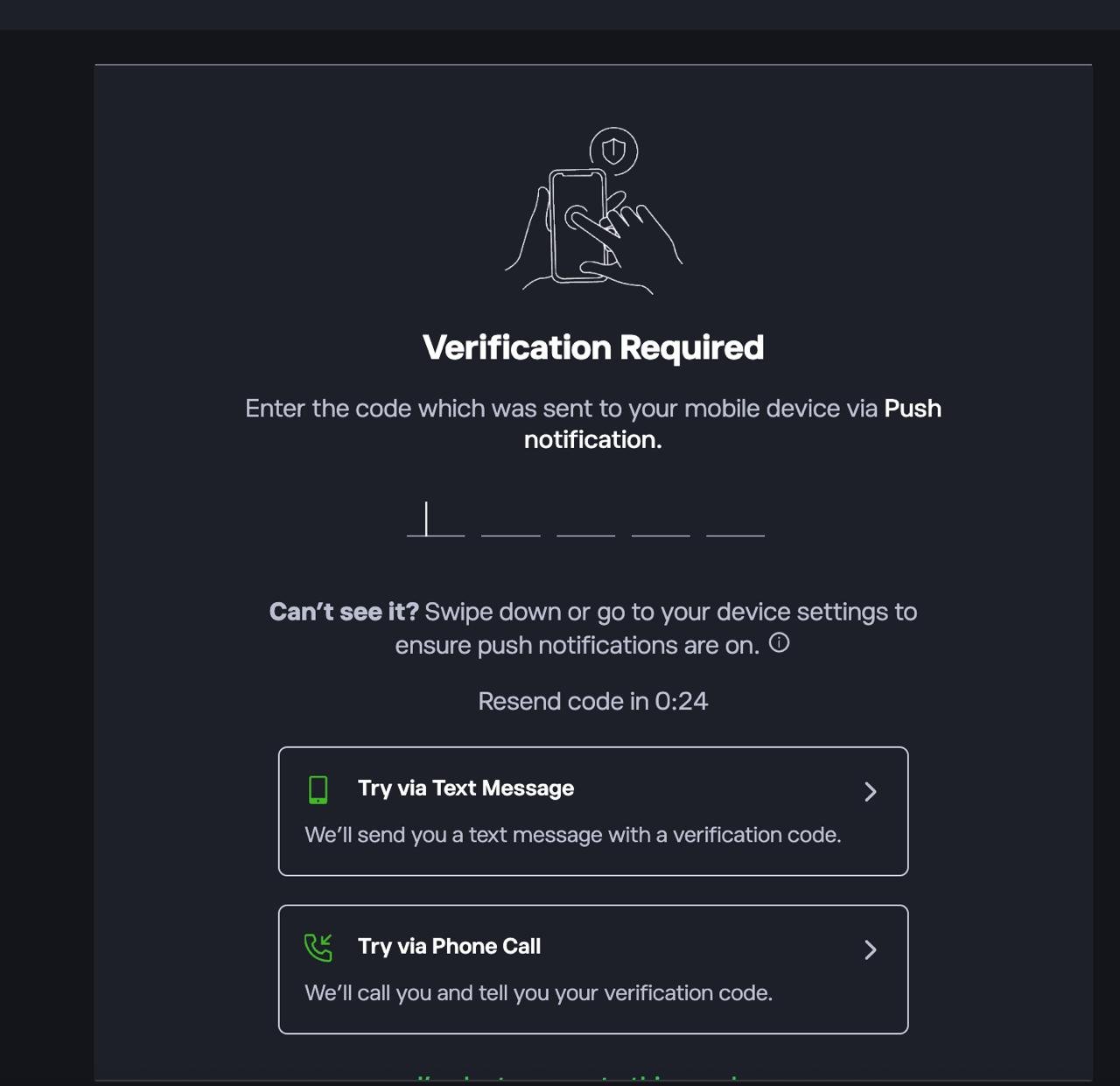
1. Log in to the platform
First sign up or log in to the platform. If prompted, complete 2FA by entering the code sent via push notification, SMS, or phone call.
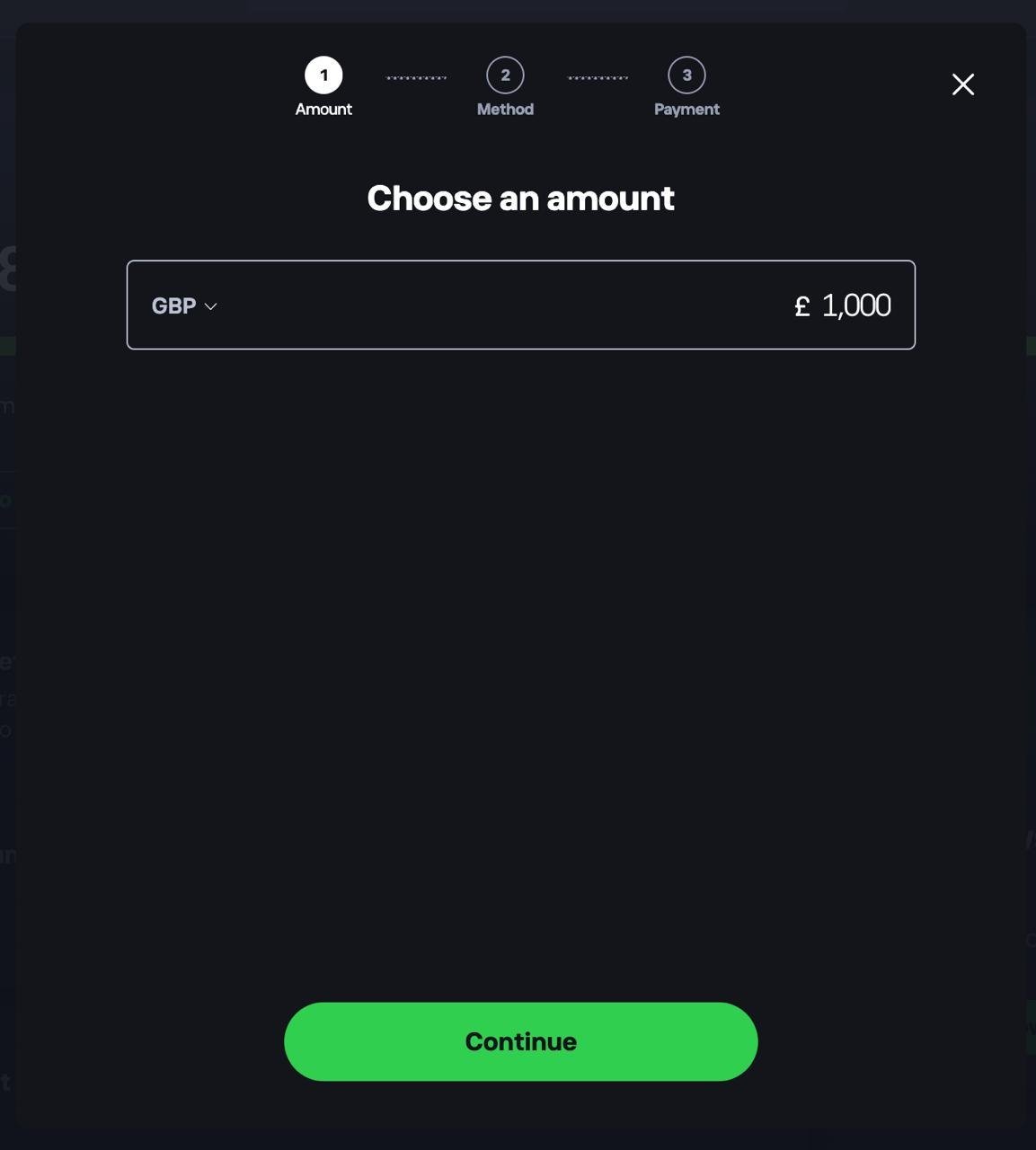
2. Deposit funds into your account
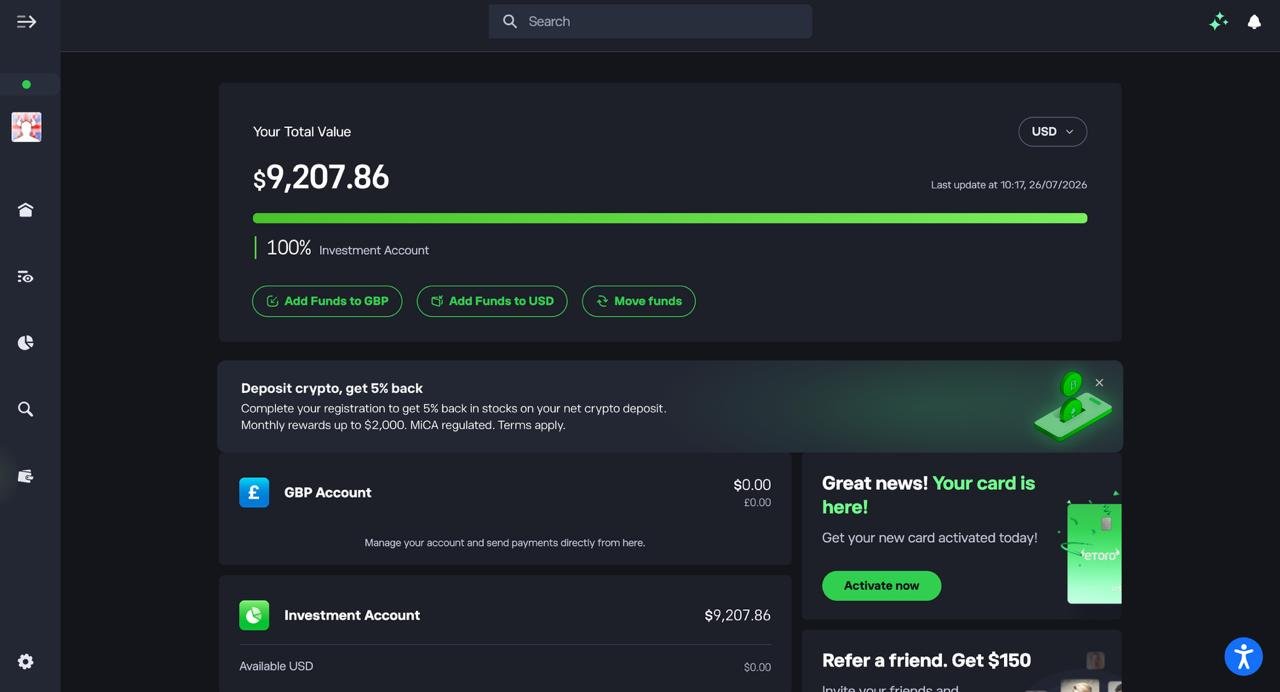
Head to your dashboard and choose to add funds. Select your currency, enter the amount you want to deposit, tap Continue, then choose a payment method.
3. Confirm your funds are available
Check your dashboard to make sure your deposit has landed in your Investment Account before you start investing.
4. Find the investment you want
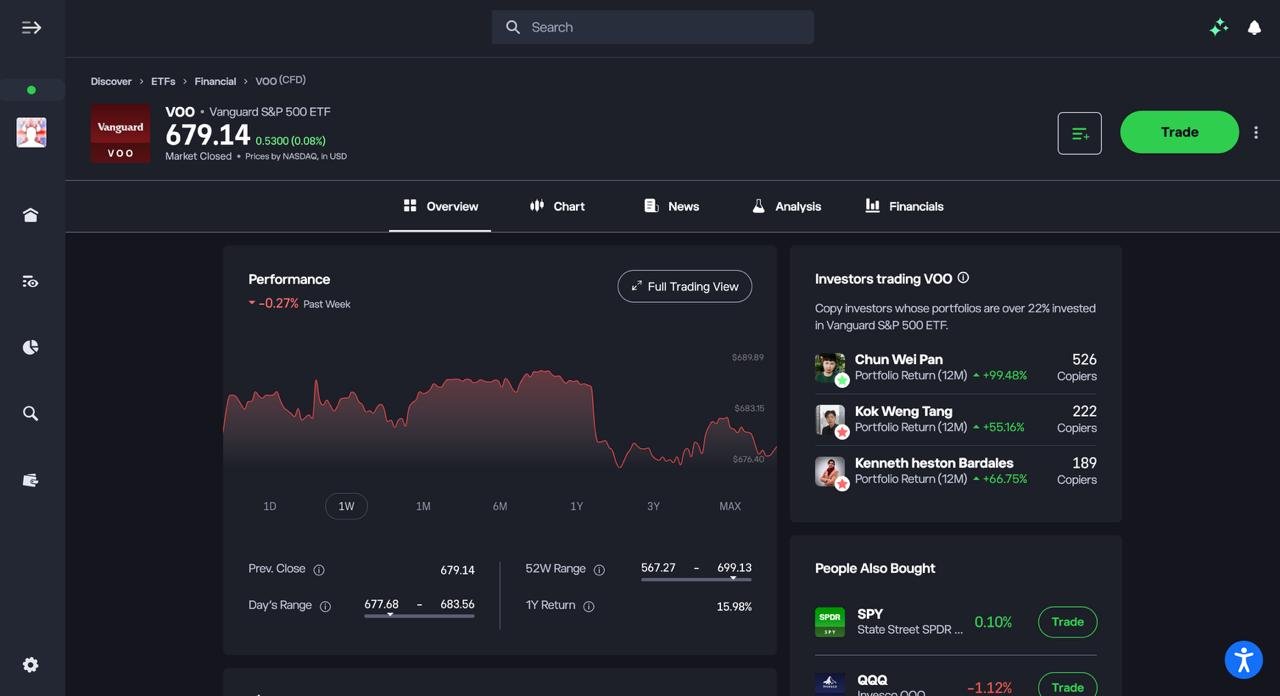
Search for the stock, ETF, or asset you want to invest in and open its overview page to check the price and performance before you commit.
5. Set up and confirm your investment
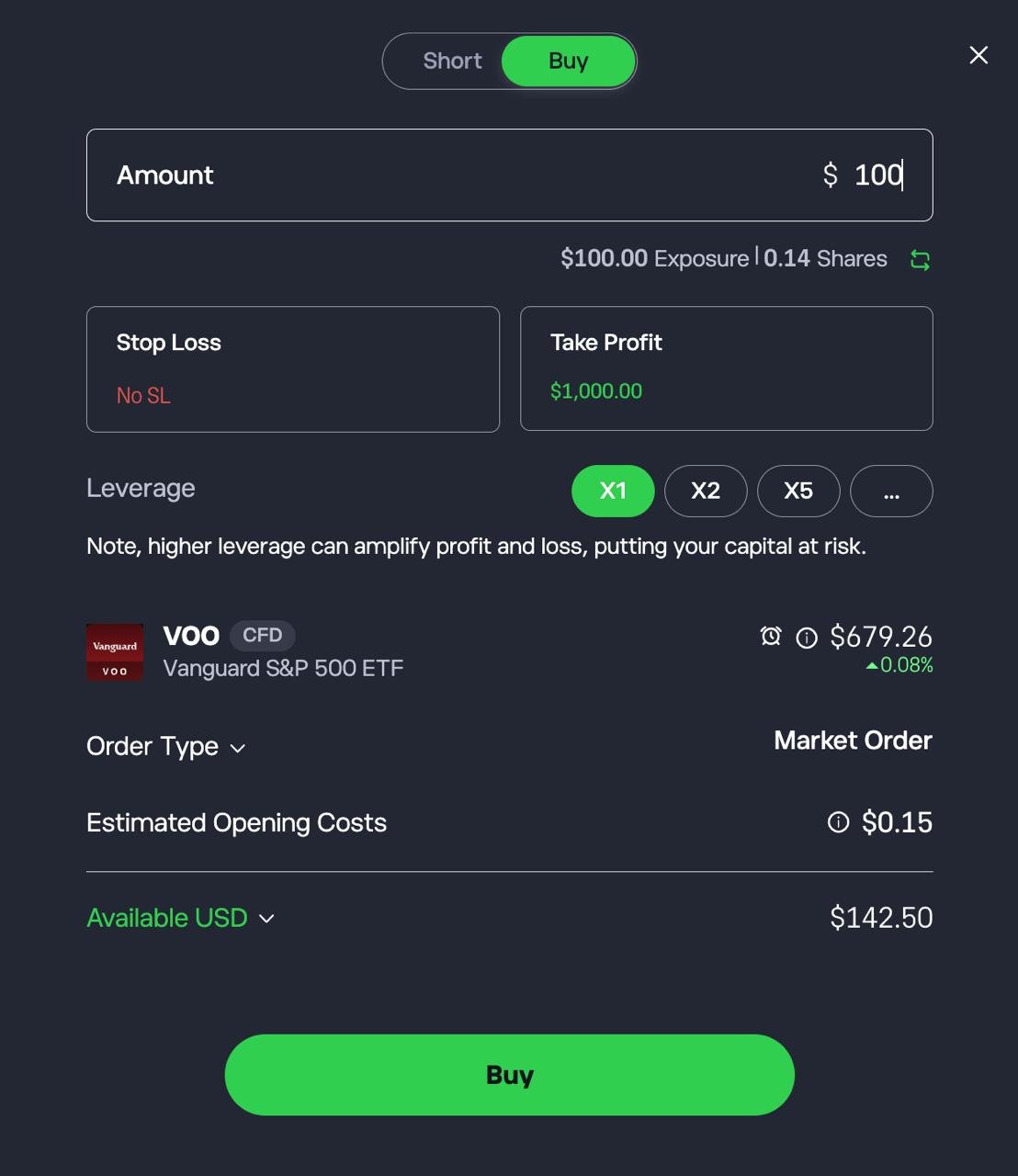
Choose Buy, enter the amount you want to invest, optionally set a Stop Loss and Take Profit, then tap Buy to confirm.
What is an ETF?
An exchange traded fund (ETF) is an investment fund that trades on a stock exchange like a share, typically tracking an index, sector, commodity or basket of assets. Australian investors can buy ASX-listed ETFs through share trading platforms and brokers, with some platforms also providing access to ETFs listed on international exchanges.
If you’re new to ETFs, see our guide to investing in ETFs in Australia for how ETFs work, their risks, fees and how to choose one.
What to look for in an ETF trading platform
Choosing a platform comes down to nine practical factors. Each one directly affects what an ETF actually costs you or what you can access — not whether ETFs are a good investment in general.
- Brokerage fees. What does the platform charge to buy and sell ASX ETFs? Some, like CMC Markets, offer $0 brokerage on the first $1,000 traded per day before a flat fee or percentage kicks in; others, like Moomoo and Tiger Brokers, charge a flat $3 or 0.03% of trade value, whichever is greater.
- CHESS sponsorship vs custody. Ownership structure is an important difference between Australian ETF trading platforms. CHESS-sponsored brokers register your ASX holdings directly against your own HIN; custodial platforms hold your investments on your behalf through a nominee structure instead. If direct CHESS ownership matters to you, prioritise a CHESS-sponsored platform. If lower brokerage or broader international access matters more, a custodial platform may still be competitive.
| Platform | CHESS-sponsored? | Own HIN? | Custodial? |
|---|---|---|---|
| CMC Markets | Yes | Yes | No |
| Moomoo | Yes | Yes | No |
| Tiger Brokers | Yes | Yes | No |
| eToro | No | No | Yes |
| Pepperstone | Not applicable | Not applicable | Not applicable (ETF CFDs — no underlying ownership) |
- ASX ETF access. Does the platform give you the full ASX ETF universe, or a limited subset? CMC Markets, for example, lists 400+ ASX ETFs.
- International ETF access. Can you buy US or globally-listed ETFs, and on which exchanges? Coverage varies significantly — CMC offers 15,000+ international ETFs across 15 markets, while some competitors don’t publish an exact figure at all.
- FX fees. If you plan to buy international ETFs, compare each platform’s currency conversion fee as well as its brokerage. A platform advertising 0% US brokerage, like eToro, can still work out more expensive once its ~1.5% FX conversion spread is factored in — CHESS-sponsored competitors typically charge less on FX.
- Recurring investment / auto-invest. Can you automatically contribute into ETFs on a schedule? Tiger Brokers and Moomoo both support scheduled auto-investing; not every platform does.
- Minimum investment. Does the platform impose a minimum deposit or order size? Several, including CMC, Moomoo and Tiger, let you start from $0.
- Account and platform fees. Watch for inactivity, withdrawal or ongoing account fees on top of brokerage — eToro, for example, charges a $10/month inactivity fee after 12 months and a $5 withdrawal fee.
- Regulation. Confirm the platform holds an ASIC-issued AFSL and check how client assets are held — every platform in this comparison is ASIC-regulated, but licence numbers and asset-holding structures differ.
- Usability. Research tools, screeners, mobile app quality, order types and tax reporting all affect how easy the platform is to actually use day to day.
Platform-selection checklist
| Question | Why it matters |
|---|---|
| What’s the brokerage fee on ASX and international ETFs? | Directly affects cost per trade |
| Is it CHESS-sponsored or custodial? | Determines who legally holds your units |
| How many ASX/international ETFs are available? | Limits what you can actually buy |
| What’s the FX conversion fee? | Can outweigh $0 brokerage on international trades |
| Is auto-invest available? | Needed for regular/recurring contributions |
| What’s the minimum deposit? | Affects accessibility for smaller investors |
| Are there account or inactivity fees? | Erodes returns even with low brokerage |
| Is it ASIC-regulated with an AFSL? | Confirms regulatory protection |
Conclusion
The best ETF trading platform in Australia depends on how you invest, but for most long-term investors, CMC Markets stands out as the strongest all-round option. It combines CHESS-sponsored ASX ETF ownership, competitive brokerage and broad global market access under ASIC regulation.
Moomoo and Tiger Brokers are excellent alternatives for cost-focused investors, offering low ASX brokerage and strong US ETF access with CHESS sponsorship. If simplicity matters more than ownership structure, eToro provides commission-free ETF trading in an easy-to-use interface, though it operates on a custodial model.
Pepperstone, by contrast, is suited to short-term traders using ETF CFDs rather than long-term investors seeking direct ownership.
For most Australians building diversified, buy-and-hold ETF portfolios, a CHESS-sponsored broker with low fees and access to both ASX and global ETFs remains the most practical and structurally sound choice.
FAQs
What is the best ETF trading platform in Australia?
For most long-term investors, CMC Markets is the strongest all-round choice due to CHESS sponsorship, competitive brokerage and global ETF access. Cost-focused investors may prefer Moomoo or Tiger Brokers, while eToro suits beginners comfortable with a custodial structure.
Is CHESS sponsorship important when buying ETFs?
CHESS sponsorship means your ETF units are registered directly under your HIN on the ASX. This provides clear legal ownership. Custodial brokers hold assets on your behalf, which is common globally but structured differently.
Are ETFs safer than individual shares?
ETFs reduce company-specific risk through diversification, but they still carry market risk. A broad market ETF will rise and fall with the overall share market.
Do ETFs pay dividends?
Yes. Many equity ETFs distribute income received from underlying companies, usually quarterly or semi-annually. Distributions may include dividends, interest and capital gains.
Are ETFs suitable for beginners?
Yes. Broad, low-cost index ETFs are often suitable for beginners because they provide diversified exposure in a single trade. However, leveraged or thematic ETFs are generally not appropriate for inexperienced investors.
What are the best ETF providers in Australia?
The best ETF providers in Australia are CMC Markets, Moomoo, Tiger Brokers, eToro, and Pepperstone, based on fees, market access, ownership structure, and platform usability. CMC Markets stands out for CHESS-sponsored ASX ETFs, while Moomoo and Tiger Brokers lead on low-cost global access, and eToro offers the simplest experience for beginners.
What are the best ETF trading platforms in Australia for beginners?
The best ETF trading platforms in Australia for beginners are eToro, CMC Markets, and Moomoo, as they combine simple interfaces, low minimum deposits, and easy access to ASX and global ETFs. eToro is the most beginner-friendly overall, while CMC Markets offers CHESS-sponsored ownership, and Moomoo provides low-cost trading with intuitive tools.
