

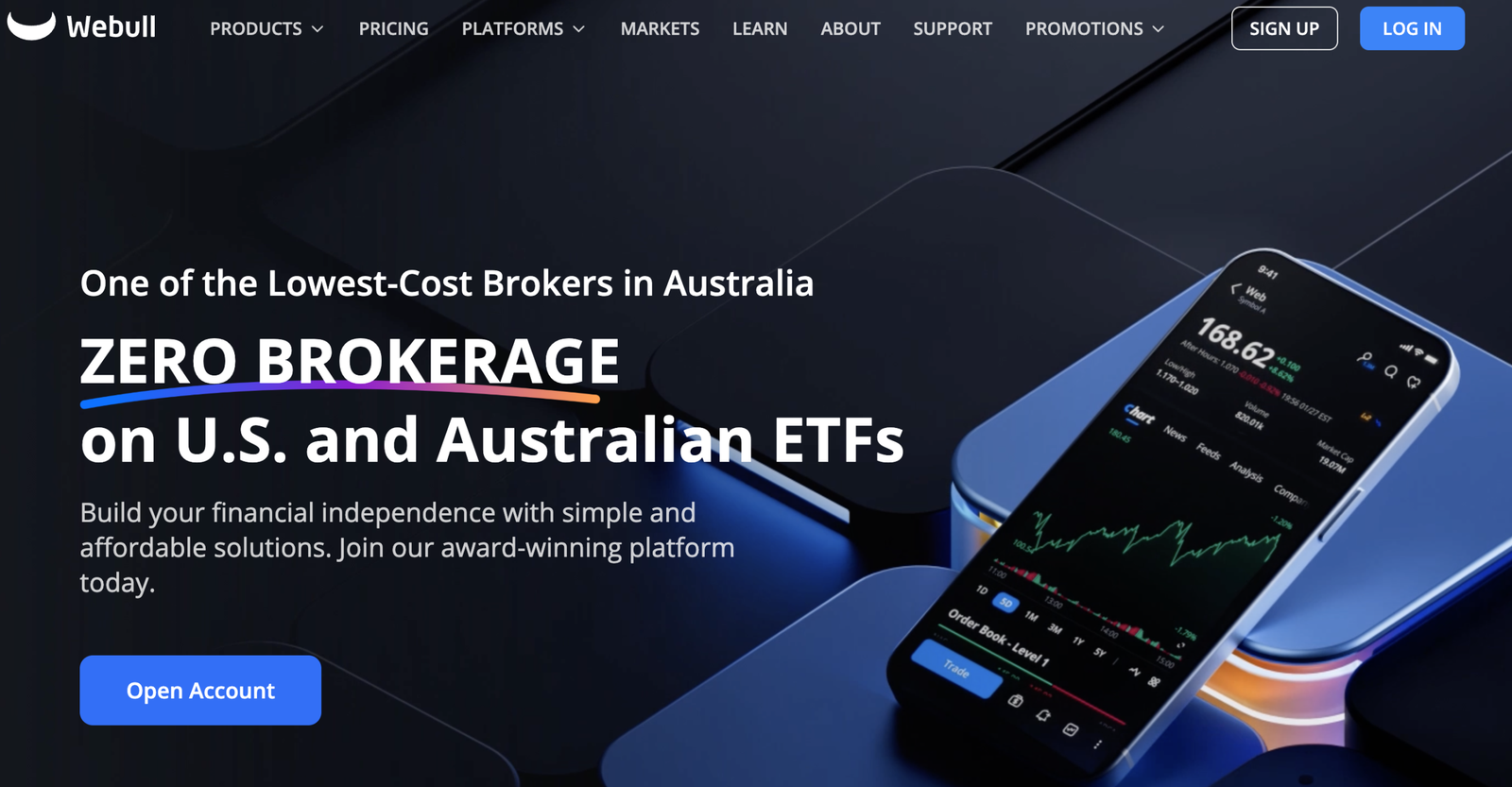
Webull is a low-cost share trading platform available in Australia in 2026, with $0 brokerage on Australian and US ETFs, CHESS-sponsored ASX investing, and access to US stocks, US options and crypto.
In this Webull Review Australia, we break down what matters most for Aussies including ASIC licensing, fees and FX costs, market access, and whether the platform is genuinely safe and worth using.
Quick verdict: How do we rate Webull for users in Australia in 2026?
Overall Rating: 4.2 / 5
Webull is a strong low-cost trading platform for Australian investors in 2026, particularly those focused on ASX and US stocks, ETFs, and US options with advanced charting tools.
It is best suited to cost-conscious beginners and active traders who value $0 brokerage on ETFs, CHESS-sponsored ASX shares, and a powerful mobile and desktop experience.
It is not ideal for investors seeking broad asset coverage, such as managed funds, bonds, forex or Australian options, or those who prioritise premium customer support.
Ratings breakdown
| Category | Score | Summary |
|---|---|---|
| Security & Trust | 4.3 / 5 | Webull Australia operates under an AFSL and ASIC oversight, with CHESS-sponsored ASX holdings, segregated client funds and multi-factor authentication. The global group is regulated by the SEC and FINRA in the US. No negative balance protection and not a publicly listed company slightly reduce transparency. |
| Fees & Pricing | 4.6 / 5 | $0 brokerage on Australian and US ETFs, low stock commissions (from $1 AUD min), competitive US options pricing (~$0.50 per contract), and no inactivity or platform fees. FX conversion (≈0.50%) and USD crypto settlement reduce the score slightly. |
| Features | 4.3 / 5 | Advanced charting with 60+ indicators and a full suite of drawing tools, paper trading, auto-investing, fractional shares, US options, crypto (+200 coins), and SMSF support. Missing asset classes include managed funds, bonds, forex and CFDs. |
| Ease of Use | 4.5 / 5 | Fast digital onboarding (often 1–2 business days), no minimum deposit, and a highly polished mobile and desktop platform. Tool depth may feel overwhelming for absolute beginners. |
| Customer Support | 3.6 / 5 | Multiple channels including phone, email and in-app messaging. However, slow response times weigh on the score. |
| Reputation | 4.1 / 5 | Strong industry recognition, solid app store ratings (~4.3–4.4/5), and growing Australian adoption. |
Webull at a glance
| Category | Details |
|---|---|
| Bestc for | Long-term investors and beginners who want low fees, ETFs and strong tools |
| Assets available | ASX shares (CHESS-sponsored), US stocks, ETFs, US options, crypto (≈240 coins), HK & China A-shares |
| Real asset ownership | Yes. ASX shares are CHESS-sponsored |
| Derivatives offered | Limited. US options only. No CFDs, forex, futures or Australian options |
| Minimum deposit | $0 AUD |
| Trading fees | AU stocks: 0.0003 × trade value (min $1 AUD). AU & US ETFs: $0 brokerage. US options: from ~$0.50 per contract |
| FX & conversion fees | ~0.50% FX conversion when trading non-AUD assets |
| Account types | Individual, Joint, SMSF, Trust, Company, Demo |
| Regulation | ASIC-regulated (AFSL holder) in Australia |
| Investor protection | Client funds segregated. ASX shares CHESS-held. No negative balance protection |
| Platform access | Desktop (Windows & Mac), iOS, Android |
| Education & tools | Advanced. Paper trading, screeners, 60+ indicators, real-time data |
| Customer support | Phone, email, in-app messaging. Market hours + 24/7 in-app |
| Not suitable for | Investors needing managed funds, bonds, forex, CFDs or Australian options |
Who should use Webull and who should avoid it?
Webull suits a specific type of Australian investor in 2026. It works best if your priorities align with low fees, listed assets and a feature-rich platform. It is less suitable if you need broad asset coverage or high-touch support.
Webull is a good fit for you if
- You’re a beginner or long-term investor who wants no minimum deposit, paper trading, and low-cost investing (especially $0 brokerage on AU & US ETFs).
- You want real ASX ownership via CHESS-sponsored Australian shares (good for buy-and-hold investors).
- You’re fee-sensitive and prefer a platform with no account/inactivity fees and low trading costs (ASX shares from $1 min).
- You like advanced tools (strong charting, screeners, market data) without paying premium-broker prices.
- You want AU + US market access, plus selected Hong Kong/China exposure and crypto (≈240 coins) in one app.
Webull is a bad fit for you if
- You want a broad multi-asset portfolio (no managed funds, bonds, forex, CFDs, commodities).
- You need Australian options (Webull supports US options only).
- Customer support is a top priority—service speed/quality is a common complaint in user reviews.
- You want a simple, minimal platform—the feature depth can feel busy for “set-and-forget” beginners.
- You trade lots of foreign assets and want the lowest FX friction (Webull charges ~0.50% FX conversion, and crypto requires USD conversion).
What are the pros and cons of using Webull in Australia?
Webull Australia is strongest for low-cost ASX/US ETF investing and tool-heavy trading (charts, screeners, paper trading). The trade-offs are a narrower product range than full-service brokers and some friction points around transfers, currency and support.
- $0 brokerage on Australian + US ETFs (helps fee-sensitive, long-term investors using DCA/auto-invest).
- Low entry barrier: $0 minimum deposit for cash accounts; fully digital onboarding (often verified fast).
- CHESS-sponsored ASX trading (direct ownership model many Australians prefer for shares).
- Strong trading tools for the price: advanced charting, screeners, alerts, news, and paper trading for practice.
- Fractional shares on supported markets (useful for small portfolios and high-priced US stocks).
- No inactivity fee / no platform fee (good for casual investors who trade occasionally).
- Options/active trading features (order types, extended-hours tools) support more advanced users as skills grow.
- Extra account types can suit locals (e.g., SMSF support mentioned in Australian coverage).
- Limited asset classes vs “all-in-one” brokers: no bonds/managed funds/forex (so diversified, multi-asset investors may need another platform).
- No Australian options (options access is US-only, so ASX derivatives traders need alternatives).
- Global coverage is selective (focus is ASX + US, with some HK/China access; fewer markets than global-first brokers like Interactive Brokers).
- Can feel complex for true beginners: the interface is feature-rich, which can increase the learning curve.
- FX + currency friction: non-AUD markets introduce conversion costs and FX exposure; crypto trading may require AUD→USD conversion.
- Funding/withdrawal constraints can matter depending on method (bank transfer reliance; international/wire fees can be high in some regions).
- Support quality is mixed
- Leverage risks: if using margin/options, complexity and losses can scale quickly; no negative balance protection (relevant to leveraged products).
How regulated and trustworthy is Webull in Australia?
Webull is considered well regulated and legitimate for Australian investors, with local licensing, global oversight, and standard investor-protection practices. That said, it is not a bank and not publicly listed, which slightly reduces transparency compared with large incumbent brokers.
Regulation snapshot
| Area | Status |
|---|---|
| Local regulator | ASIC |
| Australian licence | AFSL holder |
| Authorised in Australia | Yes |
| ASX share holding | CHESS-sponsored |
| Client fund segregation | Yes |
| Negative balance protection | No |
| Global regulators | SEC, FINRA (US), SFC (Hong Kong) |
| Investor compensation (AU) | No SIPC-style scheme |
| Founded | 2017 |
| Publicly listed | No |
| Bank licence | No |
What assets can you trade on Webull as a user in Australia?
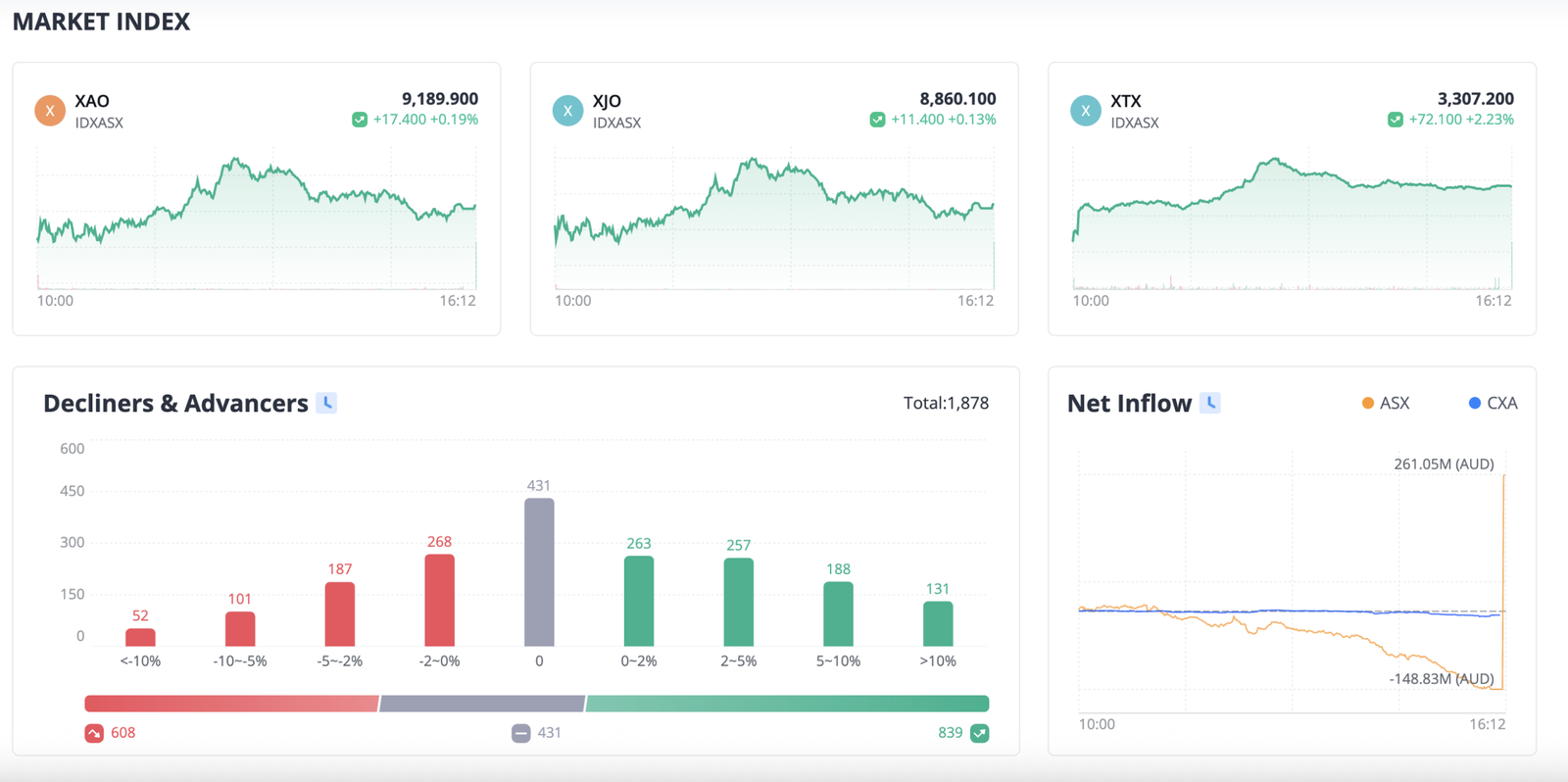
Webull Australia is primarily a listed-securities platform (shares/ETFs + exchange-traded derivatives). For Australians, it focuses on ASX/Cboe Australia for local listings, US markets for shares/ETFs and US-listed options, plus crypto via Webull Pay (a separate service).
Shares and ETFs (Australia + US)
For most Australian investors, Webull’s core coverage is shares and ETFs across Australia and the US. Webull Australia promotes access to the ASX and Cboe Australia for local trading, alongside US market access for shares/ETFs. Read our full guide on how to invest in ETFs.
Derivatives (what’s actually available)
If you want derivatives at Webull in Australia, they’re mainly US options and ASX warrants. Webull frames options as US options for AU users.
ASX warrants are exchange-traded products whose value is linked to an underlying (including, in some cases, indices/commodities/currencies depending on the series).
Crypto (and Australia-specific restrictions)
Crypto is available to Australians via Webull Pay, making it a convenient option for those looking to learn how to invest in crypto.
Webull Pay markets “up to 240+ cryptocurrencies” for Australia, but the exact list can change over time. Webull also notes that Webull Pay’s crypto services are not provided under Webull’s AFSL.
What you can’t trade on Webull Australia (in practice)
Webull won’t suit investors looking for forex trading, CFDs, futures, bonds, or managed funds. It’s positioned around listed equities/ETFs, US options, ASX warrants, and crypto via Webull Pay.
Asset coverage table (Australia)
| Asset class | Available to AU users? | What you can trade (AU offering) | Key limitations/notes |
|---|---|---|---|
| Australian shares | Yes | ASX-listed shares (CHESS sponsorship is used for AU share platforms; confirm per account setup) | Local market access is via ASX and also Cboe Australia where relevant. |
| Australian ETFs | Yes | ASX-listed ETFs | Availability and any $0 brokerage promos depend on current pricing schedule. |
| Warrants (ASX) | Yes | ASX warrants (structured products that can provide exposure to shares and sometimes other underlyings) | Warrants can reference assets like commodities/currencies/indices depending on issuer/series (you’re trading the warrant, not spot FX/commodities). |
| US shares | Yes | US-listed shares (often including fractional shares, depending on the instrument) | Trading is in USD; FX conversion may apply. |
| US ETFs | Yes | US-listed ETFs | Same USD/FX considerations as US shares. |
| Options (derivatives) | Yes (US only) | US-listed stock/options | Webull Australia supports US options only (no Australian options). |
| Crypto (spot) | Yes (via Webull Pay) | Spot crypto trading, up to 240+ cryptocurrencies for AU users | Offered through Webull Pay and not under Webull’s AFSL; coin list and availability can change and may be restricted by eligibility/KYC. |
| Forex (spot FX) | No | — | Not presented as a tradeable asset class in Webull Australia’s product menu (you may still incur FX conversion when buying non-AUD assets). |
| CFDs | No | — | Not listed as an AU product line. |
| Futures | No | — | Not listed as an AU product line. |
| Bonds / treasuries | No | — | Not listed as an AU product line. |
| Managed funds / mutual funds | No | — | Not listed as an AU product line. |
How much does Webull cost in Australia?
For Australian users, Webull’s pricing is largely “low-fee + pay-as-you-trade”. You’ll pay a small commission on shares (unless it’s an ETF with $0 brokerage), per-contract fees on US options, a spread/fee on crypto, and FX conversion when you trade offshore markets in non-AUD currencies.
Currency for Australia: AUD is the local funding currency, but you’ll trade US assets in USD (and Hong Kong/China assets in their local currencies). That means FX conversion costs play a meaningful part of your total cost when buying/selling offshore assets.
Trading fees (commissions, spreads, per-contract fees)
Australian shares (ASX/Cboe Australia): Webull’s share commission is a small percentage of trade value with a minimum charge:
- AU shares: 0.0003 × trade value (min A$1)
- AU warrants: 0.0003 × trade value (min A$4.90)
ETFs (Australia + US)
- AU ETFs: $0 brokerage
- US ETFs: $0 brokerage
US shares
- US shares: 0.00025 × trade value (min US$1)
US options
- US options: US$0.50 per contract
(Exchange/regulatory fees may still apply depending on the venue and contract type, even when the broker’s commission is low.)
Crypto (Australia)
- Crypto: Priced as a spread/fee in basis points (for example, 30 bps = 0.30% of trade value).
FX and conversion fees (often overlooked)
If you deposit in AUD but trade US stocks/options (USD) or HK/CN markets (HKD/CNY), you’ll usually pay an FX conversion cost:
- Currency conversion fee: 50 bps (0.50%) per conversion
What this means in practice:
- Converting A$10,000 to another currency at 0.50% is roughly A$50 in conversion cost (before considering the spot rate movement and any embedded spread). If you buy and later sell an offshore asset and convert back, you may pay conversion costs twice (AUD→USD and USD→AUD), depending on how the account handles multi-currency balances.
Non-trading fees (account, funding, withdrawals, admin)
These are the fees you can pay without placing a trade:
- Account / platform fees: $0
- Inactivity fee: $0
- Deposits: AUD deposits $0; USD deposits may incur a small fee (e.g., US$1)
- Withdrawals: AUD withdrawals $0; USD withdrawals may incur a fee (e.g., US$7)
- Admin / transfer fees: for example, an off-market transfer may be charged per security (e.g., A$55 per security)
Typical fees table
These examples use Webull Australia fee schedule and show what “typical” costs look like on realistic trade sizes.
| What you’re trading (AU user) | Typical fee type | Fee | Example trade size | Example cost (approx.) |
|---|---|---|---|---|
| AU shares | Commission | 0.0003 × value (min A$1) | A$5,000 | A$1.50 |
| AU ETFs | Commission | $0 | A$5,000 | A$0 |
| AU warrants | Commission | 0.0003 × value (min A$4.90) | A$5,000 | A$4.90 (min applies) |
| US shares | Commission | 0.00025 × value (min US$1) | US$5,000 | US$1.25 |
| US ETFs | Commission | $0 | US$5,000 | US$0 |
| US options | Per-contract | US$0.50 / contract | 10 contracts | US$5.00 |
| Crypto | Spread/fee | 30 bps (0.30%) | A$1,000 | A$3.00 |
| FX conversion (when needed) | Conversion fee | 50 bps (0.50%) | A$10,000 | ~A$50 per conversion |
| AUD deposit | Non-trading | $0 | A$1,000 | A$0 |
| USD withdrawal | Non-trading | Fee | US$1,000 | US$7 (example) |
How good is Webull’s web app for users?
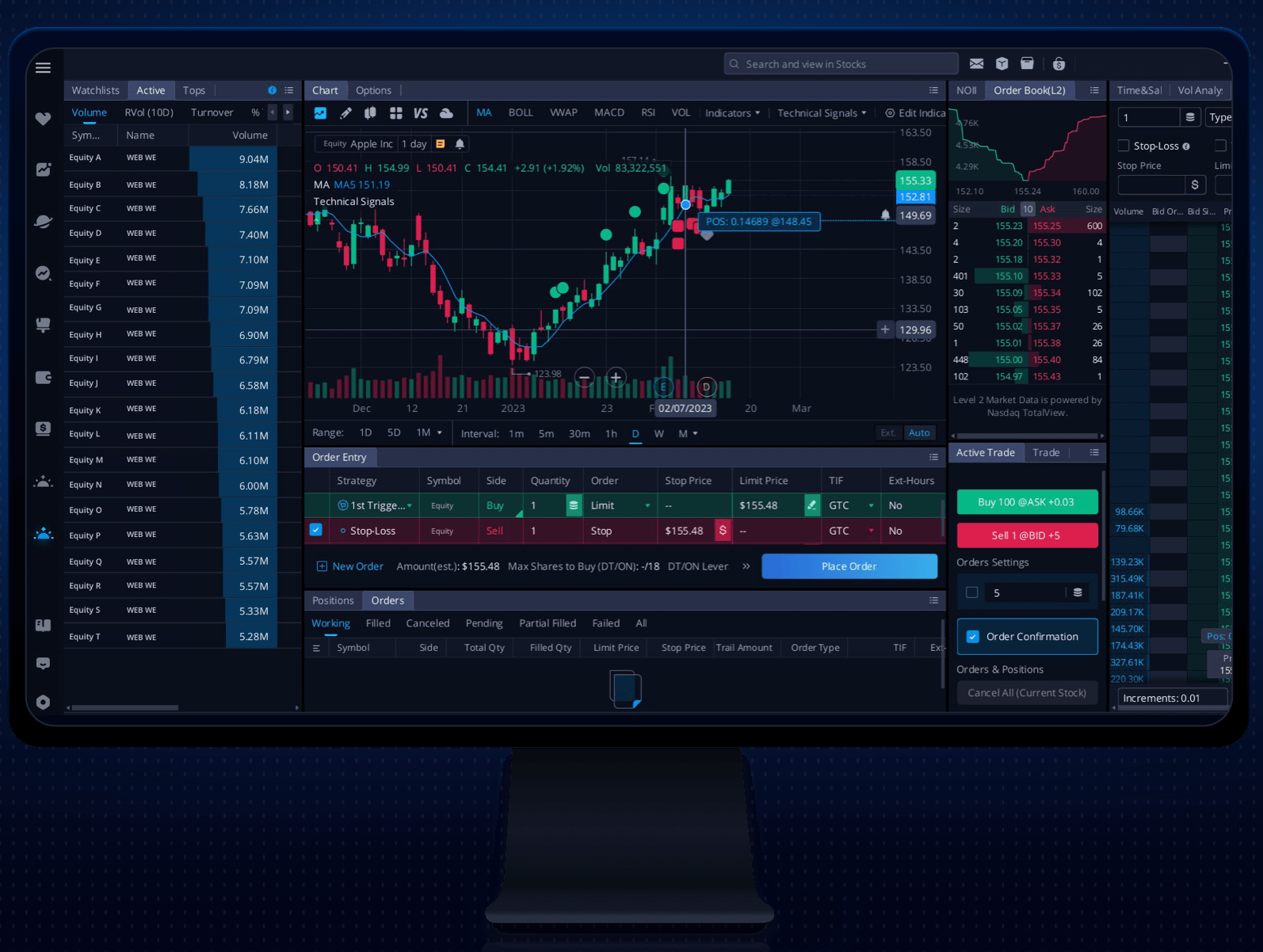
Webull’s web platform is fast, modern, and feature-rich, and it feels closer to a “pro” layout than most low-cost brokers.
For Australian users, it’s especially strong for ASX/US shares, ETFs and US options, but it’s not built for every asset class or advanced automation.
Usability
The interface is clean but information-dense, with watchlists, charts, news, positions and the order ticket all easy to access. Search works well by ticker/name. Beginners may find it slightly overwhelming, while active traders love the depth.
Charting
Charting is a standout:
- 60+ indicators and a full suite of drawing tools
- multiple timeframes (intraday to long-term)
- responsive charts suitable for active monitoring and analysis
Customisation
You can rearrange panels, build watchlists, and save layouts/presets. The desktop app is still more flexible for multi-screen traders, but the web trading app is more than capable for most users.
Known limitations
Key constraints for Australian users:
- US options only (no Australian options)
- No forex, CFDs, bonds, managed funds
- Some account actions (notably funding features in some flows) may still be easier in the mobile app
- Limited advanced automation vs. Interactive Brokers-style platforms
Web app feature summary
| Area | Webull web app |
|---|---|
| Usability | High (best for intermediate/active users) |
| Charting | Very strong (60+ indicators) |
| Order types | Market/Limit/Stop/Stop-limit/Bracket |
| Customisation | Good (desktop is deeper) |
| Biggest gaps | No ASX options, no forex/CFDs/funds |
How good is the Webull mobile app in Australia?
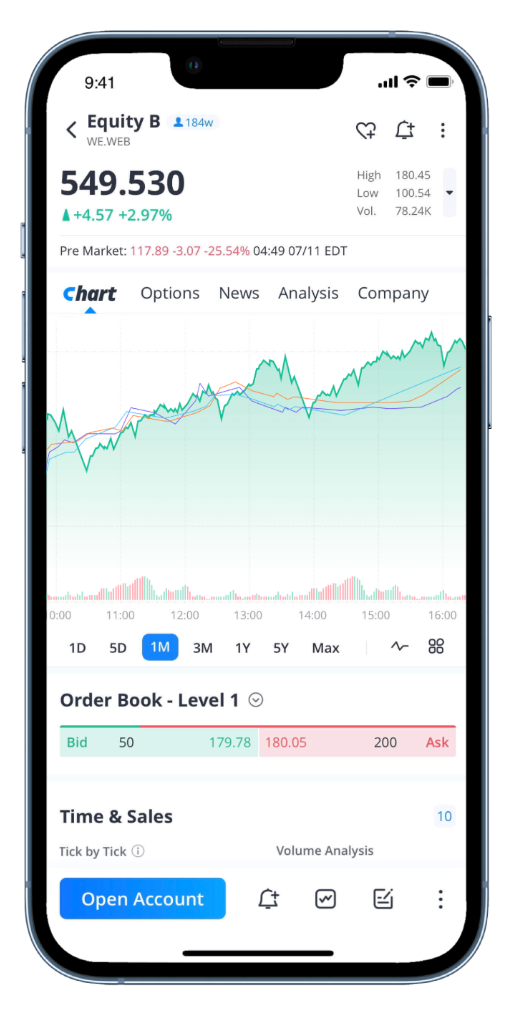
For users in Australia, Webull’s mobile trading app is one of the platform’s biggest strengths. It’s built “mobile-first” and packs in most of the tools you’d normally expect to find on a desktop trading terminal, while still staying relatively easy to navigate.
iOS and Android availability
- iOS: Available via the Apple App Store.
- Android: Available via Google Play.
- Multi-language support: The app supports multiple languages (including English, plus major Asian/European languages), which is useful if you prefer a non-English interface.
Key features (what you can do in-app)
Webull’s mobile investment app is designed so you can handle almost everything from your phone, including:
- Trading & portfolio: Trade supported markets/products available to Australian users (e.g., ASX and US shares/ETFs where enabled on your account, plus US options if supported on your AU setup), track positions, and monitor P/L.
- Advanced charting: Strong mobile charting with 60+ indicators and a full suite of drawing tools60+ indicators and a full suite of drawing tools, (drawing/analysis), which is above average for a “low-cost” broker app.
- Watchlists & discovery: Watchlists, screeners, trending lists, and market movers for quick idea generation.
- Alerts: Price alerts and notifications (helpful if you’re following US markets overnight from Australia).
- Paper trading: A simulated (“demo”) environment so beginners can practise strategies without risking capital.
- Market data add-ons: Options like Level 2-style data (often as a paid add-on) for users who want deeper order-book insight.
Stability and performance
- Fast and responsive for core actions (searching tickers, loading charts, placing standard orders).
- Best for active monitoring: Because the app is feature-dense, older phones (or poor connectivity) can feel cluttered when running multiple panels (watchlist + chart + order ticket).
- Data-heavy tools: Live data, advanced charts, and depth tools can use more bandwidth and battery than “basic” investing apps—worth keeping in mind if you’re trading on mobile data.
Security features (what protections you get)
- Two-step / 2FA-style protections: Webull supports stronger login protection (via verification codes and security controls), which reduces the risk of unauthorised access.
- Account security controls: Webull also publishes guidance on securing accounts (e.g., stronger passwords, phishing awareness, and security settings).
- Practical tip: If you’re trading on the go, enable all available security settings (2-step login, device verification/alerts where available) and avoid logging in on shared Wi-Fi.
Quick scorecard
| Category | What to expect on Webull mobile |
|---|---|
| Ease of use | Clean layout, but feature-rich (slightly “busy” for first-timers) |
| Charting | Best-in-class for the price tier (indicators + drawing tools) |
| Trading workflow | Strong order ticket + fast repeat actions for active traders |
| Research | Solid in-app news, watchlists, screeners; lighter than pro platforms |
| Security | Stronger-than-basic protections available (enable all security options) |
How easy is it to open an account with Webull in Australia?
Overall, opening a Webull account in Australia is straightforward and mostly mobile-first: the onboarding is fully digital, the forms are guided, and identity checks are handled inside the app/web flow.
For most retail users with standard documentation, it’s a fast sign-up (often same-day to 1–2 business days), but approval time can stretch if your documents don’t match perfectly or you’re applying for a more complex account type (e.g., SMSF/company/trust).
Digital onboarding (what the process feels like)
- Fully online application via Webull’s mobile app (accessible via web/desktop sign-up as well).
- A step-by-step flow that collects personal details, tax residency and trading suitability info (standard for regulated brokers).
- Uploads are in-app (camera/photo upload), so most people can complete the application in 10–20 minutes if they have documents ready.
KYC steps (what you’ll be asked to do)
Webull’s KYC is typical for an Australian brokerage and usually includes:
- Create account (email/mobile + password)
- Personal details (legal name, DOB, address)
- Tax + regulatory questions (e.g., residency, declarations)
- Suitability/experience (trading experience, risk questions)
- Identity verification
- Upload government ID (driver’s licence or passport)
- Sometimes selfie/liveness check (depends on the verification path)
- Link funding method (bank transfer/PayID/PayTo-style rails depending on what Webull supports at the time)
- Submit the application and wait for verification/approval
Typical approval time (what to expect)
| Scenario | Typical outcome |
|---|---|
| Clear ID + matching details + standard individual account | Often same day or 1 business day |
| Manual review required (document mismatch / unclear image) | 1–3 business days |
| Complex structures (e.g., SMSF, trust, company) / extra compliance checks | Several business days in some cases |
Practical tip: have your ID + a clean, well-lit photo ready and ensure your legal name and address match what you enter.
Common delays (and how to avoid them)
The most common reasons approvals slow down:
- Blurry / cropped ID images (glare, missing corners, low light)
- Name mismatch (nickname used in the form vs legal name on ID)
- Address mismatch (different formatting, old address, PO box issues)
- Verification “can’t confirm” outcomes (can happen with thin credit files or recent address changes)
- Higher-risk flags (multiple attempts, VPN/location anomalies, repeated failed scans)
- Account type complexity (SMSF/company/trust often triggers more document requests)
How do deposits and withdrawals work in Australia (methods, fees, limits, speed)?
For Australian users, Webull keeps deposits and withdrawals fairly simple, with no minimum funding requirement and a strong focus on bank-based transfers rather than cards or e-wallets. The trade-off is that while local AUD transfers are cheap or free, international and USD-related transfers are slower and more expensive.
What is the minimum deposit in Australia?
Minimum deposit: $0. You can open and verify a Webull account in Australia without funding it at all. This applies to standard cash accounts. Exception: if you want to trade on margin, minimum equity requirements apply (e.g. USD $2,000+ depending on margin features).
Deposit methods in Australia
| Deposit method | Currency | Fee | Typical speed | Notes |
|---|---|---|---|---|
| Australian bank transfer (AUD) | AUD | $0 | Same day – 1 business day | Most common method for Australian users |
| PayTo / instant bank rails (where available) | AUD | $0 | Near-instant (24/7) | Subject to bank participation and limits |
| International wire transfer | USD | ~$1 (Webull) + bank fees | 1–5 business days | Sending bank/interediary fees often apply |
Key points for Australians: Deposits must come from a bank account in your own name. Webull does not support PayPal or other consumer e-wallets. Funding is primarily managed via the mobile app.
Withdrawal methods in Australia
| Withdrawal method | Currency | Fee | Typical speed | Notes |
|---|---|---|---|---|
| Australian bank transfer | AUD | $0 | 1–2 business days | Most cost-effective option |
| International wire transfer | USD | ~USD $7 | 1–5 business days | Third-party bank fees may apply |
Important withdrawal rules: Withdrawals can only be sent to a bank account in your own name. Recently deposited funds may be subject to a holding period (a few days) before they become withdrawable. If deposit and withdrawal bank accounts differ, additional compliance checks may extend processing time.
What account types does Webull offer users in Australia?
Webull Australia offers a broader mix of account structures than many “app-first” brokers, covering everyday retail investors as well as SMSFs and entity setups.
In practice, the choice comes down to (1) how the account is legally held (individual vs SMSF vs company/trust), and (2) whether you want to trade with your own cash only (cash) or use borrowing/leverage (margin, where available and subject to eligibility).
Standard account types in Australia
| Account type | Who it suits | Key notes in Australia |
|---|---|---|
| Individual account | Most retail investors | Standard personal investing account for ASX/US shares & ETFs (and eligible products) |
| Joint account | Couples/partners/shared investing | Useful for shared portfolios; both holders usually need to complete identity checks |
| SMSF account | Self-managed super funds | Designed for trustees wanting trading access within an SMSF structure |
| Trust account | Family trusts/investment trusts | Requires trust documentation and additional verification steps |
| Company account | Businesses/investment companies | Requires ASIC/company registration details and authorised representative checks |
Cash vs margin accounts
Webull supports cash-style investing by default, and may offer margin functionality depending on product, eligibility, and local rules.
| Feature | Cash account | Margin account |
|---|---|---|
| Uses borrowed money | No | Yes (leverage/borrowing) |
| Risk profile | Lower (no leverage) | Higher (losses are magnified) |
| Best for | Long-term investors, ETF buyers, beginners | Experienced traders who understand leverage, margin calls, and liquidation risk |
| Typical requirement | $0 minimum deposit to open | Additional eligibility + minimum equity/limits may apply |
Tax-advantaged accounts (Australia)
Australia does not use US-style “tax-advantaged brokerage wrappers” like IRAs (Traditional/Roth) that some US brokers offer. In Australia, the closest equivalent is investing through superannuation structures. On Webull, that means an SMSF account (if you’re eligible and set up correctly), rather than a special retail “tax wrapper” account type.
Professional or special accounts
Webull Australia is positioned for both retail and more advanced users, and supports “special structure” accounts (SMSF, Trust, Company) that many low-cost apps don’t offer.
Demo / paper trading
Webull is known for offering a demo-style environment (often called paper trading) so users can practice strategies without risking real funds. This is useful for Australians who want to learn the platform, test orders, and get comfortable with market movements before funding a live account.
Is Webull suitable for your trading or investing style in Australia?
Webull is strongest for active traders and self-directed investors who want low-cost access to ASX + US shares/ETFs, plus US options, with a platform that leans heavily into advanced charting, screeners, real-time data add-ons, and paper trading.
It’s less ideal if your “style” depends on ultra-fast execution for scalping, Australian options, or a broad multi-asset menu (e.g., bonds, managed funds, forex, CFDs).
Suitability ratings by style (Australia)
| Style | Suitability | Why (Australia-specific) |
|---|---|---|
| Scalping | 2/5 | Webull’s tools are strong, but scalping is highly sensitive to execution speed, spreads, and routing. Webull is not designed as a specialist scalping venue, and it’s not a CFD/forex broker. If your edge relies on sub-second fills across very liquid markets, platforms built for pro-style execution tend to be a better fit. |
| Day trading | 4/5 | Best-fit use case: Webull’s platform is built around active trading workflows (advanced charts/indicators, watchlists, alerts, screeners, paper trading). It also supports US options and extended/overnight access on selected US stocks/ETFs, which can suit active strategies across time zones. |
| Swing trading | 4/5 | Strong fit for 2–30 day horizons: low entry barriers (including no minimum deposit), good charting/alerts, and low-cost access to US and ASX markets (especially ETFs). Works well if you mainly swing equities/ETFs and occasionally hedge/speculate with US options. |
| Long-term investing | 4/5 | Very solid for long-term, self-directed investing thanks to $0 brokerage on ETFs (AU + US), fractional shares (where available), and features like recurring investing/auto-investing. Not ideal if you want managed portfolios, bonds, or extensive adviser-style guidance. |
What education and learning resources are available for users in Australia?
Webull Australia puts a strong emphasis on self-directed learning, with most education delivered in-platform via its mobile and desktop apps.
Rather than formal, accredited courses, Webull focuses on practical trading education, market literacy, and hands-on learning through demo tools. This approach suits beginners who want to learn by doing, as well as active traders refining strategies on a good day trading platform.
Courses (structured learning)
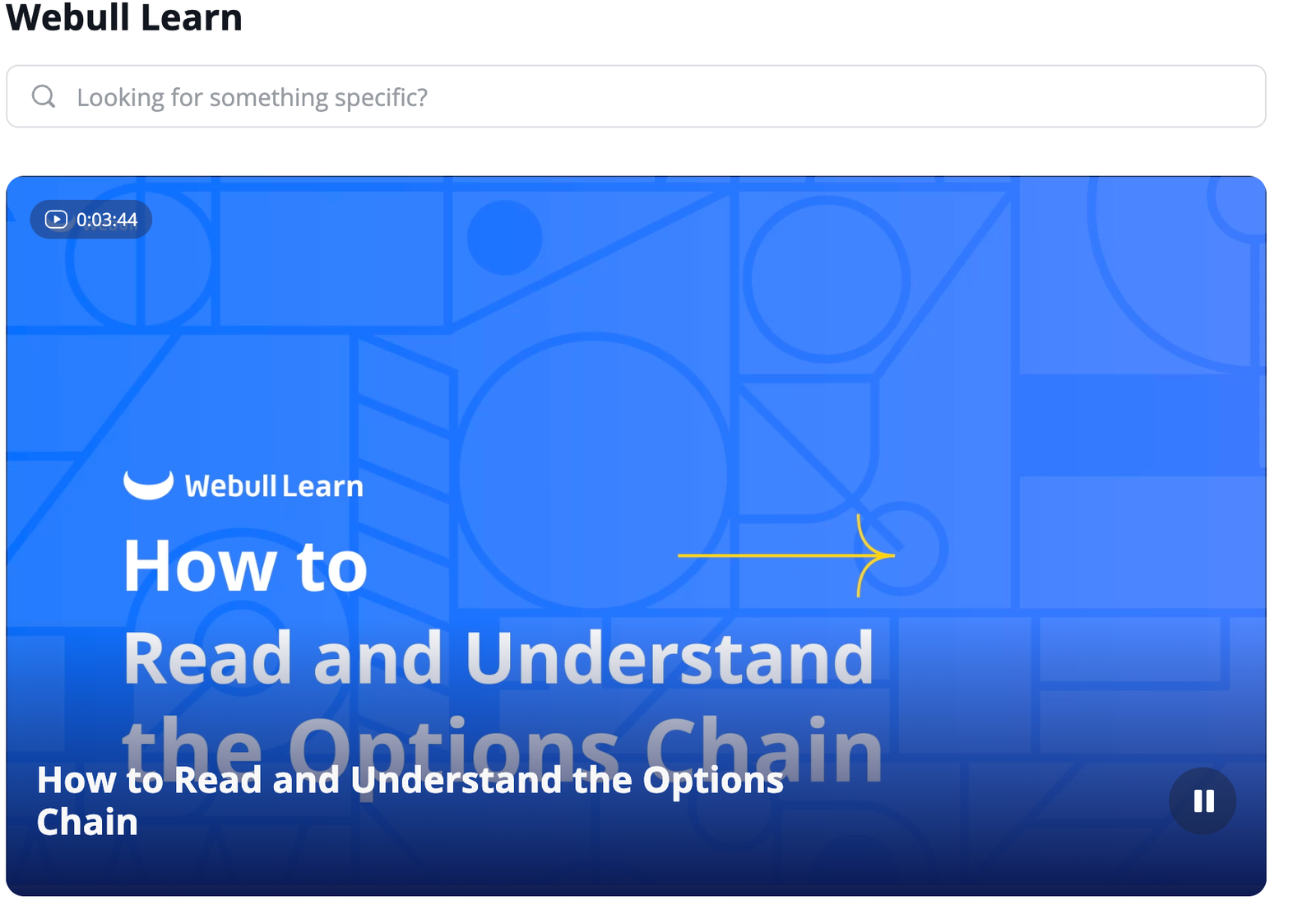
Webull provides a structured learning hub often branded as Webull Learn. What it covers:
- Beginner-to-intermediate lessons covering:
- Stock market basics
- ETFs and diversification
- Options fundamentals (US options only)
- Technical analysis concepts
- Risk management and trading psychology
- Bite-sized modules rather than long-form courses
- Content embedded directly in the app, making it easy to learn alongside trading
These materials are designed to be globally applicable, so while examples often reference US markets, the concepts translate well to ASX, US stocks, and ETFs traded by Australians.
Tutorials (platform & trading how-tos)
Tutorials are one of Webull’s strongest learning tools, especially for new users. Available tutorial content includes:
- Step-by-step guides on:
- Placing market, limit, stop, and bracket orders
- Using advanced charting tools (60+ indicators)
- Building and customising watchlists
- Using screeners and filters
- Navigating mobile vs desktop platforms
- Short explainer videos and in-app walkthroughs
- Contextual tips that appear while you’re using features (e.g. charts or order tickets)
For Australian users, tutorials are particularly helpful for:
- Understanding US market mechanics (time zones, extended hours)
- Learning how currency conversion and FX exposure works when trading offshore assets
- Getting comfortable with US options, which differ structurally from Australian derivatives
Webinars and live content
Webull runs regular live and recorded webinars, although availability can vary by region and time zone. Typical webinar themes:
- Market outlooks and macro discussions
- Stock and ETF analysis
- Options strategy overviews
- Platform feature deep-dives
- Risk management for active traders
Important for Australians:
- Many live sessions are scheduled around US market hours, so replays are often more practical than live attendance
- Content is educational, not advice, and focuses on strategy and tools rather than stock recommendations
- There are no Australia-specific regulatory or tax webinars (e.g. CGT or SMSF compliance), so local tax education must be sourced externally
Demo accounts (paper trading)
Webull’s demo trading account (paper trading) is one of its standout learning features and is fully available to Australian users.
Key details:
- Uses real-time or near real-time market data
- Simulated cash balance (often generous, e.g. six figures in virtual funds)
- Supports:
- ASX and US stocks/ETFs
- US options
- Full charting, indicators, and order types
- No time limit on demo usage
- Can be switched on/off instantly inside the app
Why this matters for Australians:
- You can practise trading US markets overnight without real risk
- Beginners can learn order mechanics before funding a real account
- Active traders can test day trading or swing strategies before committing capital
- Especially valuable given $0 minimum deposit, allowing a smooth transition from demo to live trading
Summary of learning resources (Australia)
| Resource type | Available to AU users | Depth | Best for |
|---|---|---|---|
| Courses / learning hub | Yes | Intro–intermediate | Beginners learning markets & concepts |
| Platform tutorials | Yes | Strong | New users learning Webull tools |
| Webinars | Yes (mostly global) | Moderate | Active traders & market context |
| Demo (paper trading) | Yes | Very strong | Practice without risk |
What unique or standout features does Webull offer in Australia?
Webull stands out in Australia by combining CHESS-sponsored ASX investing, $0 ETF brokerage, and professional-grade tools in one platform with no minimum deposit, a mix many competitors don’t offer.
Standout features competitors often lack
- CHESS-sponsored ASX shares (true ownership): You receive a HIN, and shares are held directly in your name rather than via a custodian model.
- $0 brokerage on ETFs (Australia and US): Zero brokerage on ASX-listed and US-listed ETFs, with no account, platform, or inactivity fees, making it well suited to long-term ETF and dollar-cost averaging strategies.
- Advanced trading platform (mobile and desktop): Includes 60+ indicators and a full suite of drawing tools, custom layouts, alerts, and stock and ETF screeners using 40+ filters, plus advanced order types such as bracket orders.
- Paper trading (demo account): A full-featured demo environment that closely mirrors live trading, useful for learning how to trade on the platform or testing strategies.
- Extended and near 24-hour US trading: Access to pre-market, after-hours, and selected near 24-hour US trading sessions, helping Australian users manage time zone differences.
Australia-specific advantages
- SMSF and entity accounts: Supports SMSF, and in many cases trust and company accounts, which are not available on app-first brokers.
- Fractional investing and auto-investing: Enables smaller, recurring investments (where supported), making portfolio building more accessible.
- Integrated crypto trading: Access to 200+ cryptocurrencies alongside shares and ETFs, with crypto trading handled inside the same platform.
Feature comparison snapshot
| Feature | Webull (Australia) | Many competitors |
|---|---|---|
| CHESS-sponsored ASX shares | Yes | No / custodian model |
| $0 brokerage on ASX ETFs | Yes | Limited |
| $0 brokerage on US ETFs | Yes | Uncommon |
| Advanced charting and screeners | Yes | Basic |
| Paper trading | Yes | Often unavailable |
| SMSF / trust / company accounts | Yes | Limited |
| Extended US trading hours | Yes | Uncommon |
How good is Webull’s customer support for users in Australia?
Webull’s customer support in Australia is adequate for routine account and platform questions, but it’s not a standout if you need fast, high-touch help. You get help via in-app secure messaging (and sometimes live chat), plus email and phone support, but response times can be slow and service quality can be inconsistent.
Support channels (Australia)
| Channel | What it’s best for | Notes for AU users |
|---|---|---|
| In-app secure message | Account-specific issues (KYC, withdrawals, trade queries) | Often the main “official” pathway inside the app |
| Live chat (where available) | Quick platform/how-to questions | Availability can vary by app version/entity; live chat may be limited |
| Non-urgent issues, documentation follow-ups | Useful if you need to attach documents or keep a written trail | |
| Phone support | Time-sensitive issues | Wait times can be lengthy during busy periods |
Availability and coverage
- AU support is offered during Australian business/market hours, with some providers describing after-hours coverage depending on the channel (in-app is usually the most accessible outside business hours).
- Webull’s platform is global, so escalation for certain issues (e.g., complex trade/market data queries) may take longer than local-first brokers.
Response quality (what to expect)
- Good for: basic platform navigation, account setup, common funding/withdrawal questions, and standard troubleshooting.
- Mixed for: urgent withdrawal timing concerns, complex account structure queries (e.g., SMSF/trust/company paperwork), and disputes that require multiple handoffs.
- Support quality is inconsistent—some issues are resolved quickly, others can take multiple follow-ups.
Known issues
- Speed: delays are a recurring complaint, especially during peak volatility or high volumes.
- Phone experience: Weak phone support and longer wait times.
- Sentiment risk: Customer service sentiment is weaker than platform and pricing sentiment.
How does Webull compare to competitors in Australia?
Webull is one of the best-value picks in Australia for investors who want $0 ETF brokerage (ASX and US) plus advanced charting and screeners, while still getting local CHESS-sponsored ASX ownership.
It competes most directly with Stake (low flat brokerage + CHESS) and Interactive Brokers (very low FX/commissions for global traders), but it is less suitable if you want the broadest global market access or deep ASX research like traditional banks.
Head-to-head comparison (Australia)
| Platform | Fees (typical retail pricing) | Assets (Australia focus) | Regulation / custody | Best use case |
|---|---|---|---|---|
| Webull (Australia) | ASX stocks: 0.0003 × trade value (min A$1) • ASX ETFs: $0 • US ETFs: $0 • US options: from US$0.50/contract • FX: ~0.50% (50 bps) per conversion | ASX shares + ETFs (CHESS), US shares + ETFs, US options, plus crypto (availability and pricing varies by product/version) | ASIC-licensed (AFSL) + CHESS-sponsored for ASX holdings (shares held in your name via HIN) | ETF-first portfolios (ASX/US) and active traders who want strong tools without paying premium brokerage |
| Stake | A$3 CHESS-sponsored brokerage for trades up to A$30,000 • above that 0.01% | ASX shares + ETFs (CHESS), and access to US market (via Stake Wall St) | CHESS-sponsored for ASX (HIN ownership model) | Simple, low-cost ASX share trading (flat-fee fans) and easy CHESS onboarding |
| SelfWealth | Advertised as A$9.50 brokerage on CHESS-sponsored trades (often shown as a flat rate in comparisons) | ASX shares + ETFs (CHESS); (other products depend on offering/version) | CHESS-sponsored model highlighted in industry comparisons | Buy-and-hold ASX investors who trade occasionally and prefer a straightforward flat-fee structure |
| CommSec | Tiered brokerage often shown as A$5 for small trades (with CDIA), rising with trade size in many public comparisons | Broad ASX access with strong bank-style reporting and research (product range depends on account type) | Mainstream Australian broker model (bank-backed ecosystem) | Investors who value research + brand familiarity over being the cheapest |
| Interactive Brokers (IBKR) | Known for low commissions + sharp FX (fees depend on market/plan; best for frequent traders and multi-market investors) | Very wide global market access (multi-currency investing) | IBKR Australia operates under an Australian Financial Services Licence (AFSL) | Serious/global investors who want maximum markets + efficient FX, and don’t need a “simple” UI |
Is Webull suitable for beginners?
Yes, if you want low fees and don’t mind a feature-rich platform. Webull is beginner-friendly on costs and onboarding, but it’s less “guided” than beginner-first apps.
Ease of onboarding
- Fast, fully digital sign-up (often verified in ~1 business day).
- $0 minimum deposit for a standard cash account.
- In Australia, supports CHESS-sponsored ASX investing (direct ownership).
Interface simplicity
- The app is easy to navigate, but busy (charts, screeners, news, options tools).
- Best for beginners who will start simple (ETFs/stocks) and add features later.
Demo/paper trading
- Includes paper trading, letting beginners practice orders, watchlists and risk-free tracking before using real money.
Education
- Offers in-app learning/news/community, but it’s more “resources + tools” than step-by-step coaching.
Risk warnings & safeguards
- Strong login security options (e.g., two-step login).
- Beginners should note that options and margin add complexity,
Quick comparison (Australia)
- Beginner-first apps (e.g., CommSec Pocket, Raiz): simpler and more guided, but fewer markets/tools.
- Webull: more tools + paper trading, but more to learn.
What are the main limitations users should be aware of?
- Limited asset classes: Often no bonds/fixed income, mutual funds/managed funds, or forex (and frequently no CFDs), so it’s not an “all-in-one” broker.
- Local product gaps: Options access can be limited for local users (e.g., US options only in some regions; no domestic exchange options).
- FX/base-currency friction: Some entities use USD-only base currency and/or charge conversion spreads/fees when funding or trading non-local assets.
- Funding/withdrawal constraints + wire costs: Bank-transfer-heavy setup; wire transfers can be expensive and transfer/holding delays can occur.
- Customer support weaknesses: Common complaints include poor phone support, long waits, and inconsistent resolution for account/withdrawal issues.
Conclusion
Webull Australia is a strong choice for cost-conscious investors who want $0 brokerage on ASX and US ETFs, CHESS-sponsored ASX ownership, and advanced trading tools across mobile and desktop. It suits ETF builders, active traders, and SMSF users who value low fees and modern analytics.
That said, it’s not ideal if you need bonds, managed funds, Australian options, forex/CFDs. It’s also not ideal if high-touch customer support is a priority. Overall, Webull offers excellent value within its niche, just make sure its product range and support model align with your investing needs.
FAQs
Is Webull available in Australia?
Yes. Webull offers accounts for Australian residents, with access to ASX trading (CHESS-sponsored) plus selected overseas markets (e.g., US; and in some cases Hong Kong/China).
Does Webull offer CHESS sponsorship for ASX shares?
Yes. Webull supports CHESS-sponsored ASX trading, which means ASX holdings are registered via CHESS rather than held under a pooled custodian model.
Can Australians trade Australian options on Webull?
No. Australian options aren’t available. Options access is focused on US options.
Can I trade crypto on Webull in Australia?
Webull has offered crypto access for Australian users (coin coverage can be large), but crypto is higher-risk and pricing can include spreads + FX costs. Check the in-app product list and fees before trading.
