

In 2026, Australia’s day trading landscape is defined by a handful of standout platforms catering to different types of investors.
Pepperstone continues to lead for forex and index specialists, while Interactive Brokers appeals to traders seeking broad global market access paired with competitive commissions.
Meanwhile, Moomoo has carved out a niche among active stock traders, and Tiger Brokers attracts those focused on cost-efficient international equity trading.
For newcomers, eToro remains a popular entry point, thanks to its intuitive interface and social trading features.
These trading platforms are widely used by active traders because they offer fast execution, competitive costs, and access to multiple markets.
Day trading platforms should be chosen based on execution speed, spreads, commissions, and available trading tools.
Small differences in trading costs or platform performance can significantly affect results for traders who place frequent trades.
- CopyTrading lets you mirror experienced investors' trades
- Multi-asset access: stocks, crypto, ETFs, forex, commodities
- Beginner-friendly interface with social/community sentiment feed
Capital at risk. T&Cs apply.
Top day trading platforms in Australia (2026)
- Best for forex and fast execution: Pepperstone is a leading choice for active forex and index traders thanks to its tight spreads, fast execution speeds, and strong ASIC regulation.
- Best for professional traders and global markets: Interactive Brokers offers extremely low commissions and access to global equities, options, and futures, making it a strong choice for experienced traders.
- Best for beginners and social trading: eToro provides a simple interface and copy-trading tools, allowing new traders to follow and replicate experienced investors.
- Best for active stock traders: Moomoo offers competitive brokerage, advanced charting tools, and strong support for US and ASX shares.
- Best for low-cost international equities: Tiger Brokers provides competitive fees and access to US and Asian markets, making it attractive for traders focused on global equities.
Key considerations for Australian day traders
- Fees and spreads: Frequent trading means costs add up quickly, so low spreads and competitive commissions are critical.
- Execution speed: Fast order execution helps reduce slippage and is essential for short-term trading strategies.
- Trading platforms: Many traders prefer platforms with advanced charting, technical indicators, and fast order entry tools.
- Market access: Choose a platform that supports the assets you trade most often, such as forex, indices, ASX shares, US stocks, or options.
- Regulation: Platforms regulated by ASIC provide stronger oversight and compliance with Australian financial services rules.
What are the best day trading platforms in Australia?
| Platform | Best For | Trading Cost | Platforms | Order Types | Level 2/DOM | Algo/API | ASIC |
|---|---|---|---|---|---|---|---|
| Pepperstone | Low spreads & fast forex/CFD execution | Razor account: from 0.0 pips + $3.50/lot/side (MT4/MT5) or $3.00/lot/side (cTrader). Standard account: from 0.6 pips, no commission. No account or inactivity fees. | MT4, MT5, cTrader, TradingView, plus proprietary Pepperstone platform. Web, desktop and mobile. | Market, limit, stop, stop-loss/take-profit, trailing stop. No guaranteed stop-loss. | Not offered. | Yes: EAs on MT4/MT5, cTrader Automate (cAlgo), free VPS hosting. | Yes: Pepperstone Group Limited, AFSL 414530. |
| Interactive Brokers | Professional & global multi-asset traders needing deep market access | ASX: 0.08%/trade (min $6). US shares: US$0.005/share (min US$1). Options from $2/contract, futures from $5/contract. No account or inactivity fees. | Client Portal (web), IBKR Desktop, Trader Workstation (TWS), IBKR Mobile & GlobalTrader apps. | Market, limit, stop, stop-limit, trailing, bracket, OCA, IOC, FOK, iceberg/hidden, MOC/LOC, conditional, plus 100+ types and execution algos (VWAP, TWAP, etc.). | Yes: full Level II/DOM via TWS Market Depth Trader (paid market data subscriptions apply). | Yes: full IBKR API (TWS API and Client Portal API) for algorithmic trading. | Yes: Interactive Brokers Australia Pty Ltd, AFSL 453554. |
| eToro | Beginners & social/copy trading | Stocks: US$2/trade flat fee. ETFs: $0 commission. CFD/forex from ~1.0 pip spread. US$5 withdrawal fee, US$10/month inactivity fee after 12 months dormant. | Browser-based web platform, iOS and Android apps. No desktop download. | Market, limit, stop-loss, trailing stop-loss. GTC only, no IOC, FOK or time-based expiry. | Not offered. | No native retail API, no MT4/MT5. Automation limited to CopyTrader and Smart Portfolios. | Yes: eToro AUS Capital Ltd, AFSL 491139. |
| Moomoo | Active stock traders wanting free Level 2 data & charting | ASX: from $3 or 0.03% (GST incl.). US: from US$0.99/order. Options from US$0.50/contract. No account or inactivity fees. | Web platform, desktop app, iOS and Android. | Market, limit, stop, stop-limit, trailing stop. GTC and Day time-in-force. | Yes: free Level 2 (Nasdaq TotalView, NYSE OpenBook, ARCA; eligibility applies). | Yes: Moomoo Algo (drag-and-drop rule builder with backtesting) and Moomoo OpenAPI/OpenD. | Yes: Moomoo Securities Australia Ltd (Futu Securities), AFSL 224663. |
| Tiger Brokers | Low-cost global equities access with pro-level tools | ASX: $3 or ~0.03% (min ~$5.50 to $6.45 depending on plan). US: US$0.01 to $0.013/share (min ~US$2). Options from US$0.75/contract (min US$3). No account or inactivity fees. | Tiger Trade (proprietary): web, desktop, iOS and Android. Demo account with $100,000 virtual funds. | Market, limit, stop-loss, stop-limit, conditional, attached (TP/SL), OCA, trailing stop, trailing stop-limit. 9 order types in total. | Yes: Nasdaq TotalView Level 2 data available on Tiger Trade. | Yes: Tiger Open API (Python SDK) for algorithmic trading. | Yes: Tiger Brokers (AU) Pty Limited, AFSL 300767. |
Day trading broker Australia reviews
See our detailed partner reviews below, comparing spreads, execution speed, platforms, and tools across the top day trading brokers in Australia.
1. eToro – Best for beginners and social trading features

Platform Overview
| Key Information | Details |
|---|---|
| Regulator | ASIC – AFSL 491139 |
| Minimum Deposit | US$50 |
| Base Currency | USD only |
| Forex Spread (EUR/USD) | From 1.0 pip |
| S&P 500 CFD Spread | 1.0 |
| Stock Commission (AU clients) | US$2 per trade |
| Crypto Fee | 1% per trade |
| Withdrawal Fee | US$5 |
| Leverage (Retail AU) | Up to 30:1 |
| Negative Balance Protection | Yes (retail clients) |
From our live testing
We opened a $500 AUD/USD position during the Sydney/London overlap and saw a spread of around 1.1 pips. That’s slightly wider than some specialist forex brokers, but eToro doesn’t charge a separate commission.
Holding leveraged CFDs overnight adds financing costs, so we found it better suited to intraday trading.
For US stocks, Australian users pay $2 per trade, while ETFs have no trading commission. The S&P 500 CFD spread was around 1.0 point during peak hours. Withdrawals also carry a $5 fee.
Overall, our testing found eToro’s costs competitive for a simple multi-asset platform, although frequent forex and CFD traders can find tighter spreads elsewhere.
How fast and reliable is order execution on this platform?
Execution is generally stable for manual day traders, with fast order placement in normal market conditions across web and its mobile trading app.
However, eToro operates a market-maker model, does not support scalping, and offers no depth-of-market view, API access or MetaTrader integration. It is suitable for discretionary intraday trading but not for high-frequency or algorithmic strategies.
How competitive are the spreads, commissions and overall trading costs?
Pricing is reasonable but not the cheapest in the Australian market.
Forex spreads start from 1.0 pip and the S&P 500 CFD spread is 1.0, with no separate commission.
Australian clients pay US$2 per stock trade, ETFs are commission-free when unleveraged, and stock CFDs carry a 0.15% spread per side.
Crypto costs 1% per trade plus spread.
The biggest cost for Australians is currency conversion, as accounts are USD-based and typically incur around 1.5% each way, alongside a US$5 withdrawal fee.
What markets and asset classes can you access for day trading?
eToro offers broad access to mainstream markets, including 56 forex pairs, 31 index CFDs, 6,200 stock CFDs, 750 ETF CFDs, 47 commodities and 142 cryptocurrencies.
You can also buy real stocks and ETFs at 1x leverage.
Major exchanges such as the ASX, NYSE and Nasdaq are supported, although coverage focuses on larger, more liquid names rather than niche listings.
How advanced are the charting tools and technical analysis features?
Charting is strong for beginner and intermediate traders, with more than 70 indicators including RSI, MACD, Bollinger Bands and Ichimoku.
Order types include market, limit, stop-loss and trailing stop, but pending limit orders cannot be edited once placed.
There is no MT4 or MT5 support and no automated trading functionality.
The mobile app is polished, secure and easy to use, making it one of the platform’s stronger features.
Is this platform regulated in Australia and how are client funds protected?
Yes. Australian clients trade through eToro AUS Capital Ltd, regulated by ASIC under AFSL 491139.
Client funds are segregated, retail traders receive negative balance protection, and eToro is publicly listed on NASDAQ.
Australia does not provide a statutory investor compensation scheme, and crypto assets are not protected.
Who is this platform best suited to?
eToro is best suited to beginner and intermediate traders who value ease of use, multi-asset access and social or copy trading features, it is one of the best among all the copy trading platforms in Australia.
It is less appropriate for high-frequency scalpers, algorithmic traders or professionals seeking raw spreads and ECN-style execution.
Overall, it is a user-friendly, well-regulated platform, but not a specialist day trading terminal.
Pro & cons
- ASIC regulated
- Low stock commission
- Commission-free ETFs
- Strong mobile app
- Broad asset coverage
- USD-only accounts
- Around 1.5% FX conversion typical
- 1% crypto fee
- Scalping not permitted
Read the full eToro review here.
2. Interactive Brokers – Best for professional traders and global market access
Platform Overview
| Key Information | Details |
|---|---|
| Regulator | ASIC – AFSL 453554 |
| Minimum Deposit | $0 (cash account) |
| ASX Brokerage | 0.08% or $6 min |
| US Brokerage | US$0.005/share, $1 min |
| Forex Commission | From 0.2 bps |
| FX Spreads | From 0.1 pip (majors) |
| Platforms | TWS, IBKR Desktop, Web, Mobile |
| Order Types | 90+ incl. algos |
| Inactivity Fee | None |
From our live testing
We placed a $10,000 CBA trade during the ASX morning session. At IBKR’s 0.08% rate, brokerage came to $8, above the $6 minimum. SmartRouting scans available exchanges for the best execution price, helping limit slippage on larger trades.
For US shares, a 200-share trade at US$0.005 per share costs the US$1 minimum. AUD/USD spreads start around 0.1 pip, plus commission from 0.2 basis points. There are also no platform or inactivity fees.
The main drawback we found was Trader Workstation’s learning curve. Its pricing and execution suit experienced day traders more than beginners.
How fast and reliable is order execution on this platform?
Execution is fast and built for active traders. IBKR’s SmartRouting system scans exchanges in real time to secure the best available price, helping reduce slippage on liquid markets. It handles millions of trades daily and supports algorithmic and high-frequency strategies, making it suitable for serious intraday traders.
How competitive are the spreads, commissions and overall trading costs?
IBKR is one of the lowest-cost platforms available to Australians. ASX trades start at 0.08% with a $6 minimum, while US stocks cost US$0.005 per share with a US$1 minimum. Forex commissions begin at 0.2 basis points with spreads from around 0.1 pip on majors. There are no inactivity or platform fees. Currency conversion is tight but includes a small minimum fee, which can impact very small transfers.
What markets and asset classes can you access for day trading?
Access is institutional grade. Traders can access 90+ global exchanges including ASX, NASDAQ and NYSE. Products include stocks, ETFs, options, futures, forex, bonds, CFDs and select cryptocurrencies. Forex coverage exceeds 100 currency pairs. This depth allows traders to operate across global sessions rather than relying only on local markets.
How advanced are the charting tools and technical analysis features?
Trader Workstation and IBKR Desktop offer professional-level tools, including advanced charting, Level II market depth, options strategy builders and 90+ order types. It’s API acess make it an excellent automated trading platform. The platform is powerful but has a learning curve, especially for beginners.
Is this platform regulated in Australia and how are client funds protected?
Interactive Brokers Australia holds an Australian Financial Services Licence and is regulated by ASIC. Client funds are held in segregated trust accounts. The parent company is publicly listed in the US and well capitalised. Australia does not provide a government compensation scheme for brokerage accounts.
Who is this platform best suited to?
Best for experienced traders, high-volume equity traders, options traders and algorithmic users who want low costs and global access. It can suit beginners willing to learn, but casual investors may find it more complex than necessary. Overall, it delivers institutional-grade trading without institutional minimums.
Pro & Cons
- Very low commissions
- 90+ global exchanges
- Advanced order types
- No inactivity fee
- Complex fee structure
- Steep learning curve
- No MT4/MT5
Read the full Interactive Brokers review here.
3. Pepperstone – Best for low spreads and fast forex execution
Platform Overview
| Key Information | Details |
|---|---|
| Regulator | ASIC – AFSL 414530 |
| Founded | 2010 (Melbourne) |
| Minimum Deposit | $0 (recommended $200) |
| Account Types | Standard, Razor |
| EUR/USD Spread | From 0.0 pips (Razor) |
| Commission (Razor) | $3.50 per lot per side |
| S&P 500 CFD Spread | From 0.4 |
| Platforms | MT4, MT5, cTrader, TradingView |
| Max Leverage (Retail AU) | 30:1 majors |
| Inactivity Fee | $0 |
From our live testing
We tested EUR/USD on Pepperstone’s Razor account, where spreads can start at 0.0 pips with a $3.50 commission per lot, per side.
A standard-lot round trip therefore costs around $7, compared with roughly $20 from the Standard account’s 1.0-pip markup. From our testing, execution speeds were around 77ms for limit orders and 100ms for market orders.
S&P 500 CFD spreads start from 0.4, while scalping and automated strategies are permitted through platforms including cTrader and MT5. All positions are CFDs, however, so overnight financing can apply, and ASIC limits retail leverage on major forex pairs to 30:1.
How fast and reliable is order execution on this platform?
Execution is fast and built for active traders. As one of the leading forex trading platforms Pepperstone uses a no-dealing-desk model with pricing from multiple liquidity providers and low-latency infrastructure. Scalping, hedging and algorithmic trading are allowed, and fills are typically quick with minimal requotes. For short-term forex and index traders, execution quality is a clear strength.
How competitive are the spreads, commissions and overall trading costs?
Costs are sharp, especially on the Razor account. EUR/USD spreads start from 0.0 pips plus $3.50 per lot per side. The Standard account averages around 0.6 to 0.8 pips with no commission. The S&P 500 CFD spread starts from 0.4. There are no inactivity or deposit fees, and most Australian withdrawals are free. Overnight financing applies to leveraged positions.
What markets and asset classes can you access for day trading?
Pepperstone offers 90+ forex pairs, 20+ indices, commodities, 800+ US share CFDs, 150+ Australian share CFDs, ETF CFDs and 20+ crypto CFDs. All products are CFDs, making it one ove the best CFD trading platforms out here, so you do not own the underlying asset. Market coverage is strong for short-term trading, but limited for long-term investors.
How advanced are the charting tools and technical analysis features?
Platform choice is a major advantage. Traders can use MT4, MT5, cTrader or TradingView integration. Automated trading via Expert Advisors is supported, and cTrader offers advanced order controls. Charting is professional-grade, though guaranteed stop losses are not available.
Is this platform regulated in Australia and how are client funds protected?
Pepperstone is regulated by ASIC under AFSL 414530. Client funds are held in segregated trust accounts. Retail clients receive negative balance protection, though Australia does not offer a statutory broker compensation scheme.
Who is this platform best suited to?
Best for active forex and CFD day traders who prioritise tight spreads, fast execution and platform flexibility. Less suitable for investors seeking physical shares or long-term portfolios. Overall, it is built for serious short-term traders rather than passive investors.
Pro & Cons
- ASIC regulated
- Tight spreads on Razor
- Fast execution
- Multiple pro platforms
- No inactivity fee
- Only CFDs, no real shares
- Overnight fees apply
- No guaranteed stop losses
- Focused mainly on forex/CFDs
Read the full Pepperstone review here.
4. Moomoo – Best for active US and ASX stock traders
Platform Overview
| Key Information | Details |
|---|---|
| Regulator | ASIC – AFSL 224663 |
| Minimum Deposit | $0 |
| ASX Brokerage | $3 or 0.03% (whichever higher) |
| US Brokerage | US$0.99 per trade |
| Options | From US$0.50 per contract |
| Forex / CFDs | Not available |
| Platforms | Desktop, Web, iOS, Android |
| CHESS Sponsorship | Yes (ASX) |
| Inactivity Fee | $0 |
From our live testing
We tested Moomoo with a $5,000 ASX share trade. Its 0.03% brokerage rate came in below the $3 minimum, so we paid $3. ASX trades are CHESS-sponsored, meaning shares are held under your own HIN.
For US stocks, brokerage starts at US$0.99 per trade, while AUD/USD currency conversion costs around 50 pips, or roughly 0.5%. US options start from US$0.50 per contract.
During testing, we found Moomoo’s Level 2 market depth, 100+ indicators and TradingView integration particularly useful for analysing short-term trades. There’s also a $1 million paper trading account for testing strategies before using real funds.
Overall, its tools are better suited to active, discretionary stock and options trading than high-frequency or automated strategies.
How fast and reliable is order execution on this platform?
Execution is smooth for ASX and US share trading, with real-time Level 2 data available for active users. However, Moomoo does not publish detailed execution statistics and is not built for high-frequency or algorithmic trading. It suits discretionary stock day traders rather than latency-sensitive strategies.
How competitive are the spreads, commissions, and overall trading costs?
Brokerage is low and transparent. ASX trades cost $3 or 0.03% of trade value, whichever is higher. US stocks and ETFs cost US$0.99 per trade, and US options start from US$0.50 per contract. There are no inactivity fees. Currency conversion applies when trading US stocks, typically with a 50 pip spread on AUD/USD. Overall, pricing is attractive for active equity traders.
What markets and asset classes can you access for day trading?
Moomoo focuses on equities and derivatives linked to equities. You can trade ASX shares with CHESS sponsorship, US stocks and ETFs, including fractional shares, Hong Kong stocks, options and selected futures. Forex, bonds, and CFDs are not available. It is equity-focused rather than multi-asset.
How advanced are the charting tools and technical analysis features?
Charting is a standout feature. The platform includes 60+ technical indicators, 30+ drawing tools, an advanced screener, and Level 2 market depth. TradingView integration expands charting capability. Order types include market, limit, stop, stop-limit, and trailing stop. Paper trading is available for testing strategies.
Is this platform regulated in Australia, and how are client funds protected?
Moomoo Securities Australia Ltd is regulated by ASIC under AFSL 224663. ASX trades are CHESS-sponsored, meaning shares are registered in your name. Client funds are held in segregated accounts. There is no government-backed investor compensation scheme in Australia and no negative balance protection.
Who is this platform best suited to?
Best for active stock and options traders who want low brokerage, strong charting tools and access to US and ASX markets. Not suitable for forex or CFD traders. Overall, it is a competitive choice for equity-focused day traders who value analytics and cost efficiency.
Pro & cons
- ASIC regulated
- CHESS-sponsored ASX trades
- Low brokerage
- Strong charting tools
- No inactivity fee
- No forex or CFDs
- Limited asset classes
- FX conversion spread
- No negative balance protection
Read the full Moomoo review here.
5. Tiger Brokers – Best for low-cost international equity trading

Platform Overview
| Key Information | Details |
|---|---|
| Regulator | ASIC – AFSL 300767 |
| Minimum Deposit | $0 |
| ASX Brokerage | $3 (≤$10k) or 0.03% |
| US Brokerage | US$0.01/share (min US$2) |
| FX Conversion | 55 pips (AUD/USD) |
| Fractional Shares | Yes (US) |
| CHESS Sponsorship | Yes (new accounts) |
| Platforms | Tiger Trade (Desktop & Mobile) |
| Inactivity Fee | $0 |
From our live testing
We tested Tiger Brokers with an $8,000 ASX share trade, which attracted the $3 flat fee for trades below $10,000. ASX shares are CHESS-sponsored and held under your own HIN.
For US shares, 500 shares at US$0.01 each costs US$5, above the US$2 minimum. AUD/USD conversion adds around 55 pips, or roughly 0.55%, making currency conversion a more significant cost. US options start from US$0.65 per contract, plus exchange and regulatory fees.
We found Tiger Trade’s charting, screeners and demo account useful for active stock trading. Overall, the platform is better suited to discretionary ASX and US equity traders than automated or high-frequency strategies.
How fast and reliable is order execution on this platform?
Execution is reliable for retail equity trading on ASX and US markets, with real-time data and Level 2 depth available. The Tiger Trade platform is stable and responsive, but it is not built for algorithmic or high-frequency trading. There is no API access or institutional execution reporting.
How competitive are the spreads, commissions, and overall trading costs?
Brokerage is competitive for moderate trade sizes. ASX trades cost $3 up to $10,000, then 0.03% above that. US shares cost US$0.01 per share with a US$2 minimum. There are no inactivity or account fees. Currency conversion adds a 55-pip spread on AUD/USD, which can reduce returns for frequent US traders.
What markets and asset classes can you access for day trading?
Tiger Brokers offers ASX, US, Hong Kong, and China A-shares, plus ETFs, US and HK options, futures and fractional US shares. Forex, CFD,s and crypto are not available. It is equity-focused rather than multi-asset.
How advanced are the charting tools and technical analysis features?
The platform includes candlestick charts, customisable layouts, stock screeners, and a solid range of technical indicators. Order types include market, limit, stop-loss, and stop-limit. Demo trading accounts are available. Tools are strong for retail traders but not institutional-grade.
Is this platform regulated in Australia, and how are client funds protected?
Tiger Brokers (AU) Pty Ltd is regulated by ASIC and offers CHESS-sponsored ASX accounts with a unique HIN. Client funds are held in segregated accounts. Australia does not provide a government-backed broker compensation scheme.
Who is this platform best suited to?
Best for active stock and options traders who want low brokerage and access to US and Asian markets. Not suitable for forex or CFD traders. Overall, it is a cost-effective equity trading platform, though FX costs should be considered.
Read the full Tiger Brokers review here
Pro & cons
- ASIC regulated
- CHESS-sponsored accounts
- Low brokerage
- Access to US and Asia
- No inactivity fee
- No forex, CFDs or crypto
- FX spread on USD trades
- Limited advanced trading tools
- No API trading
How to place a trade on an Australian day trading platform?
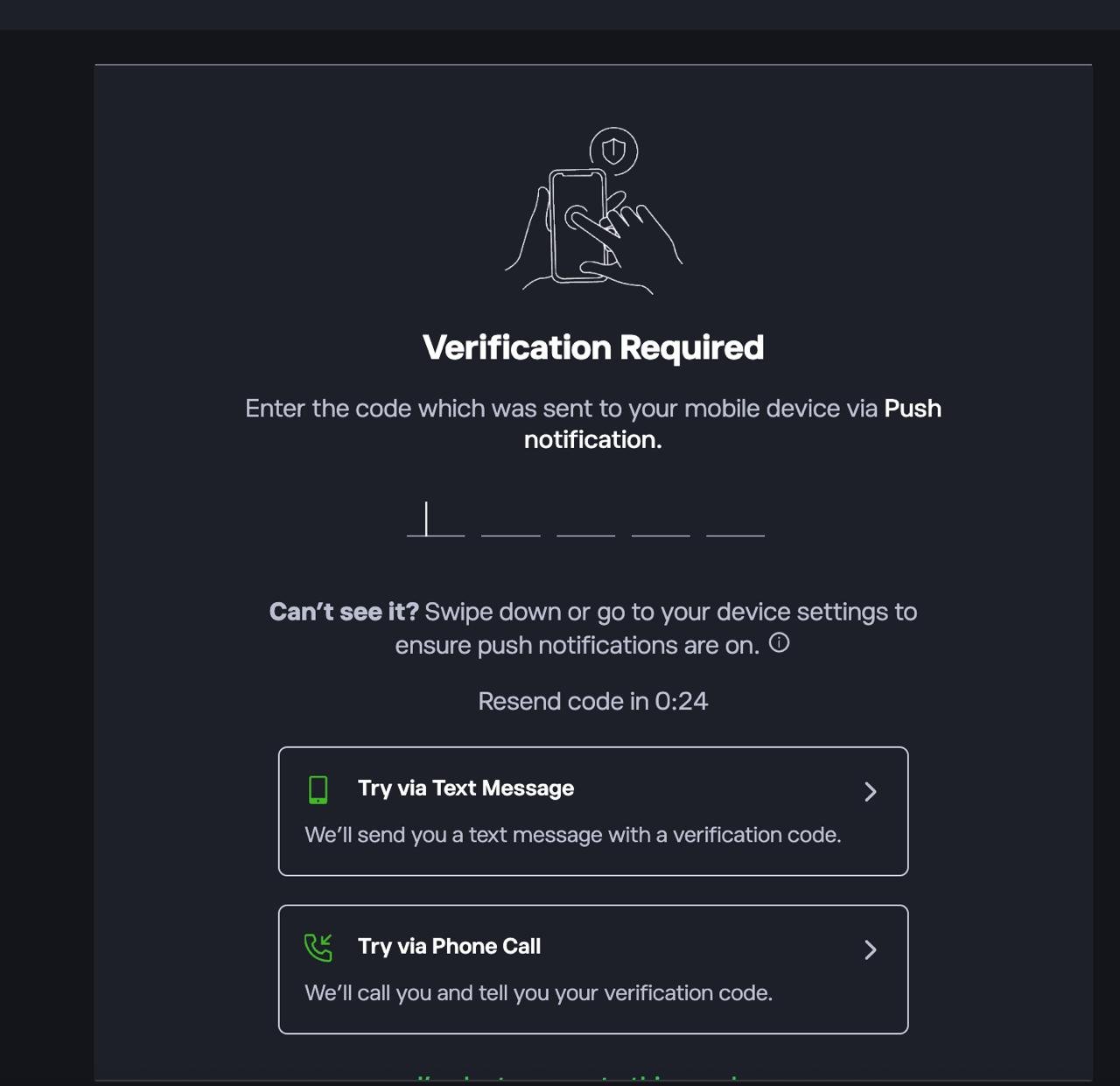
1. Log in to the platform
If prompted, complete 2FA by entering the code sent via push notification, SMS, or phone call.
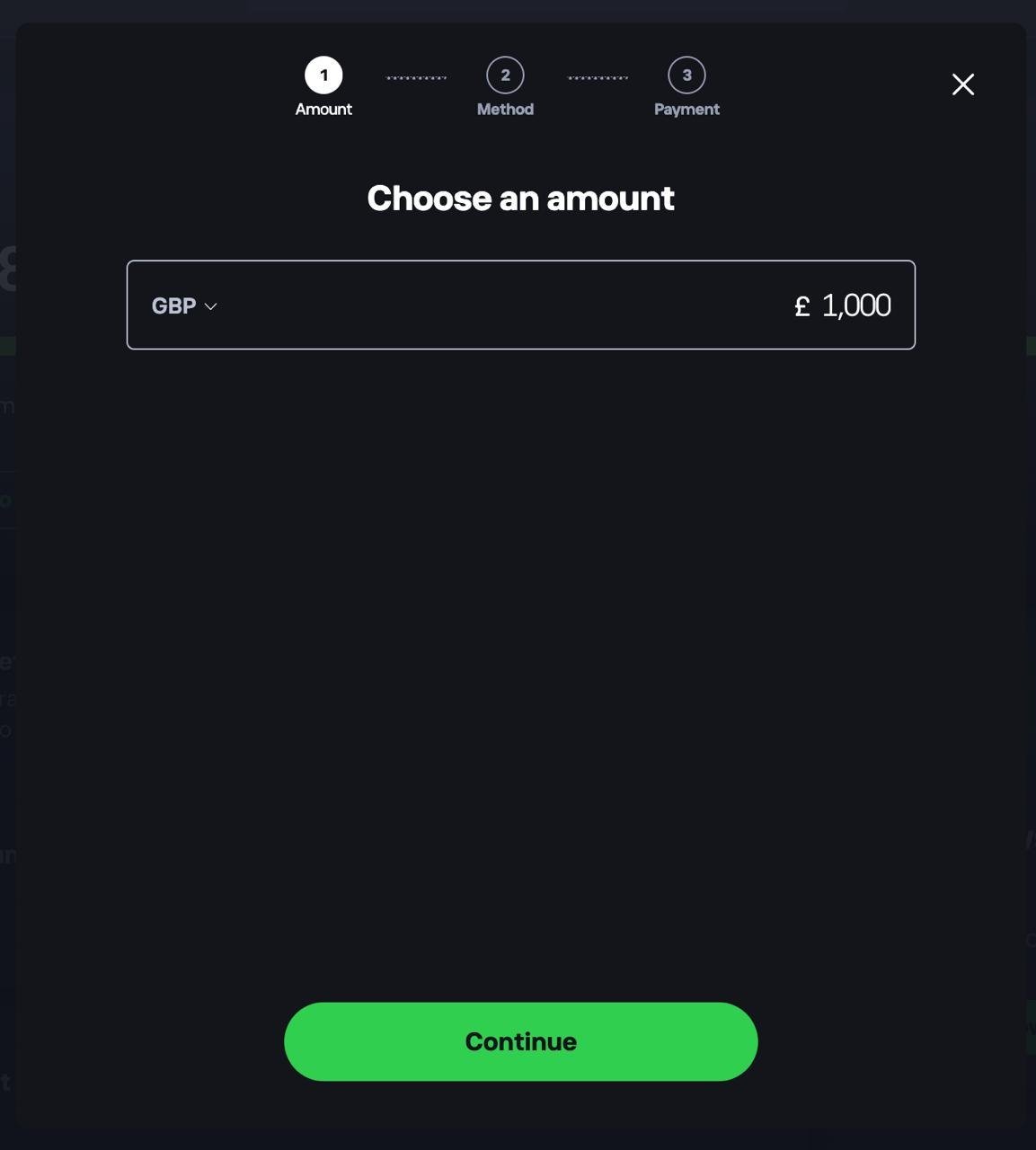
2. Deposit funds into your account
Head to your dashboard and choose to add funds. Select your currency, enter the amount you want to deposit, tap Continue, then choose a payment method.
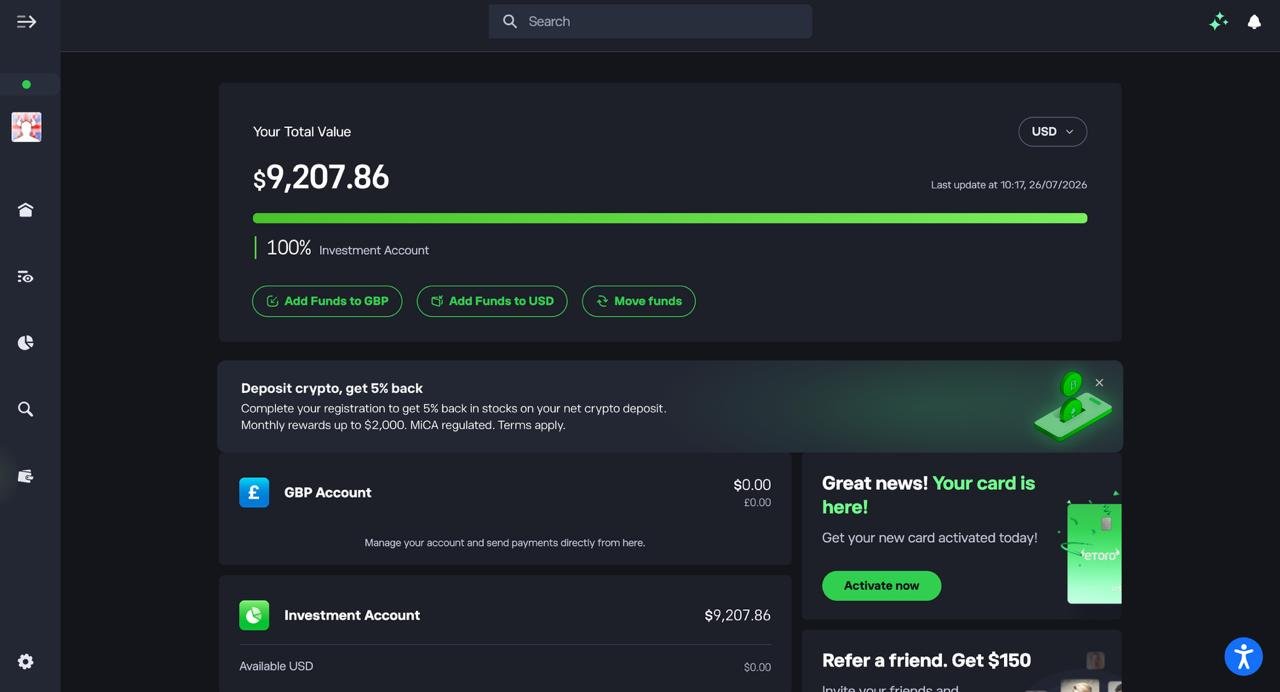
3. Confirm your funds are available
Check your dashboard to make sure your deposit has landed in your Investment Account before you start trading.
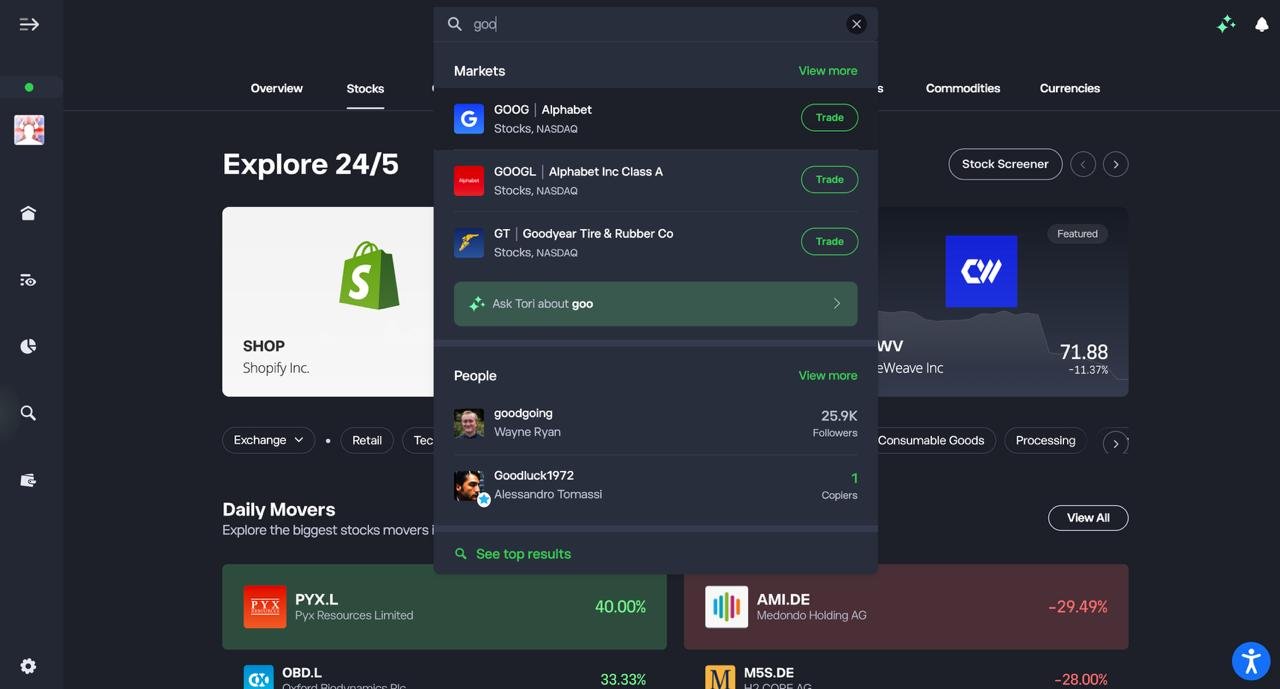
4. Search for the stock you want to trade
Use the search bar to type in the ticker or company name, then select it from the Markets results.
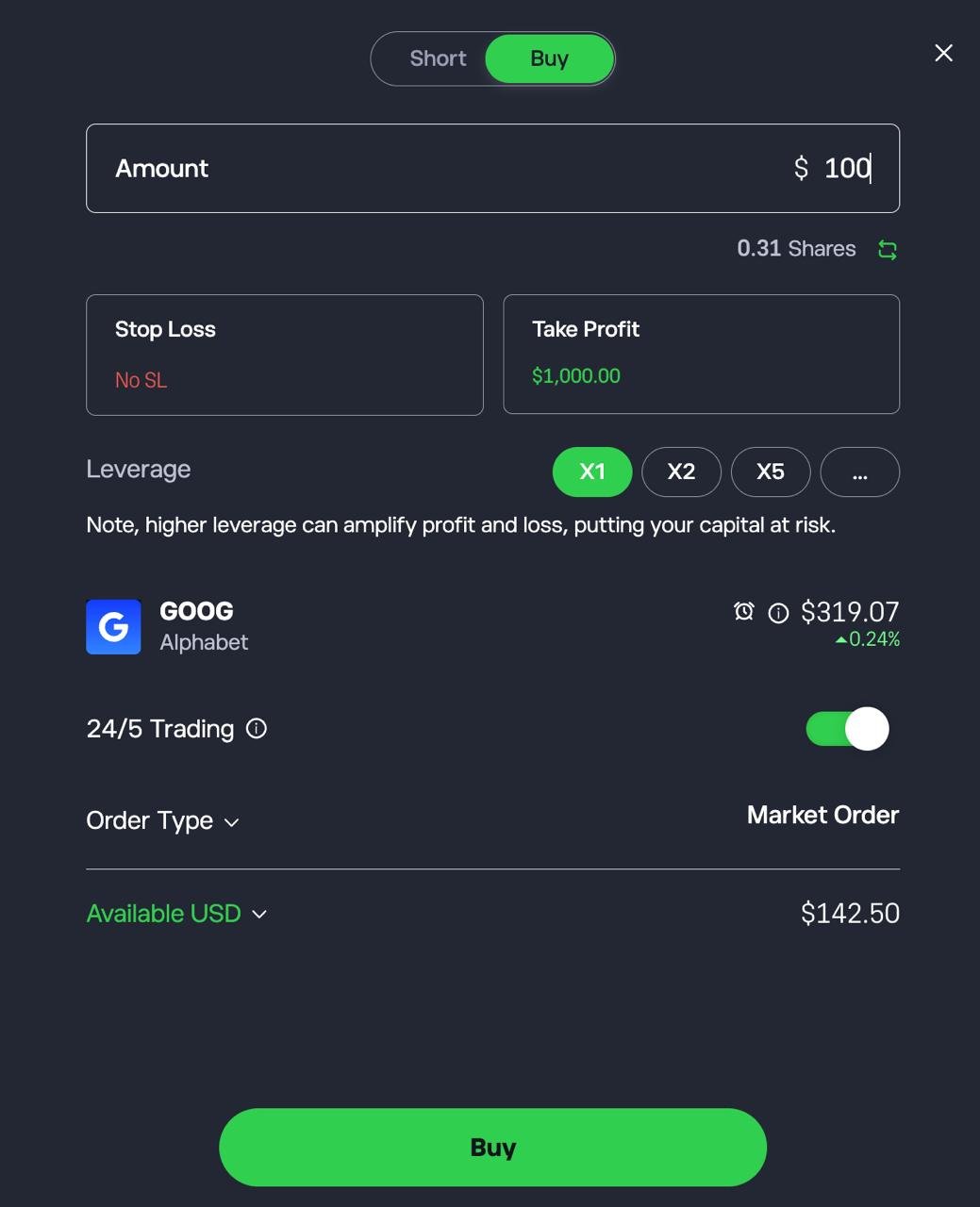
5. Set up and confirm your trade
Choose Buy or Short, enter the amount you want to invest, optionally set a Stop Loss and Take Profit, then tap Buy or Short to confirm.
What is day trading, and how does it work?
Day trading means opening and closing trades within the same trading day to profit from short-term price movements. Positions are rarely held overnight. Instead of focusing on long-term growth or dividends, day traders aim to capture small intraday moves in shares, forex, indices or commodities.
Traders rely heavily on volatility, liquidity, and fast execution. Without price movement and tight spreads, day trading simply does not work.
How does day trading work in practice?
A trader identifies a short-term setup, enters a position, sets a stop-loss to control risk and exits before the session ends. Trades may last minutes or hours. Most decisions are based on technical analysis such as chart patterns, volume, and indicators rather than company fundamentals.
Common markets for Australian day traders include:
- ASX shares
- US stocks during the overnight session
- Major forex pairs like EUR/USD
- Index CFDs such as the S&P 500
- Gold and oil around macro events
Profits come from small price differences between entry and exit. Losses occur just as quickly, which is why strict risk management is essential. With ASIC leverage caps of up to 30:1 on major forex pairs, traders must manage margin carefully.
Day trading is fast, demanding, and statistically difficult. For most beginners, long-term investing is simpler and more sustainable.
What should you look for in a day trading platform in Australia?
A serious day trading platform should deliver fast execution, competitive costs, and strong ASIC oversight. Small differences in spreads, latency, or order control can meaningfully affect short-term results, especially if you trade daily.
Execution speed and reliability
Fast, stable execution is essential. Look for low-latency infrastructure, minimal requotes and consistent fills during volatile events such as RBA announcements or US data releases. ECN or no-dealing-desk models are generally preferred for forex and index traders.
If you scalp or trade news, execution quality matters more than marketing claims.
Fees and trading costs
High turnover amplifies costs. Focus on total trading cost, not just headline spreads.
Key items to compare:
- Spreads on majors and indices
- Commission per lot or per share
- Minimum ASX brokerage
- FX conversion margins on US trades
- Overnight financing rates
Typical competitive ranges in Australia:
| Cost Type | Competitive Range |
|---|---|
| EUR/USD spread | 0.0 to 1.0 pips |
| ASX brokerage | $3 to $10 minimum |
| US brokerage | US$0.99 to US$2 minimum |
| S&P 500 spread | 0.4 to 1.0 |
Tight spreads lose their appeal if FX conversion is 1% or more.
ASIC regulation and client fund protection
Always confirm the broker holds an Australian Financial Services Licence issued by ASIC. Client funds must be held in segregated trust accounts, and retail leverage is capped at 30:1 on major forex pairs. Negative balance protection applies to retail CFD accounts.
Australia does not provide a government-backed broker compensation scheme, so financial stability and governance matter.
Charting tools and technical indicators
At minimum, the platform should offer 50+ indicators, drawing tools, real-time data, and one-click trading. Advanced traders may want Level 2 depth, custom layouts, and API or automated trading support.
Slow or clunky charting will quickly become a liability.
Market range and order types
Broader market access increases flexibility. Ideally, you should have access to ASX shares, US equities, major forex pairs, index CFDs, and commodities.
Order types should include market, limit, stop-loss, trailing stop and stop-limit. Conditional or bracket orders are a plus.
Ease of use and mobile trading
The platform should be intuitive and stable across desktop and mobile. Look for quick order modification, clear P&L tracking, and two-factor authentication. Many active traders manage positions via mobile during US sessions.
Education and customer support
Reliable support during market hours is essential. Look for live chat or phone access, transparent fee breakdown,s and demo accounts for testing strategies.
What skills and tools do you need to start day trading?
Day trading requires structured skill, strict risk control, and reliable tools. Without those, short-term trading becomes speculation rather than strategy.
Technical analysis skills
Day traders rely on price action, not long-term fundamentals. You should understand candlestick patterns, support and resistance, trend structure, and volume. Most traders use indicators such as RSI, MACD, moving averages, and VWAP across lower timeframes like 1-minute to 1-hour charts. Clarity matters more than complexity.
If you cannot clearly define your entry, stop and target, you are not ready to trade live.
Risk management framework
Risk control is non-negotiable. A basic framework should define maximum risk per trade, daily loss limits and position sizing rules. Many traders risk 0.5% to 2% of account capital per trade and aim for at least a 1:2 risk-to-reward ratio.
With ASIC leverage caps of up to 30:1 on major forex pairs, margin can amplify losses quickly. Without disciplined sizing and stop-loss use, capital erosion is fast.
Essential trading tools
At minimum, you need a fast trading platform, real-time data, reliable charting and access to stop-loss and trailing stop orders. An economic calendar is essential for tracking events like RBA decisions or US inflation data.
Advanced traders may also use Level 2 data, automated trading tools or trade journaling software.
Using a demo account
A demo account lets you practise order placement, risk management and strategy execution without financial risk. It will not replicate emotional pressure, but it helps you master platform mechanics before committing real capital.
How do you open a day trading account in Australia?
Opening a day trading account in Australia is quick, but choosing a properly regulated broker and setting up correctly is critical. Most accounts can be opened online in 15 to 30 minutes, with verification typically completed within one business day.
Choosing an ASIC-regulated broker
Start with a broker that holds an Australian Financial Services Licence issued by ASIC. This ensures client funds are held in segregated trust accounts and retail leverage is capped at 30:1 on major forex pairs. Retail CFD accounts must also provide negative balance protection.
Review the Product Disclosure Statement carefully and confirm all spreads, commissions and funding costs are clearly disclosed. If trading ASX shares, decide whether you want CHESS sponsorship with your own HIN or a custodial model.
Account verification requirements
Under Australian AML and KYC laws, you will need to provide government-issued ID, proof of address, tax residency details and basic financial information. Most CFD brokers also require a short suitability assessment confirming your trading experience and understanding of leverage risk.
Verification is often automated and completed within hours.
Funding methods in Australia
Common funding options include bank transfer, PayID, PayTo and debit card. PayID and card deposits are usually instant, while bank transfers can take one business day. Check minimum deposit requirements and FX conversion margins if trading US markets.
Setting up your platform
Once funded, configure your platform before trading live. Set position sizing defaults, enable stop-loss orders, create watchlists and activate two-factor authentication. If available, practise in a demo account first.
How do we test and review day trading platforms?
We test and review day trading platforms using live accounts, structured cost audits and hands-on use of every tool a platform offers.
- Australian regulation and account suitability: verified directly through ASIC’s registers to confirm AFSL status, client fund segregation and AFCA membership, then weighed against who the platform actually suits, from beginners to professional day traders.
- Trading costs: we track spreads across different points in the session and weigh them against commissions, FX margins and financing rates, not just the advertised minimum.
- Execution quality: tested in real market conditions, including volatile sessions, to check order speed, slippage and requotes under pressure.
- Platform and charting functionality: we trade directly on each platform’s charting and workspace tools, on desktop and mobile, to judge whether they hold up for active intraday use rather than just looking good in a demo.
- Order types and automation: every order type a broker claims to support is placed and confirmed, and where automation is offered, whether EAs, cAlgo or a full API, we test the setup ourselves.
- Market access: checked against what an Australian resident can actually trade and fund, not the global marketing list.
Conclusion
The best day trading platform in Australia ultimately depends on your strategy, but a few stand out for clear reasons.
Pepperstone is hard to beat for tight spreads and fast execution in forex and index CFDs.
Interactive Brokers suits experienced traders who want global market access and institutional-grade tools at very low cost.
For equity-focused traders, Moomoo and Tiger Brokers offer competitive brokerage and strong access to US and ASX markets, while eToro remains a simple entry point for beginners who value ease of use.
Whichever platform you choose, prioritise ASIC regulation, transparent pricing and execution quality over marketing features. In day trading, infrastructure and cost control matter more than anything else.
FAQs
Is day trading legal in Australia?
Yes. Day trading is legal in Australia as long as you use a broker regulated by the Australian Securities and Investments Commission and comply with tax obligations. Profits are generally subject to income tax rather than long-term capital gains treatment if you are classified as a trader.
How much money do you need to start day trading in Australia?
Some platforms allow you to start with a few hundred dollars, but realistically, $5,000 to $10,000 provides more flexibility and risk control. Undercapitalised accounts are more vulnerable to volatility and trading costs.
Can you lose more than you deposit?
If you trade CFDs with an ASIC-regulated broker as a retail client, negative balance protection applies, meaning you cannot lose more than your account balance. However, losses can still be rapid and substantial.
What is the best market for beginners to day trade?
Most beginners start with highly liquid markets such as major forex pairs, large-cap US stocks or index CFDs like the S&P 500. Liquidity reduces slippage and makes execution more predictable.
Do you pay tax on day trading profits in Australia?
Yes. Day trading profits are typically treated as ordinary income and taxed at your marginal tax rate. Losses may be deductible. Record-keeping is essential, and many traders consult a tax professional for clarity.
What are the best day trading platforms for beginners?
For beginners, eToro is the top pick, thanks to its simple app, commission-free ETFs, and social/copy trading. Moomoo is a solid step-up if you want free Level 2 data and better charting without much added complexity. Pepperstone and Interactive Brokers are better once you’re past the beginner stage.
