

Binance is the world’s largest cryptocurrency exchange by trading volume and has operated a dedicated Australian platform since 2020, with registration under AUSTRAC.
Australian users get access to 440 plus cryptocurrencies, low 0.10% spot trading fees, and features ranging from simple instant buys to advanced trading tools.
Below, we assess Binance’s fees, safety, AUD funding options, and suitability for Australian users.
Quick verdict: How do we rate Binance for users in Australia in 2026?
Binance is best suited to Australian users who want low trading fees, deep liquidity, and access to a very large range of cryptocurrencies, and who are comfortable navigating a feature-rich platform.
It is less suitable for complete beginners who want a simple investing-only app, or users looking for crypto derivatives, which are no longer available in Australia.
For experienced traders and active investors, Binance remains one of the most powerful crypto platforms available locally, with improving AUD access following the return of PayID and bank transfers in 2026.
Overall rating: ⭐ 4.2 / 5
Ratings breakdown
| Category | Score | Summary |
|---|---|---|
| Security & Trust | 4.3 / 5 | Registered with AUSTRAC, operates a US$1 billion Secure Asset Fund for Users (SAFU), proof-of-reserves using Merkle Tree verification, and majority cold storage. Past hacks were fully reimbursed. |
| Fees & Pricing | 4.6 / 5 | Competitive 0.10% maker and taker fees on spot trades, no crypto deposit fees, and variable withdrawal fees based on network costs. VIP discounts available for high-volume traders. |
| Features | 4.7 / 5 | Over 440 cryptocurrencies, spot trading, P2P marketplace, staking on 180+ assets, trading bots, recurring buys, rebalancing tools, NFT marketplace, and DeFi access. Some features are geo-restricted. |
| Ease of Use | 3.8 / 5 | Fast onboarding with KYC, Lite mode for beginners, but the full platform can feel overwhelming due to the depth of tools and options. |
| Customer Support | 3.9 / 5 | 24/7 live chat with quick response times once escalated to a human agent. No phone support and initial chatbot filtering required. |
| Reputation | 4.2 / 5 | World’s largest exchange by trading volume. Strong global presence, though past regulatory issues in Australia weigh slightly on its score. |
Binance at a glance
| Category | Details |
|---|---|
| Best for | Buying, selling, and actively trading cryptocurrencies |
| Crypto assets supported | 440+ cryptocurrencies, including Bitcoin (BTC), Ethereum (ETH), Solana (SOL), XRP, BNB, USDT |
| Spot trading | Yes |
| Derivatives trading | No (not available to Australian retail users) |
| Trading fees | Maker: 0.10% / Taker: 0.10% (VIP discounts available for high-volume traders) |
| Fiat on/off ramps | Yes, AUD via PayID and bank transfer (availability depends on user eligibility and banking partner support) |
| Minimum deposit | No fixed minimum for bank transfers; card deposits may have small minimums |
| Wallet custody | Custodial (Binance controls private keys) |
| Staking / earn | Yes. Staking and earn products on 180+ assets (terms and commissions vary) |
| Regulation status | Registered with AUSTRAC; not licensed by ASIC for investments or derivatives |
| Investor protection | None. Crypto assets are not covered by Australian investor protection schemes |
| Security features | Two-factor authentication (2FA), majority cold storage, proof-of-reserves, security audits, US$1B SAFU insurance fund |
| Not suitable for | Traditional investors seeking regulated products, guaranteed protections, or simple long-term investing tools |
Who should use Binance and who should avoid it?
Binance is best suited to Australians who want low trading fees, a wide range of cryptocurrencies, and advanced trading tools, but it is not designed for every type of user.
Good fit if…
- You have some crypto experience and are comfortable with order types, wallets, and a feature-rich platform.
- You want broad asset access, with 440+ cryptocurrencies including major coins and many smaller altcoins.
- You are fee-sensitive or trade regularly, with spot fees starting at 0.10% maker and taker.
- You value flexibility, including spot trading, P2P, staking on 180+ assets, and automated tools like recurring buys.
Avoid if…
- You are a complete beginner looking for a simple buy-and-hold app with minimal complexity.
- You want regulated investor protections, as crypto on Binance is not covered by ASIC protections or compensation schemes.
- You want derivatives or leveraged crypto products, which are not available to Australian retail users.
- You prefer non-custodial control or phone-based support, as Binance is custodial and offers live chat only.
Binance suits confident Australian crypto users who prioritise low fees and asset choice, but it may be too complex for beginners or those seeking traditional investment safeguards.
Is Binance suitable for beginners?
Binance can work for beginners, but it is better suited to users who are willing to learn and grow into a more advanced platform rather than those wanting the simplest possible start.
Ease of onboarding
Signing up is straightforward for Australians, with standard KYC checks and AUD funding via PayID, bank transfer, debit card, or credit card. Account setup is fast, but new users still need to understand wallets, order types, and basic crypto mechanics.
Interface simplicity
Binance offers a Lite mode in its app that strips the experience back to basic buy, sell, and portfolio tracking. However, switching to the full platform introduces a large number of tools, markets, and features that can feel overwhelming compared with beginner-first exchanges.
Demo accounts
Binance offers a demo trading account accessible to users for both spot and futures, allowing risk-free trading with virtual funds
Education availability
There is strong educational support through Binance Academy and the Learn & Earn hub, where users can learn basics and earn small amounts of crypto. This helps offset the lack of a demo environment.
Risk warnings and safeguards
Binance is registered with AUSTRAC, uses 2FA, cold storage, proof-of-reserves, and a US$1 billion SAFU insurance fund, but crypto assets are not protected by ASIC investor safeguards, and losses are possible.
Beginner comparison
Relative to simpler, beginner-focused platforms that focus on simplicity and fewer assets, Binance offers far more features and lower fees, but at the cost of higher complexity.
What are the pros and cons of using Binance in Australia?
Binance is a strong option in Australia if you want low spot fees and a very large range of cryptocurrencies, but it comes with higher complexity and limited investor protections compared to traditional finance platforms.
- Huge coin selection: 446 supported assets (including BTC, ETH, SOL, XRP, USDT and hundreds of altcoins).
- Low spot trading fees: 0.10% maker and 0.10% taker for standard spot trades (discounts available via VIP tiers/BNB).
- AUD funding options improving: PayID and bank transfer reinstated for all users from January 2026 (rollout depends on banking partners), plus debit/credit card support.
- Strong feature set: spot market, instant swaps, P2P marketplace, staking/earn, recurring buys, rebalancing bot, launchpad, NFT marketplace, and some DeFi access.
- Security stack + backstops: 2FA, cold storage, security audits, proof-of-reserves (Merkle Tree), plus the SAFU fund (topped up to ~US$1B in 2022).
- Track record on incidents: 2019 hack (~7,000 BTC / US$40m) was covered via SAFU, with users reimbursed; majority reserves remained in cold storage.
- Local compliance baseline: Binance Australia is registered with AUSTRAC (AML/CTF and KYC obligations).
- Can be overwhelming: feature-heavy interface, especially in Pro mode (even though Lite mode helps).
- No crypto derivatives for Australian retail users: Binance no longer offers derivatives locally following ASIC action.
- Crypto has no investor protections: holdings aren’t covered by ASIC-style protections, deposit insurance, or compensation schemes.
- Custodial exchange: Binance holds your private keys, so you carry platform counterparty risk (hacking/insolvency).
- Support starts with a bot: live chat is available and can be fast, but you usually need to get through chatbot prompts first (no phone support).
- Withdrawals vary by network: crypto withdrawal fees depend on blockchain/network congestion (can spike during busy periods).
- Not “regulated investing”: AUSTRAC registration is not the same as being licensed for investment products; it doesn’t change crypto risk or volatility.
How regulated and trustworthy is Binance in Australia?
Binance Australia is registered with AUSTRAC and has a long operating history, but it is not licensed like a traditional investment broker, and investing in crypto assets does not come with ASIC-style investor protections.
Regulation and trust snapshot
| Area | Binance Australia status |
|---|---|
| Primary Australian regulator | AUSTRAC: registered for AML/CTF compliance and KYC requirements |
| ASIC authorisation | Not authorised by ASIC as an investment or stockbroking platform for crypto |
| Authorised or registered? | Registered (AUSTRAC), not broadly authorised for regulated investment products |
| Derivatives availability (AU retail) | Not available to Australian retail users following ASIC action |
| Fund segregation | Custodial model: Binance holds users’ private keys; not subject to traditional client-money segregation rules |
| Investor protection | None. Crypto assets are not covered by Australian compensation or deposit protection schemes |
| Years in operation | Since 2017 globally; Australian service since 2020 |
| Parent company / listing | Operates under the global Binance group; privately held (not publicly listed) |
| Security and trust measures | 2FA, majority cold storage, regular security audits, proof-of-reserves (Merkle Tree), and the SAFU insurance fund (targeted around US$1 billion, value fluctuates) |
What assets can you trade on Binance as a user in Australia?
For Australian users, Binance is primarily a cryptocurrency exchange (spot trading + crypto-related features). You can’t trade shares/ETFs, forex, or exchange-traded derivatives like you would on a traditional broker, and crypto derivatives aren’t available to Australian retail users.
| Asset type | Available to Australian users? | What you can access on Binance Australia | Notes / limitations (Australia) |
|---|---|---|---|
| Cryptocurrencies (spot trading) | Yes | 446 supported crypto assets (examples: BTC, ETH, SOL, XRP, USDT, BNB, ADA, DOGE, USDC) | Large altcoin range; some notable exclusion (e.g., STETH, LEO, USDS), with 17 of the top 20 market-cap coins available. |
| Crypto trading pairs | Yes | Spot markets + “convert/instant swap” style trades | Trading fees are maker/taker (from 0.10% / 0.10%); “instant buy/swap” may have different pricing mechanics. |
| Margin trading (crypto) | Limited / conditional | Margin trading | Availability can vary by jurisdiction and user settings; always treated as higher-risk due to leverage. |
| Crypto derivatives (futures/options/CFDs) | No (AU retail) | — | Not available to Australian retail users (Binance previously faced ASIC issues related to derivatives). |
| Staking / earn (crypto yield features) | Yes | Staking/earn on 180+ assets | Rewards and commissions vary by asset/product; these are not the same as bank interest and carry crypto/platform risks. |
| Launchpad / early-stage token access | Some access | Launchpad feature | Participation often depends on eligibility rules and local restrictions. |
| NFT marketplace | Yes | NFT marketplace access | NFT availability and collections can change; still subject to crypto/NFT market volatility. |
| DeFi access (via Binance ecosystem/tools) | Some access | DeFi services | Involves additional smart-contract and counterparty risks. |
| Shares & ETFs | No | — | Binance Australia is not a share/ETF broker. |
| Forex | No | — | Not a forex broker; any FX exposure is indirect (e.g., converting fiat/crypto pairs). |
| Commodities / indices | No | — | Not offered as traditional financial instruments on Binance Australia. |
How much does Binance cost?
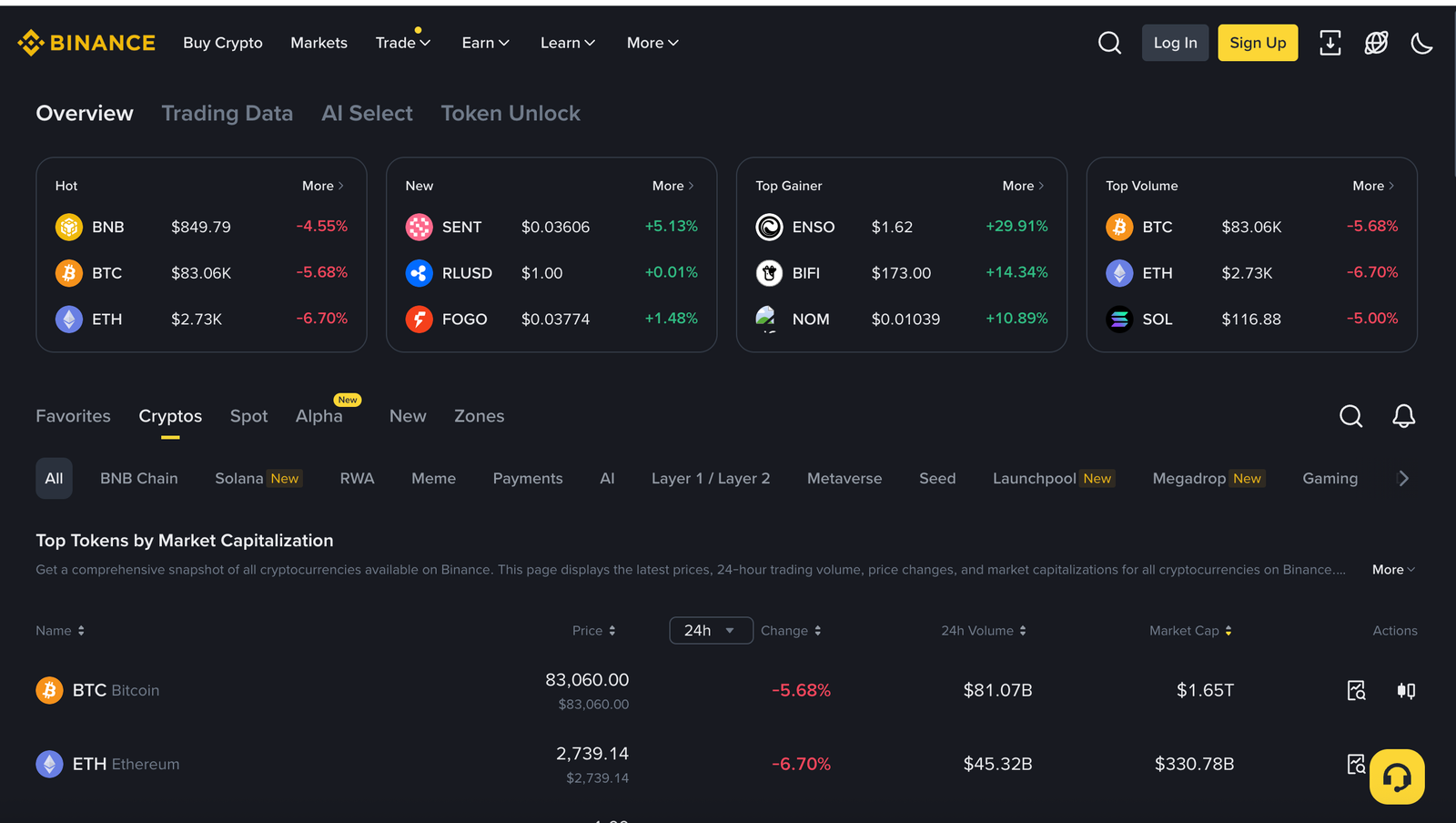
Short answer: For Australians, Binance’s headline pricing is 0.10% maker / 0.10% taker on spot trades, with free crypto deposits and variable crypto withdrawal fees (network-dependent).
Your total cost mainly comes from trading fees + spread/slippage, plus any fiat on/off-ramp or card/third-party conversion costs (where applicable).
Trading fees (spot)
Binance Australia uses a maker/taker model for spot markets:
- Maker fee: 0.10%
- Taker fee: 0.10%
What this means in practice
- A maker fee applies when you place a limit order that adds liquidity (doesn’t fill immediately).
- A taker fee applies when you place an order that fills immediately (e.g., market order or marketable limit).
Spreads or commissions
Binance generally charges commission-style trading fees (maker/taker) rather than a “spread-only” model.
However, your effective cost can still include:
- Spread (difference between best bid/ask), which varies by coin and liquidity.
- Slippage, especially on smaller tokens or during volatile periods.
- Instant buy/convert flows can price differently than placing orders on the spot order book (often “all-in” pricing vs explicit maker/taker).
FX and conversion fees (AUD ↔ crypto / crypto ↔ crypto)
Costs depend on how you fund and trade:
- AUD funding / withdrawals: Binance restored PayID & Bank Transfer access for users in January 2026 (rollout can be staged), which is cheaper than card options when available.
- Card deposits: third-party processing fees can apply (often higher than bank transfer options).
- Crypto-to-crypto conversions: If you use the spot order book, you pay maker/taker fees; if you use “convert/instant swap,” pricing may be bundled into the quote (not always shown as a separate fee).
Non-trading fees
Common non-trading costs:
- Deposit fees: Crypto deposits: none
- Withdrawal fees: Crypto withdrawals: fees vary (depends on the blockchain network, congestion, and asset)
Other potential non-trading costs can include payment-provider fees (for certain funding routes) and any product-specific charges (e.g., earn/staking commissions on rewards can vary by asset/product).
Typical fees table
| Fee type | Typical cost (Australia) | What to know |
|---|---|---|
| Spot trading fee (maker) | 0.10% | Often via limit orders that don’t fill instantly. |
| Spot trading fee (taker) | 0.10% | Often market orders / immediate fills. |
| Spread / slippage | Variable | Depends on liquidity and volatility; usually tighter on major coins (BTC/ETH) than small-cap tokens. |
| AUD deposit (bank transfer/PayID) | Varies by availability | PayID/Bank Transfer restoration from Jan 2026; bank routes are lower-cost than cards when available. |
| AUD deposit (credit/debit card) | Variable (often higher) | Third-party processing fees can apply. |
| Crypto deposit | $0 | No Binance fee for incoming crypto deposits. |
| Crypto withdrawal | Variable | Network/blockchain fee varies by asset and congestion. |
| Convert/instant swap | Variable (built into quote) | May not show as explicit maker/taker; compare with spot order book for large trades. |
Bottom line for cost-sensitive Aussies: If you stick to spot markets and use limit orders, Binance’s explicit fees are competitive (0.10% / 0.10%). The biggest “hidden” drivers are usually spread/slippage and how you fund in AUD (bank transfer/PayID when available vs card/third-party routes).
How good is Binance’s web app for users?
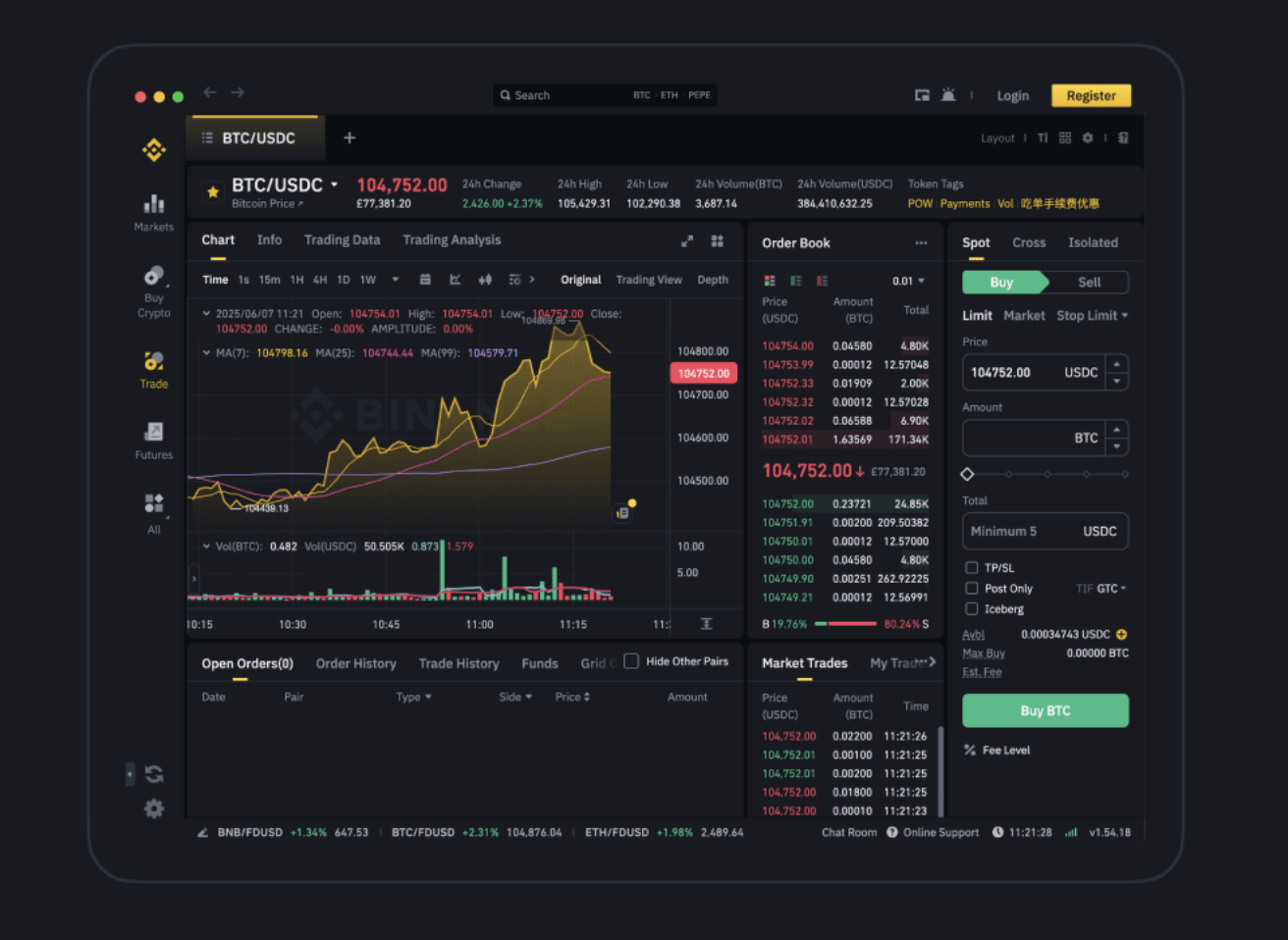
Binance’s web app is powerful and feature-rich, but it’s clearly built with active and experienced traders in mind rather than beginners.
Usability
- Dense, professional layout with markets, order books, charts and trade history all on one screen.
- Supports ~446 crypto assets in Australia, which adds flexibility but also visual complexity.
- Efficient once learned, but the learning curve is real for new users.
Charting
- Advanced TradingView-style charts with multiple timeframes, indicators and drawing tools.
- Well suited to technical analysis and frequent trading.
- Overkill for users who only place occasional buy/sell orders.
Order types
- Spot trading supports market, limit, stop-limit and OCO orders.
- Designed for structured trade execution and risk control.
- Crypto derivatives are not available to Australian retail users.
Customisation
- Custom watchlists, chart presets and market filters.
- Can be configured into a full trading terminal once set up.
- Automation tools exist, but some bots/features are restricted in Australia.
Known limitations
- Complex interface can overwhelm beginners.
- Some major tokens are missing despite wide coverage.
- Fiat on/off-ramps (PayID & bank transfer) are being restored progressively from Jan 2026.
- Support is via live chat only, starting with a bot.
Quick web app summary
| Area | Strength | Limitation |
|---|---|---|
| Usability | Fast, trader-grade layout | Steep learning curve |
| Charting | Advanced technical tools | Too complex for casual users |
| Orders | Market, limit, stop-limit, OCO | No derivatives for AU retail |
| Customisation | Watchlists, presets, filters | Takes time to configure |
Binance’s web app is excellent for traders who want depth, charts and control. Beginners may find it powerful but overwhelming without time to learn it.
How good is the Binance mobile app in Australia?
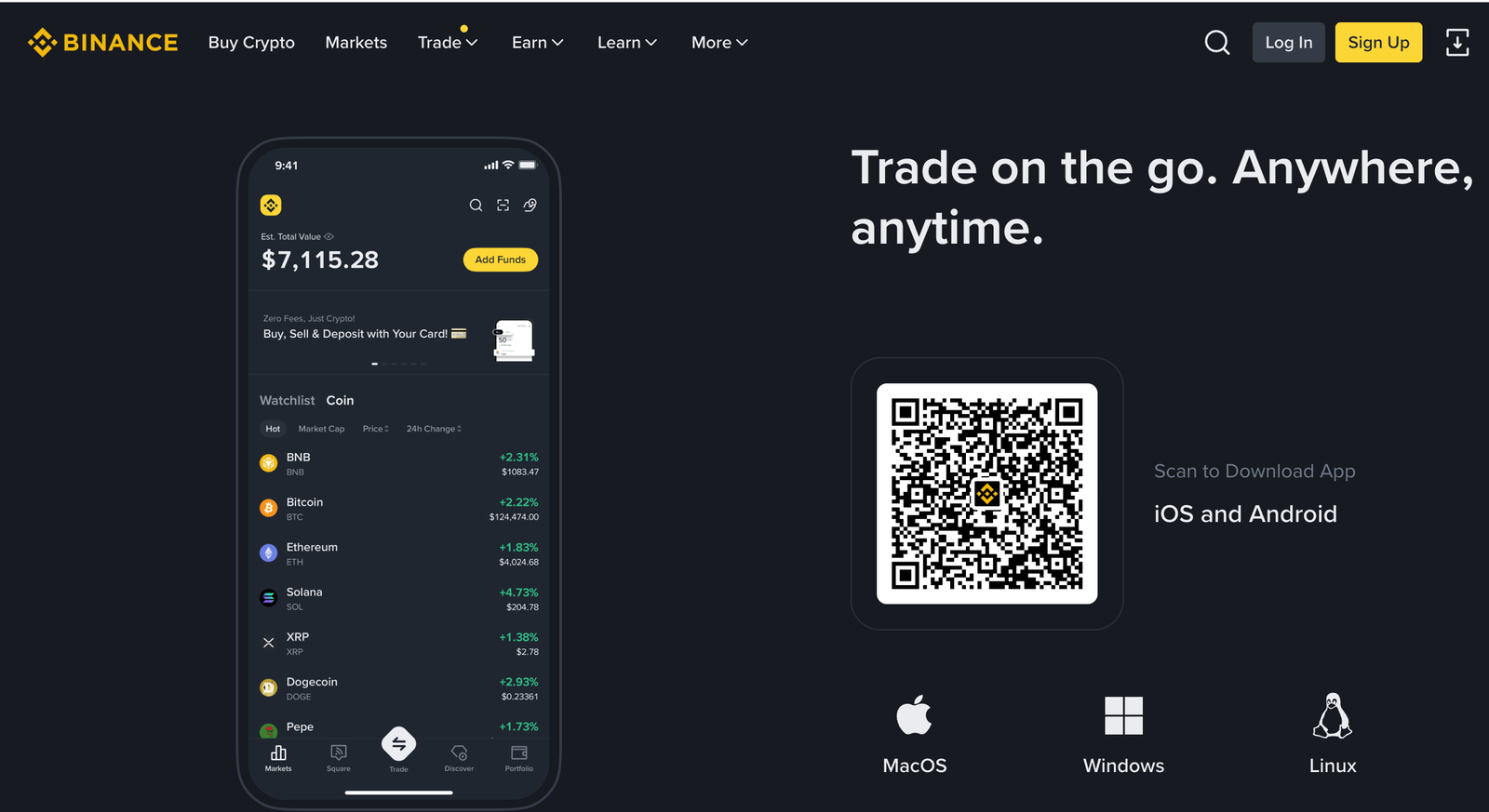
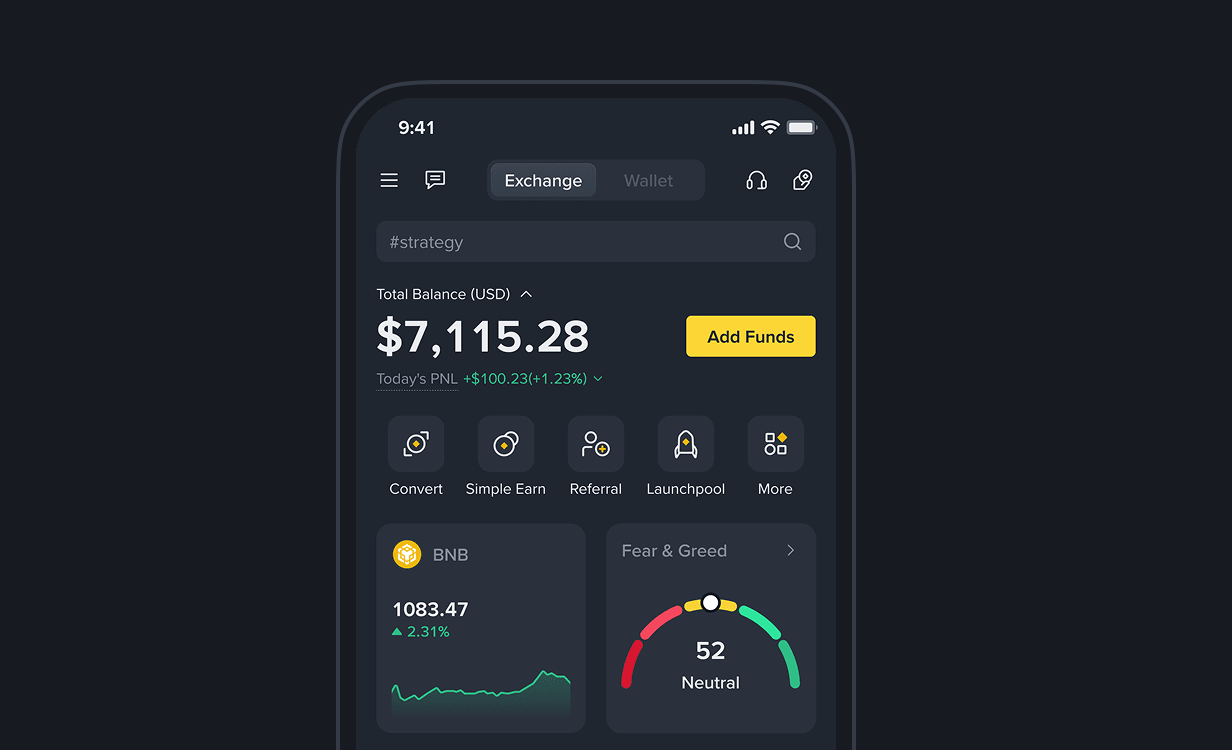
The Binance mobile trading app is one of the most fully featured crypto apps available in Australia, offering near-parity with the desktop platform while still catering to beginners via a simplified mode.
iOS and Android availability
- Available on iOS (Apple App Store) and Android (Google Play).
- Strong user feedback: 4.6★ on iOS (40k+ reviews) and 4.4★ on Android (3M+ reviews, 100M+ downloads).
- Regular updates and active development.
Key features
- Access to 440+ cryptocurrencies for Australian users.
- Lite mode for beginners (simple buy/sell, portfolio tracking).
- Pro mode with advanced spot trading, charts, order books and P2P trading.
- Supports recurring buys, staking/earn products, Convert swaps and selected automation tools.
- Fiat deposits and withdrawals via PayID and bank transfer are being restored progressively from January 2026.
Stability and performance
- Generally fast and stable, even during high-volume trading periods.
- Smooth switching between Lite and Pro modes.
- Occasional slowdowns during extreme market volatility, but outages are uncommon.
Security features
- Two-factor authentication (2FA), biometric login and device management.
- Majority of assets held in cold storage.
- Backed by Binance’s SAFU insurance fund (targeted around US$1 billion, value fluctuates).
- Proof-of-reserves system using Merkle Tree verification.
The Binance mobile app is powerful, secure and highly rated in Australia. It suits both beginners (via Lite mode) and active traders, though the full feature set can feel complex for first-time users.
How easy is it to open an account with Binance in Australia?
Opening a Binance Australia account is fully digital and usually straightforward: you sign up online (or in-app), complete identity verification (KYC), then link a payment method (e.g., PayID/bank transfer or card) before you start trading.
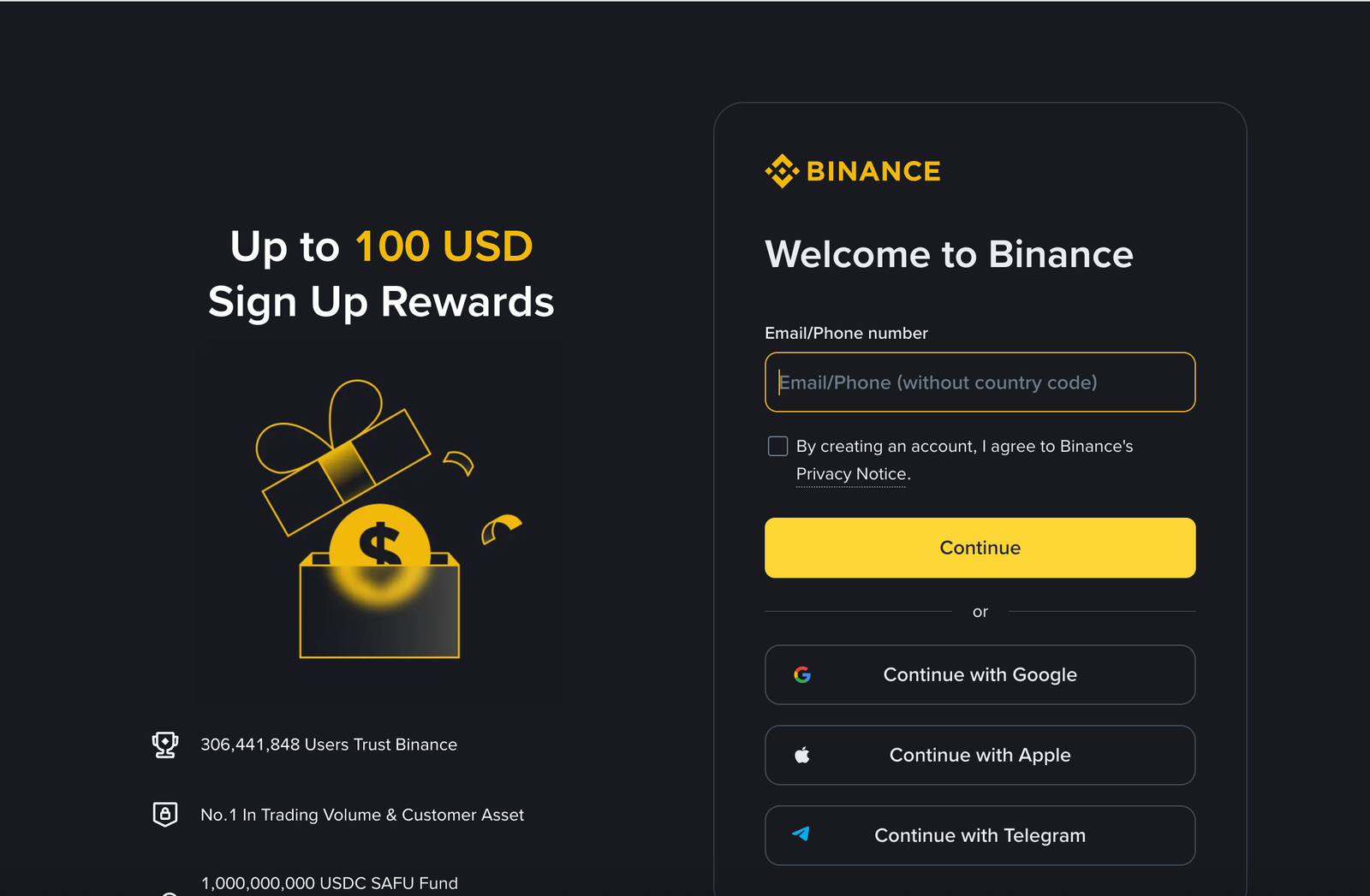
Digital onboarding (web + app)
- Online signup via Binance website or the Binance app (iOS/Android).
- Create an account with email + password.
- You can then complete verification and set up funding without visiting a branch or mailing documents.
KYC steps (what you’ll do)
Binance requires Know Your Customer (KYC) checks before you can withdraw funds and access higher limits.
Typical steps:
- Create account (email + password).
- Enter personal details (legal name, DOB, address, etc.).
- Upload ID: commonly passport or driver’s licence.
- Proof of address (often required for higher limits/withdrawals).
- Additional checks in some cases (extra document request / manual review).
- Security setup: enable 2FA (recommended before funding).
- Add a payment method (e.g., PayID/bank transfer, debit/credit card) and fund your account.
Common delays (what slows approval down)
Most delays happen when verification needs manual review, for example:
- Blurry/low-light photos, cropped document edges, glare, or expired ID
- Name/address mismatches between your signup details and documents
- Proof-of-address issues (too old, incomplete, or not accepted format)
- Extra compliance checks (more likely if details don’t match cleanly)
- Bank account linking / payment setup friction (especially if PayID/bank transfer access is rolling out gradually)
Typical approval time
Binance doesn’t guarantee a fixed KYC timeframe:
- Best case: verification can be fast once documents are accepted (often same day).
- If manual review is triggered: it can take longer, especially during high-demand periods or if documents need resubmitting.
Tip: Upload clear photos (good lighting, all corners visible), and make sure your account details match your ID to avoid a manual review loop.
How do deposits and withdrawals work in Australia (methods, fees, limits, speed)?
Binance supports AUD and crypto funding for Australian users. In January 2026, Binance began restoring AUD on/off-ramps via PayID and bank transfer, with access rolling out gradually depending on banking partners.
Deposit methods (Australia)
- PayID (AUD)
- Bank transfer (AUD)
- Debit / credit card (AUD)
- Cryptocurrency transfers
- P2P marketplace (user-to-user trades, usually via bank transfer)
Key differences
- PayID / bank transfer: cheapest and most “bank-like” option when available.
- Cards: fastest to fund, but higher fees.
- Crypto deposits: no platform deposit fee; standard blockchain fees apply.
- P2P: often fee-free from Binance, but speed and price depend on the counterparty.
Withdrawals
- AUD withdrawals via PayID or bank transfer (where enabled).
- Crypto withdrawals to external crypto wallets (network fees vary by asset).
Speed
- PayID / bank transfer: fast once enabled (bank processing times apply).
- Card deposits: near-instant for deposits.
- Crypto withdrawals: depend on blockchain congestion.
Fees (summary)
- Crypto deposits: free (network fees may apply).
- Crypto withdrawals: fees vary by coin/network.
- Spot trading fees: 0.10% maker / 0.10% taker.
- AUD funding fees: vary by payment method (bank rails usually cheaper than cards).
Minimum deposit and account approval in Australia
Minimum deposit
There is no single universal minimum. It varies by payment method:
- Bank transfer / PayID: low practical minimums.
- Card deposits: usually higher minimums set by the card processor.
- Crypto deposits: no fixed minimum, but network fees make very small transfers impractical.
Account approval time
- Digital onboarding with KYC (ID + selfie; proof of address in some cases).
- Typical approval: same day for most users once documents are accepted.
- Common delays: unclear ID images, mismatched personal details, or manual compliance checks.
Australia deposits & withdrawals snapshot
| Method | Deposit | Withdraw | Fees | Speed | Notes |
|---|---|---|---|---|---|
| PayID (AUD) | Yes | Yes | Low | Fast | Availability varies during rollout |
| Bank transfer (AUD) | Yes | Yes | Low | Fast–moderate | Bank processing times apply |
| Debit / credit card | Yes | Limited | Higher | Instant deposit | Convenience over cost |
| Crypto transfer | Yes | Yes | Network-based | Chain-dependent | Fees vary by asset |
| P2P marketplace | Yes | Yes | Low/none | Variable | Depends on counterparty |
What account types does Binance offer users in Australia?
Binance doesn’t split Australian users into multiple retail account tiers like traditional brokers. Instead, one main account gives access to different trading modes and features, subject to local regulatory limits.
Standard account (retail)
- Default account type for Australian users.
- Access to spot trading, instant buy/sell, Convert swaps and P2P trading.
- Supports 440+ cryptocurrencies and AUD funding methods (PayID, bank transfer, cards).
- Maker/taker spot fees start at 0.10% / 0.10%.
- Includes access to staking and earn products, recurring buys and selected automation tools.
- Custodial account (Binance holds assets on your behalf).
Demo trading (paper trading)
- Available to Australian users via Demo Trading in the Trade menu.
- Uses virtual funds to practise trading with no financial risk.
- Mirrors the real Binance interface, including charts and order placement.
- Best suited for learning the platform and spot trading mechanics.
- No withdrawals, profits, or tax implications (simulated only).
Margin vs cash trading
- Cash (spot) trading: fully available and the core way Australians trade on Binance.
- Margin trading: available in Australia, but subject to stricter limits and eligibility checks.
- Derivatives (futures/options): not available to Australian retail users following ASIC action and AFSL cancellation.
Tax-advantaged accounts
- None available.
Binance does not offer Australian tax-advantaged structures (e.g. superannuation or retirement-style accounts). Crypto activity is taxed under ATO rules, depending on use.
Professional or special accounts
- VIP tiers: automatic fee discounts based on 30-day trading volume and BNB holdings (not a separate account).
- Business / institutional accounts: available for companies, trusts and high-volume traders, with enhanced limits and compliance checks.
- Lite vs Pro mode: interface choice only (same account, different UI complexity).
Quick overview
| Account type | Available in Australia | Notes |
|---|---|---|
| Standard retail | Yes | Spot, earn, P2P, automation |
| Demo trading | Yes | Virtual funds, no risk |
| Margin | Yes (limited) | Higher risk, eligibility applies |
| Derivatives | No | Removed for Australian users |
| Tax-advantaged | No | No super/retirement-style accounts |
| Business / institutional | Yes | Separate onboarding & limits |
Bottom line: Australian users get a single, flexible Binance account focused on spot crypto trading, with optional demo trading, margin and earn features—but no derivatives or tax-advantaged accounts.
Is Binance suitable for your trading or investing style?
Binance is best suited to active crypto traders rather than traditional long-term investors. With 440+ assets, deep liquidity, 0.10% spot fees, advanced order types, bots, and demo trading, it covers most short-to-medium-term trading styles used by Australian crypto users.
That said, the platform’s depth and busy interface can feel heavy for set-and-forget investors.
Who it suits best (Australia)
- Active traders who value low fees and liquidity
- Crypto-native investors building diversified altcoin exposure
- Beginners who want to learn, using Lite mode and demo trading before going live
Where it’s weaker
- Traditional long-term investors wanting simplicity or tax-advantaged structures
- Derivatives traders (futures/options are not available to Australian retail users)
- Hands-off investors who don’t want custody or platform complexity
Trading style suitability (Australia)
| Trading style | Suitability | Why |
|---|---|---|
| Scalping | ⭐⭐⭐⭐☆ (4/5) | Low 0.10% fees, high liquidity, fast order execution; no futures for AU limits leverage-based strategies |
| Day trading | ⭐⭐⭐⭐☆ (4/5) | Advanced charts, multiple order types, bots, deep markets; interface can overwhelm beginners |
| Swing trading | ⭐⭐⭐⭐☆ (4/5) | Wide asset range (440+), limit/stop orders, staking between trades |
| Long-term investing | ⭐⭐⭐☆☆ (3/5) | Large coin selection and earn products, but custodial risk, no tax-advantaged accounts, complex UI |
Bottom line
Binance is a strong all-round trading platform for active crypto trading in Australia, especially for scalping, day trading and swing trading, and stands out as a strong option among day trading platforms in Australia.
Long-term investors can use it, but may prefer simpler platforms or self-custody for buy-and-hold strategies.
What education and learning resources are available for users in Australia?
Binance provides a self-serve learning setup for Australian users, focused on in-app education, guided tutorials and risk-free practice rather than formal classroom-style training.
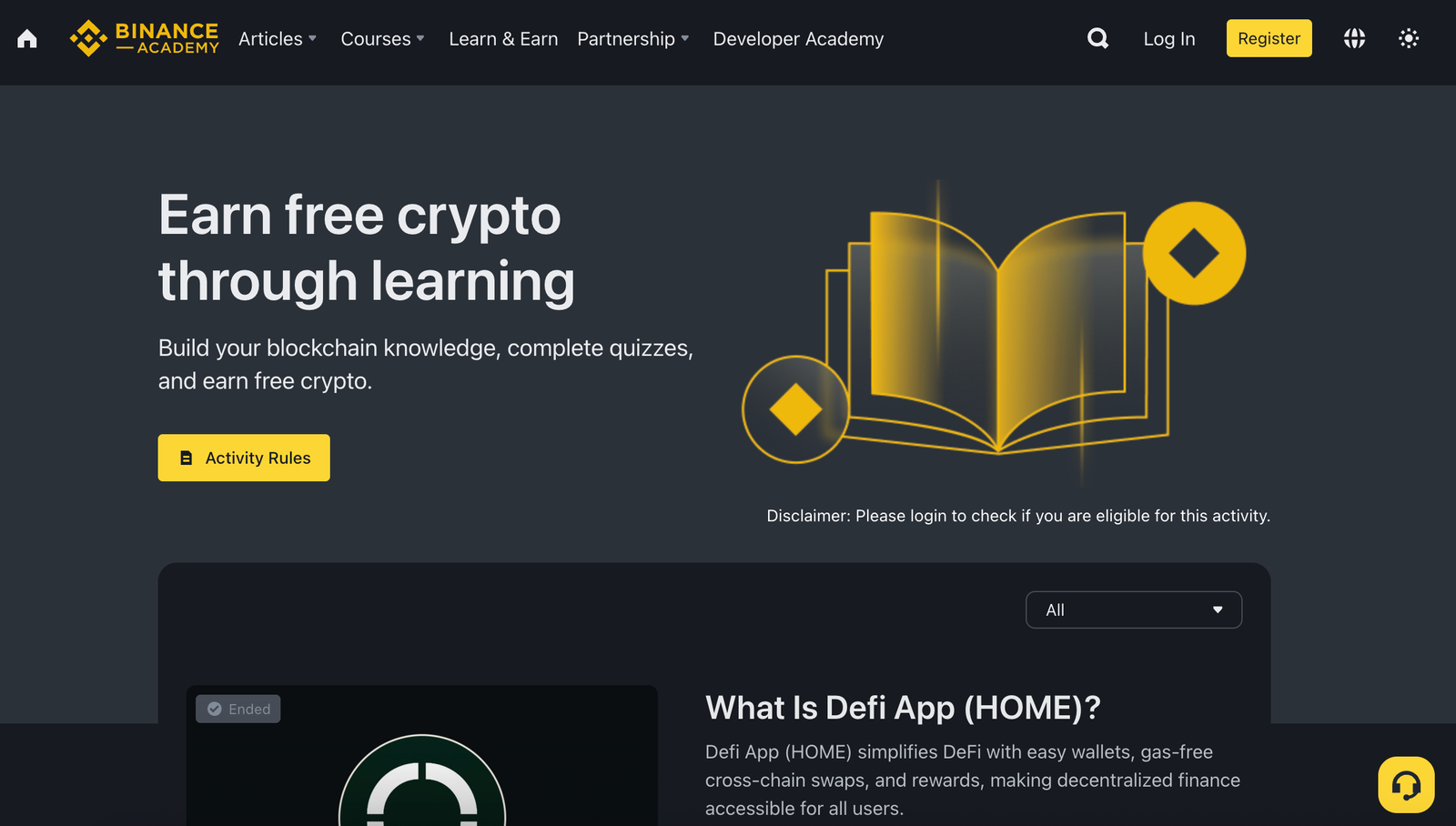
Courses
- Learn & Earn hub: Short learning modules that explain crypto basics, how to trade crypto, and platform features, with occasional rewards for eligible users.
- Designed for beginners and intermediate users rather than advanced technical study.
Tutorials
- Help Centre & FAQs: Step-by-step guides covering account setup, KYC, deposits/withdrawals, spot trading and platform tools.
- Lite mode: A simplified interface that helps new users learn core actions before moving to the full Pro trading view.
Webinars
- Binance’s education for Australians is mainly on-demand, with limited emphasis on live webinars or scheduled training sessions.
Demo accounts
- Demo Trading: Available to Australian users and uses virtual funds to practise spot trading.
- Mirrors the real interface and order types, with no financial or tax risk.
What unique or standout features does Binance offer in Australia?
Binance stands out in Australia for its scale, low fees and feature depth, offering more tools and assets than most local crypto exchanges, even with derivatives removed.
Australia-specific advantages
- AUSTRAC-registered with a dedicated Australian platform since 2020.
- AUD PayID and bank transfer on/off-ramps restored in January 2026.
- Supports common local funding methods (PayID, bank transfer, cards).
Features many competitors lack
- 440+ cryptocurrencies available to Australian users.
- Low spot fees: 0.10% maker / 0.10% taker, with VIP discounts.
- High liquidity and tighter spreads due to global trading volume.
- P2P marketplace with fee-free peer-to-peer trading.
Proprietary tools and ecosystem
- Binance Convert: Simple, instant crypto swaps.
- Trading bots: Built-in automation tools (feature availability varies), similar to features offered by automated trading platforms.
- Staking & Earn: Multiple yield options on idle crypto.
- Learn & Earn + Demo Trading: Education and risk-free practice with virtual funds.
- Lite vs Pro mode: Beginner and advanced interfaces on the same account.
How good is Binance customer support for users in Australia?
Binance Australia’s support is functional and fairly fast once you reach a human, but it’s built around self-serve help + chatbot-first live chat, which can frustrate users who want direct phone/email help.
Support channels
- Live chat (in-app / web): Main support channel for Australians.
- Support hub / Help Centre: Guides, FAQs and articles for common issues (account access, deposits/withdrawals, security, verification).
- Contact forms: Available via the support hub for some request types.
Notably: There is no phone or email support; assistance is handled via live chat and help centre tools, so users generally need to rely on chat + help centre.
Availability
- 24/7 live chat is offered (global support model), plus always-on help centre resources.
Response quality (what to expect)
- Fast initial response, but it starts with a bot.
- You can request a human agent.
- In practice, escalation to a human agent can occur in under a minute after prompting the chatbot.
Known issues / complaints
- Chatbot gatekeeping: You may need several prompts before getting a person.
- Inconsistent experience: Support quality can be inconsistent, especially for complex account, funding, or compliance issues.
- No phone fallback: If your issue is urgent (account lockouts, failed transfers), the lack of phone support can be a pain point.
How does Binance compare to competitors in Australia?
Binance is built for low-fee, high-choice spot trading with a feature set that leans “advanced” (P2P, margin, bots, Earn). Key trade-off: the interface can feel busy for beginners, and derivatives aren’t available to Australian retail users.
Quick comparison
| Platform | Fees (typical) | Assets | Regulation (AU) | Best use case |
|---|---|---|---|---|
| Binance Australia | Spot maker/taker: 0.10% / 0.10% | 446 | AUSTRAC-registered | Active spot traders who want low fees + lots of coins + advanced tools |
| CoinSpot | Instant Buy/Sell: ~1%; Markets: ~0.1% | 360+ | Check AUSTRAC DCE status | Beginners who want a simple “buy/sell” experience (and don’t mind higher instant fees) |
| Swyftx | ~0.6% trading fee | 420+ | Check AUSTRAC DCE status | Users who want a local exchange feel with a broad coin list |
| Independent Reserve | Tiered: ~0.5% down to ~0.02% (by volume) | Varies | Check AUSTRAC DCE status | Traders who prefer a more traditional exchange with fee tiers for higher volume |
What are the main limitations users in Australia should be aware of?
- No derivatives for Australian retail users: Binance no longer offers crypto derivatives (e.g., futures/options) to Australians after ASIC action and the exchange’s AFSL cancellation for complex derivative products.
- Interface can be overwhelming: Binance’s biggest strength (lots of features/markets) can also be a drawback for beginners. The app has a Lite mode, but the overall ecosystem is still complex.
- Support friction: Support is mainly via live chat, and you have to go through a chatbot first before reaching a human agent.
- Fiat deposits/withdrawals can be inconsistent: Binance began restoring PayID & bank transfer on/off-ramp in January 2026, but rollout is described as gradual with banking partners—so availability can vary by user/time.
- Fees aren’t always “just 0.10%”: Spot trading is 0.10% maker / 0.10% taker, but instant purchases incur a separate fee, and crypto withdrawal fees vary by asset/network.
- Margin trading adds risk and may be limited: Margin is available, but it’s higher risk and comes with stricter limits/eligibility checks than standard spot trading.
- Custody/counterparty risk: Like any centralised exchange, you’re exposed to platform risk (hacks, insolvency, access issues). Binance holds assets on your behalf unless you self-custody.
- Security history exists: Binance has had major incidents in the past (e.g., the 2019 hack), even though losses were covered via its insurance mechanism and it emphasizes audits and security upgrades.
- Not every major coin is listed: Despite 445–446 assets, some notable tokens can still be missing (some notable exclusions include STETH, LEO and USDS).
- KYC is required for full access: Expect identity verification before you can fully use features like withdrawals and higher limits.
Conclusion: Is Binance the right choice for users in Australia in 2026?
Binance Australia is best suited to Australians who want a feature-rich crypto exchange with low spot fees (0.10% maker / 0.10% taker) and a very large coin list (446 supported assets). It’s a strong fit if you:
- Trade spot regularly (including limit/stop orders) and care about liquidity + tight spreads
- Want a “one app” setup: Convert, spot markets, P2P, margin (eligibility/limits apply) and Earn/staking options
- Like automation such as recurring buys and a rebalancing bot
- Prefer funding in AUD via PayID / bank transfer (being restored across users from Jan 2026) and/or cards
Best alternatives (Australia)
Pick an alternative if your priority is simplicity, local support, or a narrower feature set:
- CoinSpot – often preferred for simplicity and “buy/sell” style crypto access
- Swyftx – commonly chosen for a cleaner UX and beginner-friendly portfolio tools
- Kraken – strong for users who prioritise security/reputation and robust trading features
- Independent Reserve – popular with Australians who prefer a more local-first exchange feel
- Coinbase – often picked for a simple interface and mainstream onboarding (fewer advanced tools than Binance)
Final recommendation
Yes. Binance is a solid choice in Australia in 2026 if you want low-cost spot trading, hundreds of assets, and advanced features (Earn, automation, P2P, margin).
It’s less ideal if you need derivatives (not available for Australian retail users), want phone/email support, or prefer a platform that feels “beginner-first” without the complexity (even though Lite mode helps).
FAQs
Is Binance legal to use in Australia?
Yes. Binance operates a dedicated Australian platform and is registered with AUSTRAC, meaning it complies with local AML/CTF requirements. Cryptocurrency itself is not regulated as a financial product in Australia.
Can Australians deposit and withdraw AUD on Binance?
Yes. Binance began restoring AUD deposits and withdrawals via PayID and bank transfer in January 2026, alongside card payments. Availability can vary as the rollout continues with banking partners.
Does Binance offer derivatives to Australian users?
No. Crypto derivatives (futures/options) are not available to Australian retail users following ASIC action and the cancellation of Binance’s AFSL for complex derivative products.
Are profits from Binance taxable in Australia?
Yes. Crypto transactions on Binance are generally taxable under ATO rules, including capital gains on disposals and income from staking or rewards, depending on how the assets are used.
