

The best crypto exchanges in Australia are eToro for copy trading, Binance for low fees and deep liquidity, Swyftx and CoinSpot for beginners and easy AUD use, and Kraken for strong security and transparency. These platforms support AUD deposits via PayID or bank transfer and suit different experience levels.
- Earn passive rewards by staking ETH, SOL, ADA, and more
- Access Web3 lending and tokenization through eToro's wallet
- Themed crypto Smart Portfolios for diversified exposure
Capital at risk. T&Cs apply.
Top Australian crypto exchanges
- eToro (Best for Copy Trading): User-friendly platform with social and copy trading features.
- Binance (Best Overall for Low Fees): Low trading fees, deep liquidity, and advanced tools suited to active traders.
- Swyftx (Best for Beginners): Simple interface, strong customer support, and easy AUD deposits.
- CoinSpot (Best for Long-Term Investors): Wide range of 500+ cryptocurrencies and beginner-friendly features.
- Kraken (Best for Security): Highly regarded for security, transparency, and advanced trading options.
Key factors to consider
- Regulation: Use AUSTRAC-registered exchanges for compliance and user protection.
- Fees: Compare spreads and trading fees, often starting from around 0.1%.
- AUD Support: Look for PayID, bank transfer, and fast AUD withdrawals.
- Security: Prioritise platforms with strong custody practices and transparency.
Best crypto apps & exchanges in Australia compared
| Exchange | Fees (spot) | AUD support | Crypto assets | Best for |
|---|---|---|---|---|
| Binance | 0.10% / 0.10% | PayID, bank transfer, cards | 440+ | Low fees, active traders |
| Swyftx | ~0.6% | PayID, Osko, bank transfer | 420+ | Beginners, simple AUD trading |
| CoinSpot | 1% instant / ~0.1% exchange | PayID, bank transfer, card | 530+ | Long-term holders, altcoins |
| Kraken | 0.25% / 0.40% | PayID, Osko, bank transfer | 420+ | Security-focused users |
| eToro | 1% crypto trades | Bank transfer, cards | 140+ | Copy trading, beginners |
Best crypto exchange Australia reviews
Compare the top crypto trading platforms in Australia based on fees, features, security, and overall value for different types of investors.
1. eToro – Best for copy trading and beginners

Platform overview
| Feature | Details |
|---|---|
| Australian entity | eToro AUS Capital Ltd |
| Regulator | ASIC |
| AFSL | 491139 |
| Minimum deposit | $50 USD |
| Cryptocurrencies | 140+ |
| Spot crypto fee | 1% per trade |
| Withdrawal fee | $5 USD |
| Account currency | USD only |
| Platforms | Web, iOS, Android |
Is this exchange regulated and compliant in Australia?
Yes. eToro operates in Australia under ASIC regulation (AFSL 491139). Client funds are held in segregated accounts and standard AML and KYC checks apply. Crypto assets are not protected under the Financial Claims Scheme, which is standard across Australian exchanges.
How competitive are the trading fees and spreads?
eToro charges a flat 1% fee on spot crypto trades, which is higher than advanced exchanges but simple and transparent. The main additional cost for Australians is AUD to USD conversion, typically around 1.5%, unless reduced via higher eToro Club tiers.
How easy is it to deposit and withdraw AUD in Australia?
Deposits are easy via bank transfer, debit card, and supported e-wallets. There are no deposit fees, but AUD is converted to USD. Withdrawals usually take 1–3 business days, with a $5 USD flat fee and a $30 minimum.
How secure is the platform and how are user funds stored?
eToro uses SSL encryption, two-factor authentication, and segregated client accounts. Australian retail clients receive negative balance protection for CFDs. eToro is also NASDAQ-listed, adding an extra layer of corporate transparency.
How easy is the platform to use and what features does it offer?
The platform is very beginner-friendly, with a clean interface and a $100,000 demo trading account. Standout features include CopyTrader, Smart Portfolios, mobile apps with biometric login, and basic charting. Advanced trading tools are limited.
Who is this platform best for?
eToro is best for Australian beginners and long-term investors who want simplicity, access to copy trading platforms, and multi-asset access. It is less suitable for fee-sensitive or high-frequency crypto traders.
Read the full eToro review here.
Pros & Cons
- ASIC regulated
- Easy to use for beginners
- Copy trading features
- Strong mobile app
- Demo account available
- USD-only account
- 1% crypto trading fee
- Currency conversion costs
- Limited advanced tools
- $5 withdrawal fee
2. Kraken – Best for security-focused and advanced traders
Platform overview
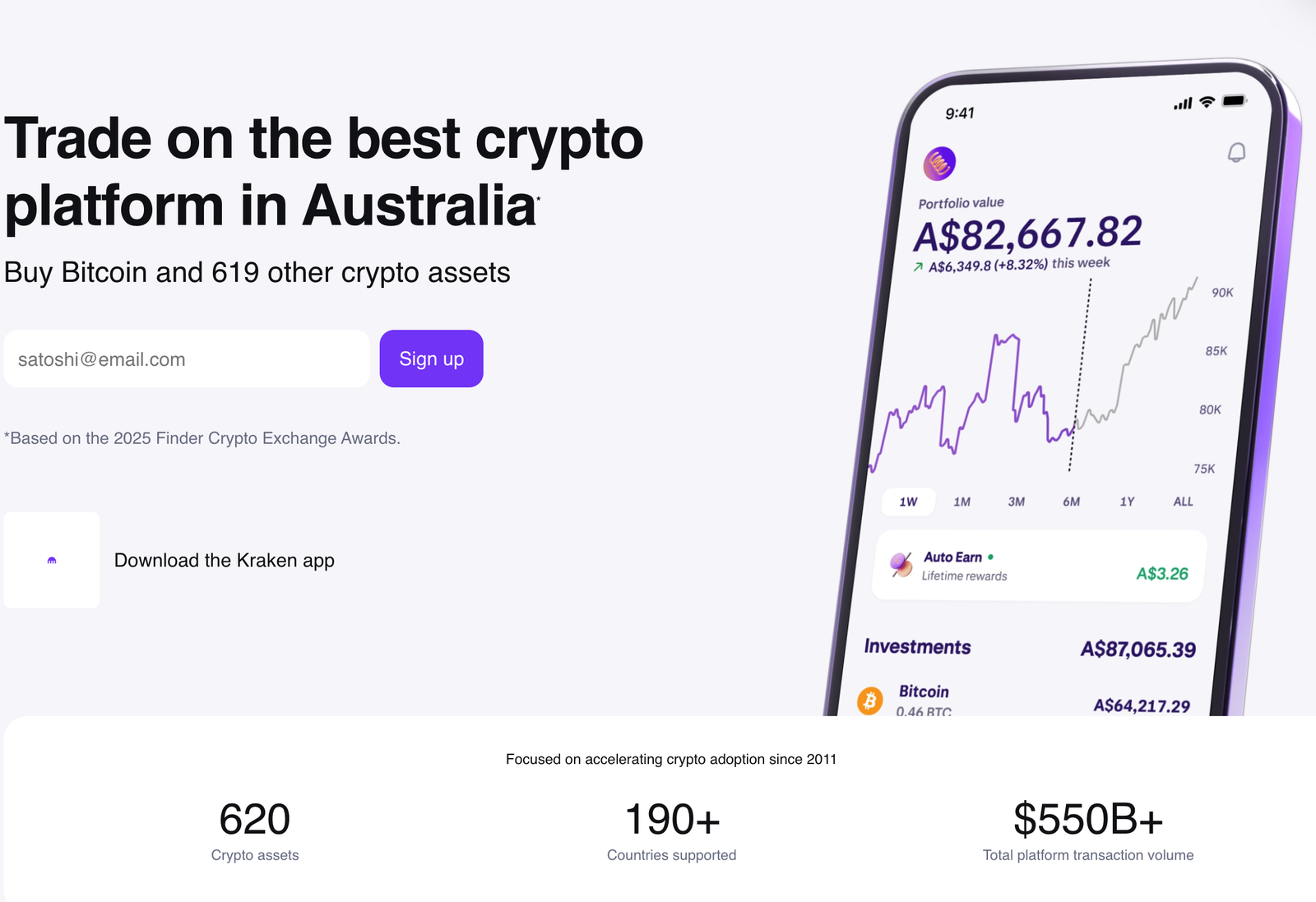
| Feature | Details |
|---|---|
| Australian entity | Kraken Australia (via Bit Trade acquisition) |
| Regulator | AUSTRAC |
| Registration | Digital Currency Exchange (DCE) |
| Minimum deposit | $0 (bank transfer) |
| Cryptocurrencies | 420+ |
| Spot trading fees | Maker ~0.20–0.25% / Taker ~0.35–0.40% |
| Withdrawal fee | $0 (AUD bank/Osko) |
| Account currency | AUD supported |
| Platforms | Web, Kraken app, Kraken Pro app |
Is this exchange regulated and compliant in Australia?
Yes. Kraken is registered with AUSTRAC as a Digital Currency Exchange, which means it complies with Australian AML and KYC obligations. Kraken does not hold an AFSL, as spot crypto trading does not require one in Australia. Like all crypto platforms, crypto balances are not covered by the Financial Claims Scheme.
How competitive are the trading fees and spreads?
Kraken uses a maker–taker fee model on its spot exchange. Fees start at around 0.25% (maker) and 0.40% (taker) and reduce as 30-day trading volume increases. Using Kraken Instant Buy is more expensive due to built-in spreads and convenience fees, while Kraken Pro offers materially lower costs for active traders. Overall pricing is competitive globally, though not the cheapest in Australia.
How easy is it to deposit and withdraw AUD in Australia?
AUD deposits are easy and fast via PayID, Osko, or bank transfer, with no deposit fees. AUD withdrawals to an Australian bank account are also fee-free, with a $5 minimum withdrawal. Card purchases are supported but carry higher processing costs, making bank transfers the preferred option for Australians.
How secure is the platform and how are user funds stored?
Kraken is known for strong security practices. Around 95% of client assets are held in cold storage, with strict internal controls, 2FA, withdrawal confirmations, and continuous monitoring. Kraken publishes Proof of Reserves using cryptographic verification and undergoes independent audits. There is no insurance or government protection for crypto holdings.
How easy is the platform to use and what features does it offer?
Kraken offers two clear experiences. The standard Kraken interface and app are beginner-friendly, with simple buy/sell tools, recurring purchases, and portfolio tracking. Kraken Pro adds advanced charting, full order books, multiple order types, margin trading, and staking on supported assets. Kraken also stands out for offering 24/7 live chat and phone support, which is rare among exchanges.
Who is this platform best for?
Kraken is best for Australian users who want a long-established, security-focused global exchange with strong AUD support. It suits intermediate and advanced traders using Kraken Pro, while still being accessible to beginners who value education and customer support. It may be less suitable for users seeking the absolute lowest fees or extensive AUD trading pairs.
Read the full Kraken review here.
Pros & cons
- AUSTRAC-registered exchange
- 420+ cryptocurrencies
- Free AUD deposits and withdrawals
- Strong security and Proof of Reserves
- Beginner and Pro platforms
- No AFSL
- Limited AUD pairs
- Instant buy is expensive
- No insurance on crypto
- Fees not the lowest
3. Swyftx – Best for: Beginners and simple AUD trading
Platform overview
| Feature | Details |
|---|---|
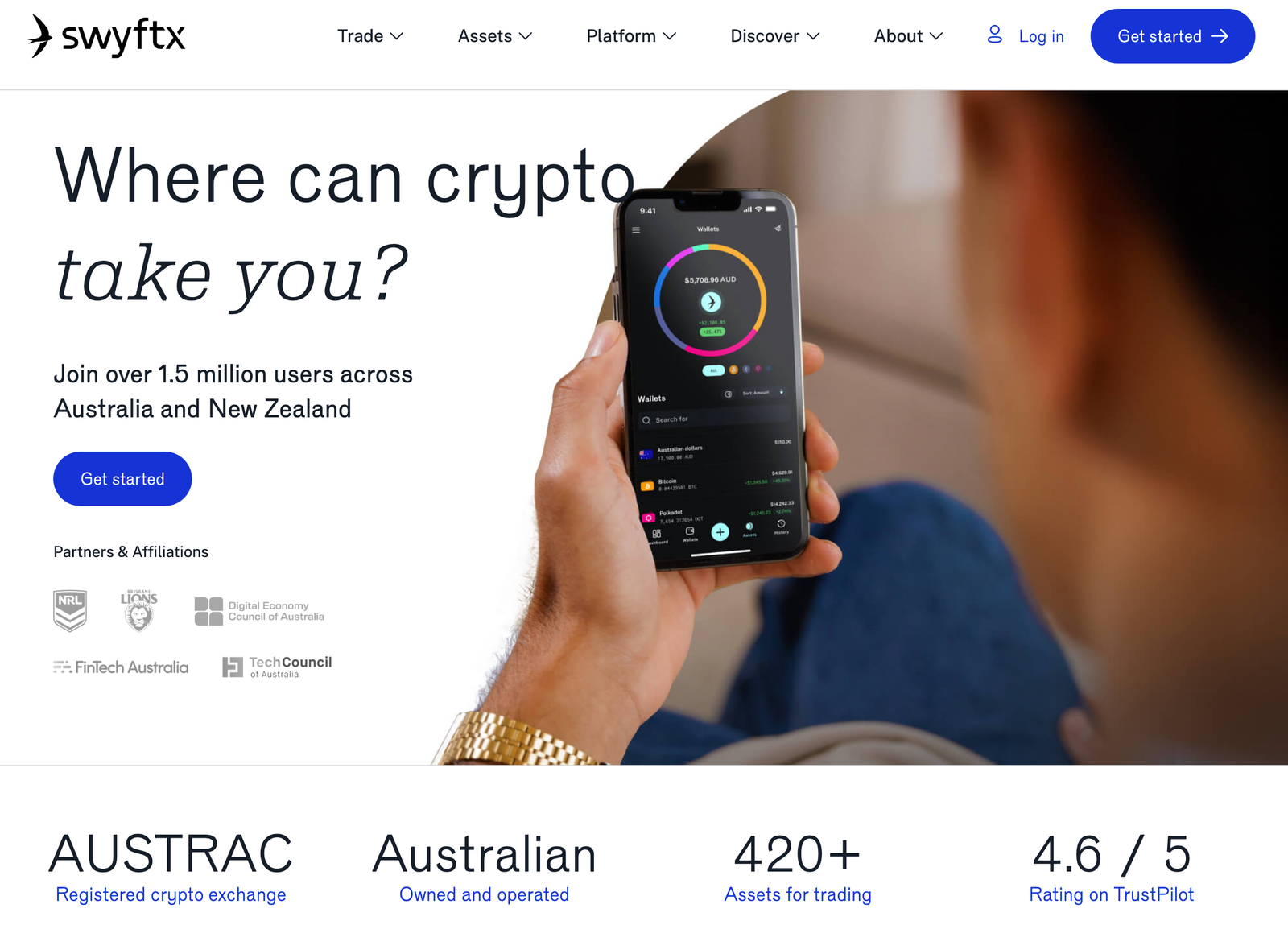
| Australian entity | Swyftx Pty Ltd |
| Regulator | AUSTRAC |
| Registration | Digital Currency Exchange (DCE) |
| Minimum deposit | $0 (bank transfer, PayID, Osko) |
| Cryptocurrencies | 420+ assets |
| Spot trading fees | 0.6% standard (down to ~0.1% with volume) |
| Withdrawal fee | $0 (AUD withdrawals) |
| Account currency | AUD, USD, NZD |
| Platforms | Web, iOS app, Android app |
Is this exchange regulated and compliant in Australia?
Yes. Swyftx is registered with AUSTRAC as a Digital Currency Exchange, which requires it to comply with Australian AML, CTF, and KYC laws. It does not hold an AFSL, as spot cryptocurrency trading is not currently regulated under Australia’s financial licensing regime. As with all crypto platforms in Australia, crypto assets are not covered by the Financial Claims Scheme.
How competitive are the trading fees and spreads?
Swyftx uses a flat trading fee model, starting at 0.6% per trade, which is higher than global exchanges like Binance but competitive among Australian platforms. Fees can reduce to around 0.1% for high-volume traders under its tiered structure. One of Swyftx’s strengths is fee transparency, with tight and visible spreads that typically start around 0.45% and average lower than many local competitors. Instant buys are included in the standard fee, unlike some exchanges that add extra markups.
How easy is it to deposit and withdraw AUD in Australia?
AUD funding is one of Swyftx’s strongest features. Australians can deposit via bank transfer, PayID, or Osko with no fees, and withdrawals back to an Australian bank account are also free. Credit and debit card deposits are supported but incur third-party processing fees of around 1.9–3.6%, making bank transfers the most cost-effective option. AUD transactions are typically near-instant during business hours.
How secure is the platform and how are user funds stored?
Swyftx has a strong security record and has not reported any hacks since launch. It uses cold storage, 2FA, encryption, penetration testing, and least-privilege access controls. Swyftx is also one of the few Australian exchanges to hold ISO 27001 certification, an international benchmark for information security management. There is no insurance on crypto or fiat balances, which is standard for Australian exchanges.
How easy is the platform to use and what features does it offer?
Swyftx is designed to be highly intuitive. The web and mobile platforms focus on simplicity, with clean dashboards, fast buying and selling, and clear portfolio tracking. Features include recurring buys (DCA), advanced orders, crypto bundles, demo trading with virtual funds, and TradingView charting. Swyftx also supports SMSF, trust, and business accounts, which is uncommon among retail-focused exchanges. It does not offer derivatives, futures, or margin trading.
Who is this platform best for?
Swyftx is best for Australian beginners and intermediate investors who want an easy-to-use platform with strong AUD support, transparent fees, and local customer service. It is particularly well suited to long-term investors using recurring buys or SMSF structures. It is less suitable for advanced traders who need derivatives, leverage, or very low maker–taker fees.
Read the full Swyftx review here.
Pros & Cons
- AUSTRAC-registered Australian exchange
- 420+ cryptocurrencies supported
- Free AUD deposits and withdrawals
- ISO 27001 security certification
- Demo mode, bundles, SMSF support
- No AFSL
- Fees higher than global exchanges
- No derivatives or margin trading
- No insurance on crypto holdings
- Limited advanced trading tools
4. Binance – Best for low fees and active traders

Platform overview
| Feature | Details |
|---|---|
| Australian entity | Binance Australia |
| Regulator | AUSTRAC |
| Registration | Digital Currency Exchange (DCE) |
| Minimum deposit | No fixed minimum (bank transfer/PayID) |
| Cryptocurrencies | 440+ assets |
| Spot trading fees | Maker 0.10% / Taker 0.10% |
| Withdrawal fee | Crypto network fees apply |
| Account currency | AUD supported |
| Platforms | Web, iOS app, Android app |
Is this exchange regulated and compliant in Australia?
Yes. Binance Australia is registered with AUSTRAC as a Digital Currency Exchange, which requires compliance with Australian AML, CTF, and KYC obligations. It does not hold an AFSL for crypto investing, as spot crypto trading is not regulated as a financial product in Australia. Binance no longer offers crypto derivatives to Australian retail users following ASIC action. Crypto assets are not covered by the Financial Claims Scheme.
How competitive are the trading fees and spreads?
Binance is one of the lowest-cost major exchanges available to Australians. Spot trading fees are 0.10% maker and 0.10% taker, with further discounts available through VIP tiers and BNB-based fee reductions. Spreads are generally tight due to deep global liquidity, especially on major pairs like BTC and ETH. Instant buy or convert features use bundled pricing and can be more expensive than placing orders on the spot market.
How easy is it to deposit and withdraw AUD in Australia?
AUD deposits and withdrawals are supported via PayID and bank transfer, which Binance began restoring broadly from January 2026, alongside debit and credit card options. Bank-based methods are typically the cheapest, while card deposits incur higher third-party processing fees. Crypto deposits are free, and crypto withdrawals incur variable network fees depending on the blockchain.
How secure is the platform and how are user funds stored?
Binance applies a multi-layered security model, including two-factor authentication, device controls, and majority cold storage of client assets. It operates the Secure Asset Fund for Users (SAFU), an emergency insurance fund established in 2018 and topped up to around US$1 billion in value, used previously to reimburse users after security incidents. Binance also publishes Proof of Reserves using Merkle Tree verification. There is no government-backed protection on crypto holdings.
How easy is the platform to use and what features does it offer?
Binance is feature-rich rather than beginner-first. The app offers a Lite mode for simple buy/sell and portfolio tracking, and a Pro mode with advanced charting, full order books, multiple order types, P2P trading, staking on 180+ assets, recurring buys, trading bots, an NFT marketplace, and access to selected DeFi services. The depth of tools can feel overwhelming for new users, but experienced traders benefit from the flexibility.
Who is this platform best for?
Binance is best suited to Australian users who want low fees, deep liquidity, and access to a very large range of cryptocurrencies, and who are comfortable using a complex, feature-heavy platform. It is less suitable for complete beginners seeking a simple investing-only app, or users wanting regulated investment protections or crypto derivatives.
Read the full Binance review here.
Pro & cons
- AUSTRAC-registered exchange
- Very low spot fees (0.10%)
- 440+ cryptocurrencies supported
- SAFU insurance fund (~US$1B target)
- Advanced tools, staking, P2P
- No AFSL for crypto investing
- Interface can overwhelm beginners
- No derivatives for AU retail users
- Crypto not government-protected
- Support starts via chatbot
5. CoinSpot – Best for: Long-term holders and altcoin access
Platform overview
| Feature | Details |
|---|---|
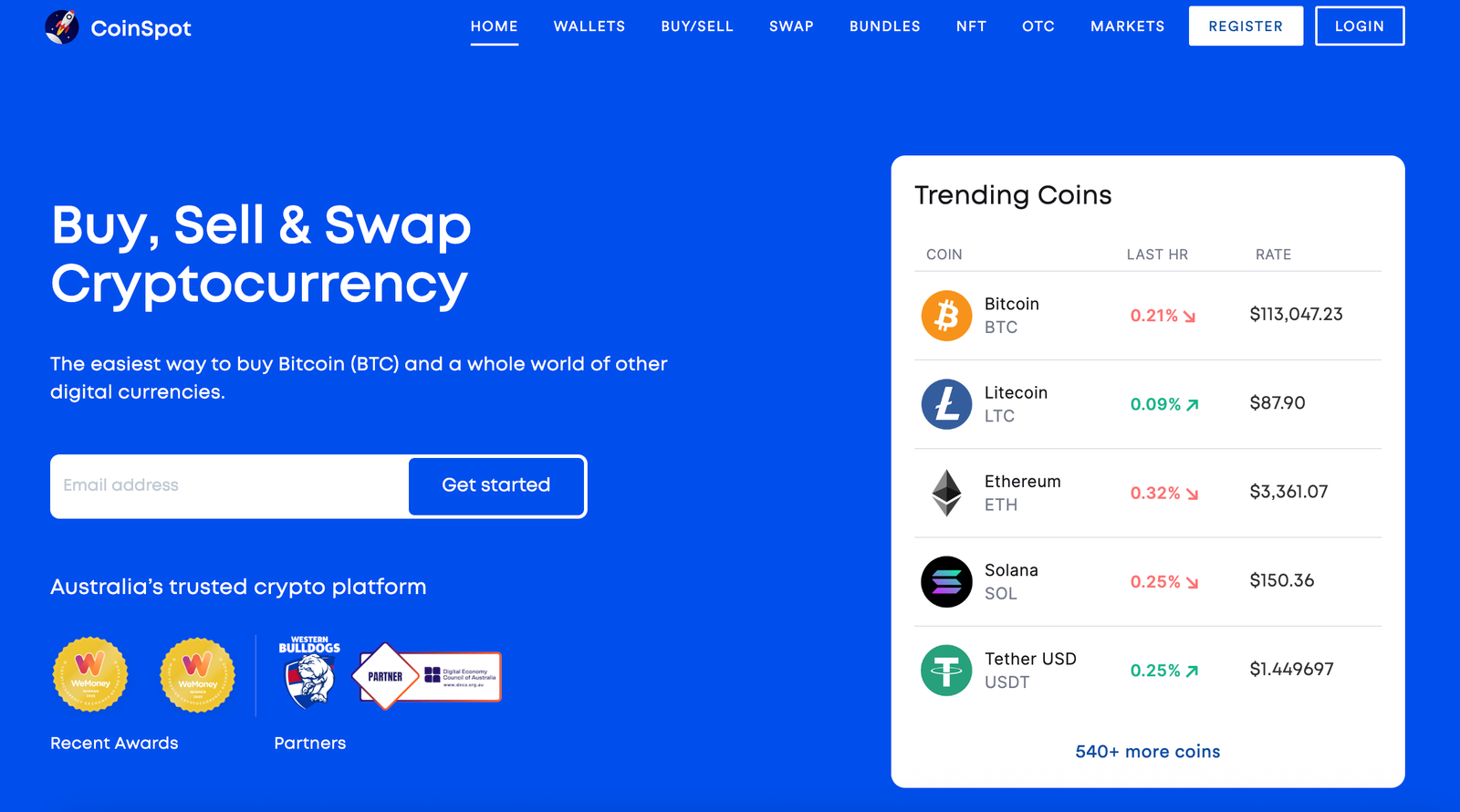
| Australian entity | CoinSpot Pty Ltd (Melbourne-based) |
| Regulator | AUSTRAC |
| Registration | Digital Currency Exchange (DCE) |
| Minimum deposit | $1 AUD (practical minimum) |
| Cryptocurrencies | 530+ assets |
| Spot trading fees | Instant Buy/Sell: 1% • Exchange: ~0.1% |
| Withdrawal fee | $0 (AUD) |
| Account currency | AUD only |
| Platforms | Web, iOS app, Android app |
Is this exchange regulated and compliant in Australia?
Yes. CoinSpot is registered with AUSTRAC as a Digital Currency Exchange and complies with Australian AML and KYC obligations. It has operated continuously since 2013, making it one of Australia’s longest-running exchanges. CoinSpot is also a member of Blockchain Australia and a voluntary member of AFCA for relevant financial products. Crypto assets held on CoinSpot are not protected by the Financial Claims Scheme and are not government-guaranteed.
How competitive are the trading fees and spreads?
CoinSpot’s fees depend on how you trade. Instant Buy/Sell/Swap carries a 1% fee, which is high for frequent traders. Lower costs are available via the CoinSpot Exchange, where spot trades are priced around 0.1%, comparable with large global exchanges. Spreads vary by asset and liquidity and are generally wider on Instant trades than on the exchange order book.
How easy is it to deposit and withdraw AUD in Australia?
AUD funding is one of CoinSpot’s biggest strengths. Users can deposit via bank transfer or PayID for free, with additional options including POLi, card, PayPal, and cash (fees apply to some methods). AUD withdrawals to an Australian bank account are free and typically processed same or next business day. CoinSpot is AUD-only, so there are no FX conversion costs.
How secure is the platform and how are user funds stored?
CoinSpot has a strong local security record with no reported hacks. The majority of customer assets are held in cold storage, with 2FA, withdrawal controls, and account-level security settings available. CoinSpot holds ISO 27001 certification and was the first Australian exchange to complete an External Statutory Financial Audit under Australian Auditing Standards. There is no insurance on fiat or crypto balances.
How easy is the platform to use and what features does it offer?
CoinSpot is designed for simplicity. The interface is clean and beginner-friendly, with clear pricing and straightforward buy/sell flows. Features include recurring buys, price alerts, crypto bundles, a spending card, SMSF and business accounts, TradingView charts, and a small NFT marketplace. Advanced trading tools and derivatives are not offered.
Who is this platform best for?
CoinSpot is best for Australian beginners and long-term holders who want an easy AUD on-ramp, broad coin access, and local support. It is less suitable for fee-sensitive active traders who rely on Instant Buy/Sell, or users looking for advanced trading tools, leverage, or derivatives.
Read the full CoinSpot review here.
Pros & Cons
- AUSTRAC-registered Australian exchange
- 530+ cryptocurrencies supported
- Free AUD deposits and withdrawals
- ISO 27001 security certification
- Very beginner-friendly UI & local support
- 1% Instant Buy/Sell fee
- Limited advanced trading tools
- Paid card, cash, PayPal deposits
- No insurance on crypto holdings
- Small NFT marketplace
How to buy crypto using an Australian crypto exchange?
1. Log in to the platform
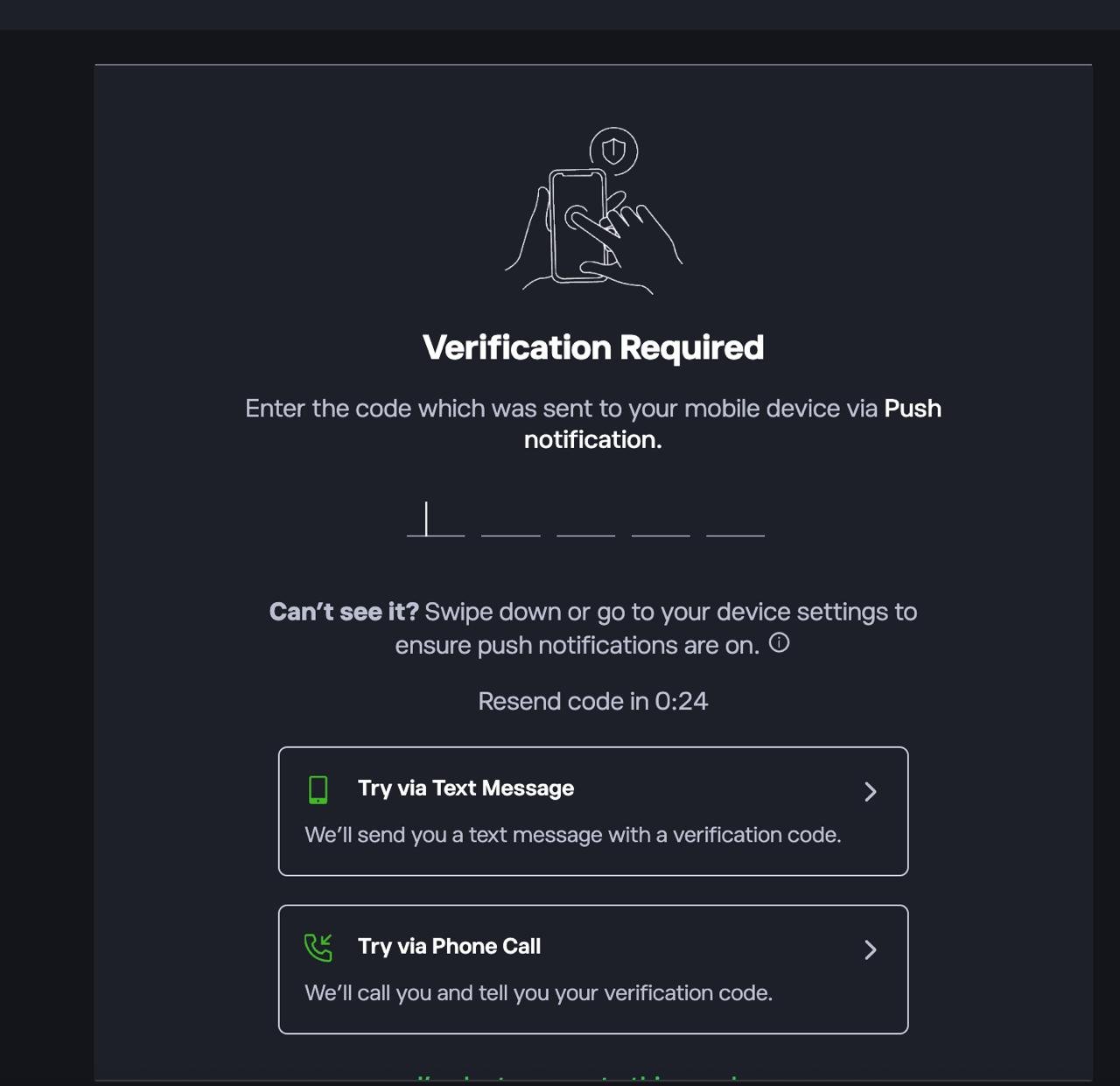
First sign up or log in to the platform. If prompted, complete 2FA by entering the code sent via push notification, SMS, or phone call.
2. Deposit funds into your account
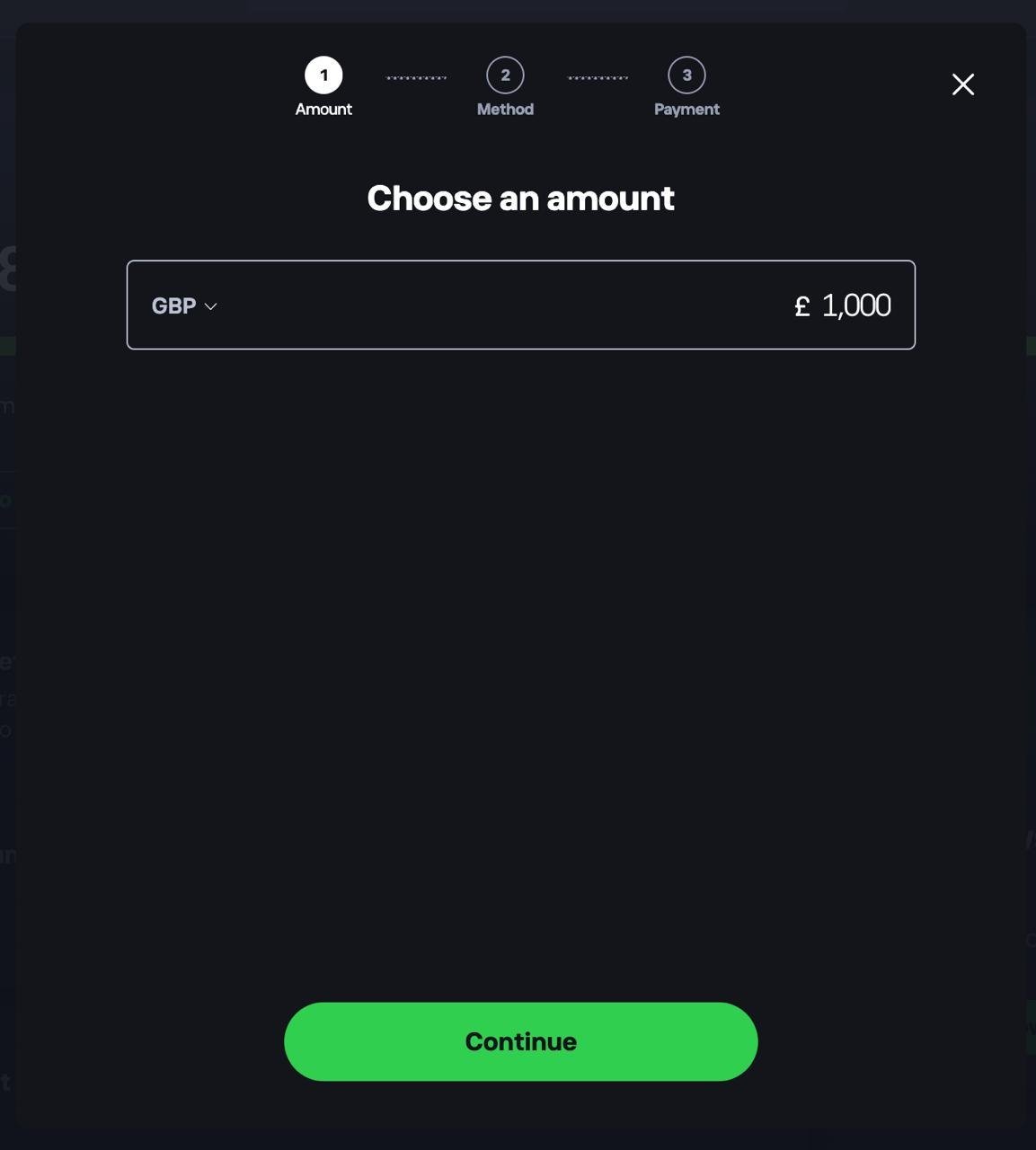
Head to your dashboard and choose to add funds. Select your currency, enter the amount you want to deposit, tap Continue, then choose a payment method.
3. Confirm your funds are available
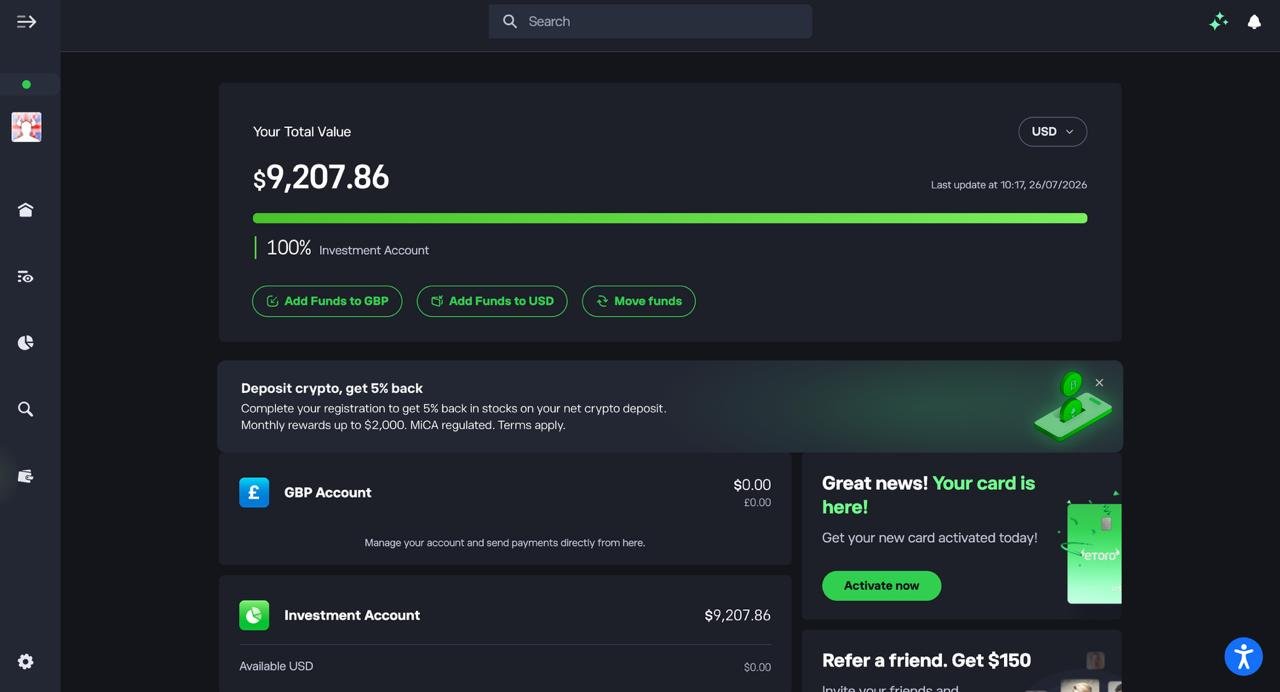
Check your dashboard to make sure your deposit has landed in your Investment Account before you start buying crypto.
4. Find the crypto you want to buy
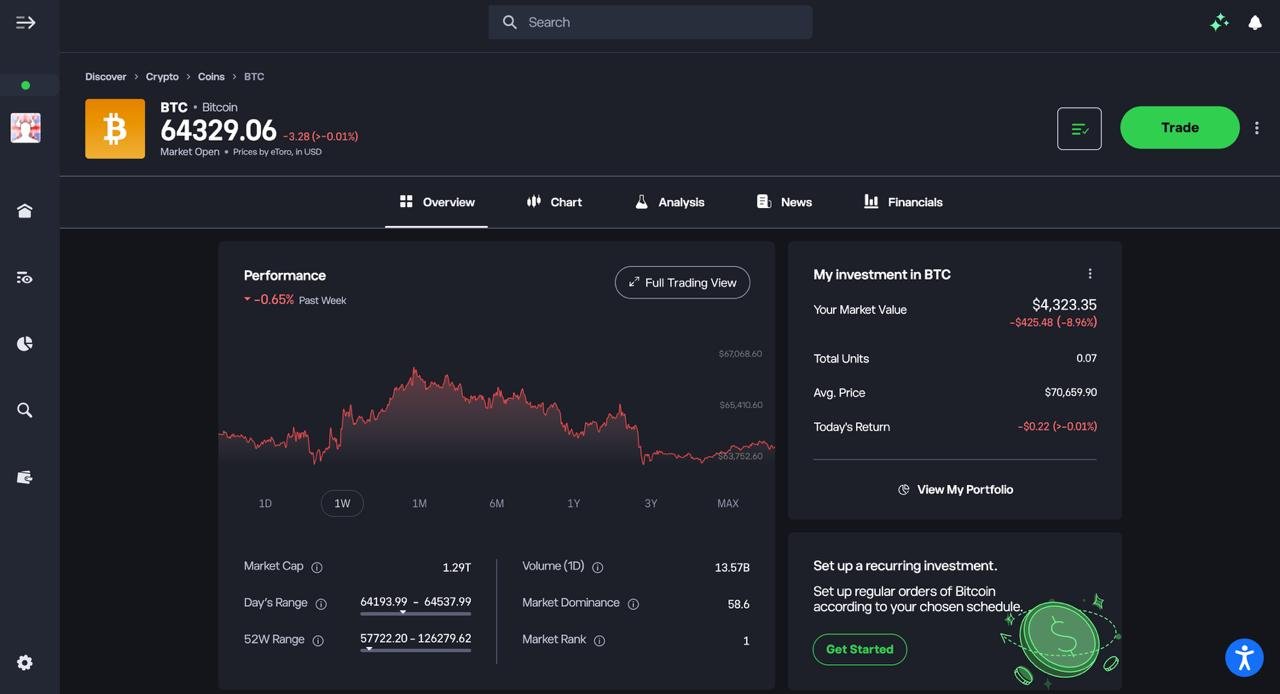
Search for the coin you’re after, such as Bitcoin, and open its overview page to check the current price and performance.
5. Set up and confirm your purchase
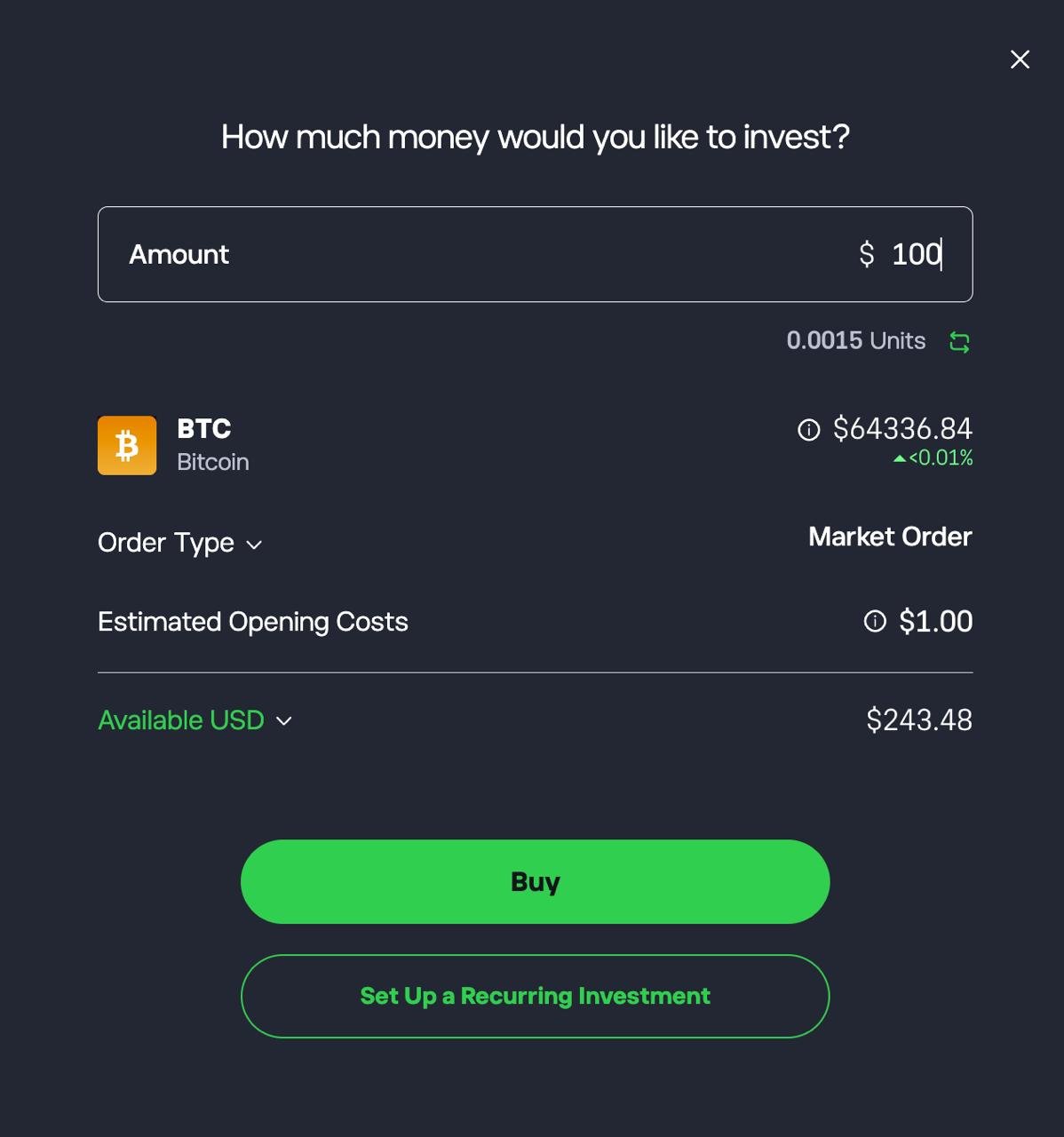
Enter the amount you want to invest, review the estimated units and opening costs, then tap Buy. You can also set up a recurring investment if you want to buy on a regular schedule.
6. Check your order confirmation
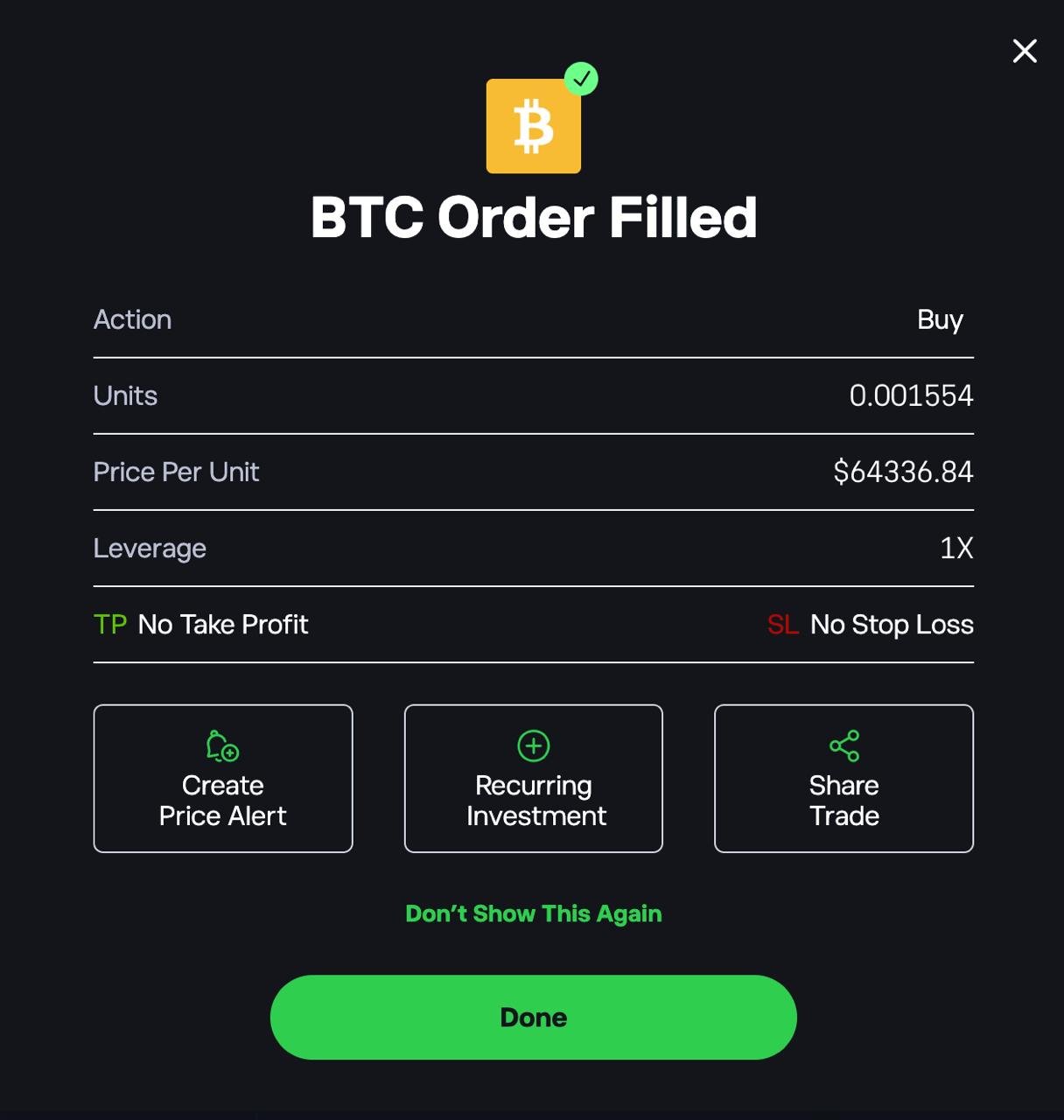
Once your order goes through, you’ll see a confirmation showing the units bought, price per unit, and leverage. From here you can also set a price alert or share the trade.
What factors should you consider when choosing a crypto exchange in Australia?
When choosing a crypto exchange in Australia, focus on regulation, fees, AUD banking support, security, asset range, and ease of use. Crypto exchanges are not regulated like share trading platforms, so understanding where protections stop is essential before you deposit funds.
1. Regulation and compliance
Australian crypto exchanges should be registered with AUSTRAC as a Digital Currency Exchange (DCE). This ensures compliance with AML and KYC laws, but it does not mean the platform is licensed like a share broker.
Most spot crypto exchanges do not hold an AFSL, and crypto is not covered by the Financial Claims Scheme.
Oversight of financial markets and consumer protections sits with ASIC, but spot crypto trading itself remains largely unregulated.
2. Fees and total trading costs
Fees vary widely and depend on how you trade. Look beyond headline rates and understand how fees are charged. Common costs include instant buy and sell fees of around 1%, spot trading fees typically between 0.1% and 0.6%, variable spreads that widen during volatility, and deposit, withdrawal, or FX conversion fees. Using exchange-style spot markets is usually cheaper than instant buys, but less beginner-friendly.
3. AUD deposits and withdrawals
Strong AUD support is critical for Australian users. The best exchanges offer free PayID, Osko, or bank transfer deposits, fast and low-cost AUD withdrawals, and no forced USD conversion. Weak AUD support adds friction and increases overall costs.
4. Security and custody of funds
Most exchanges are custodial, meaning they control your private keys unless you withdraw to your own wallet.
Key security features to look for include majority cold storage, two-factor authentication, withdrawal controls, independent security audits or certifications such as ISO 27001, and Proof of Reserves reporting. Even with strong security measures, counterparty risk remains.
5. Asset range and liquidity
Australian exchanges vary widely in asset coverage, from fewer than 50 coins to more than 400. Check whether major assets like Bitcoin, Ethereum, Solana, and stablecoins are supported, whether AUD pairs are liquid, and how wide spreads are on smaller altcoins. A large coin list only helps if liquidity and pricing are reasonable.
6. Ease of use and platform features
The right platform depends on your experience level. Important features include beginner-friendly buy and sell tools, advanced order types for experienced traders, reliable mobile apps, recurring buy options for dollar-cost averaging, tax reporting support for Australian users, and responsive customer service.
7. Fit for your investing style
| User type | What matters most |
|---|---|
| Beginners | Simplicity, clear pricing, AUD support |
| Long-term investors | Security, recurring buys |
| Active traders | Low fees, liquidity |
| Altcoin investors | Broad coin selection |
What is a crypto exchange and how does it work?
A crypto exchange is an online platform that lets you buy, sell, and hold cryptocurrencies, whether you’re buying Bitcoin in Australia or buying Ethereum in Australia, using Australian dollars or other crypto assets. In Australia, most exchanges operate as custodial exchanges, meaning they hold and manage crypto on your behalf unless you withdraw it to a personal wallet.
Using a crypto exchange typically involves four steps. First, you create an account and complete identity checks required under AUSTRAC anti-money-laundering rules. Second, you deposit funds, usually AUD via PayID, Osko, or bank transfer. Third, you place a trade using either an instant buy feature or a spot market. Finally, your crypto is credited to your account on the exchange, where it remains until you trade again or withdraw it.
Most Australian crypto exchanges are registered as Digital Currency Exchanges (DCEs) with AUSTRAC. This registration focuses on AML and KYC compliance only. Crypto assets held on exchanges are not covered by the Financial Claims Scheme, and spot crypto trading is not regulated like shares or ETFs. Oversight of financial markets sits with ASIC, but consumer protections are limited.
How trading works on a crypto exchange
Exchanges usually offer two main trading methods. Instant buy and sell executes immediately at a quoted price and often costs around 1% per trade. Spot trading uses an order book where buyers and sellers set prices, with lower fees commonly between 0.1% and 0.6%. Higher liquidity generally leads to tighter spreads and fairer pricing.
Custodial exchanges
A custodial exchange controls the private keys to your crypto while it remains on the platform. This setup is convenient for beginners and active traders because trading is fast and account recovery is possible. The trade-off is counterparty risk. If the exchange is hacked, frozen, or becomes insolvent, access to funds may be delayed or lost.
Most Australian custodial exchanges mitigate this risk by holding the majority of assets in cold storage, offering two-factor authentication, and applying withdrawal controls, but these measures do not remove platform risk.
Non-custodial wallets
Non-custodial crypto wallets in Australia give you full control of your private keys and crypto. Only you can approve transactions, and no exchange can restrict access. This reduces counterparty risk but increases personal responsibility. Losing your recovery phrase means permanent loss of funds.
Non-custodial wallets generally fall into two categories. Software wallets are internet-connected apps suitable for everyday use. Hardware wallets are offline devices designed for long-term storage and are widely considered the safest option for holding larger balances.
Custody comparison
| Storage type | Who controls keys | Best for | Main risk |
|---|---|---|---|
| Custodial exchange | Exchange | Beginners, active trading | Exchange failure |
| Non-custodial software wallet | You | Regular use | Phishing, malware |
| Non-custodial hardware wallet | You | Long-term storage | Lost recovery phrase |
What is a decentralised exchange (DEX)?
A decentralised exchange (DEX) is a crypto trading platform that allows users to trade cryptocurrencies directly with each other using smart contracts, without relying on a central company to hold funds or execute trades. Unlike centralised exchanges, a DEX is non-custodial, meaning you keep control of your private keys at all times.
DEXs operate on blockchain networks and use automated code to facilitate trades. There is no account sign-up, identity verification, or AUD deposit option. Instead, users connect a non-custodial wallet and trade crypto-to-crypto directly on-chain.
DEX vs centralised exchange (CEX)
| Feature | DEX | Centralised exchange |
|---|---|---|
| Custody | Non-custodial | Custodial |
| Private key control | You | Exchange |
| AUD deposits | No | Yes |
| KYC required | No | Yes |
| Regulation (AU) | None | AUSTRAC registration |
| Customer support | None | Yes |
| Ease of use | Advanced | Beginner-friendly |
Who are DEXs best for?
DEXs are best suited to experienced crypto users who understand wallets, private keys, and on-chain transactions. They are commonly used for:
- Accessing newly issued or niche tokens
- Trading without intermediaries
- Participating in DeFi protocols
They are generally not suitable for beginners, Australians needing AUD on-ramps, or users who want customer support and regulatory oversight.
How do you choose the right type of crypto exchange in Australia?
Choosing the right type of crypto exchange in Australia depends on your experience level, how you plan to trade, and how much control you want over your crypto. The main choice is between a custodial (centralised) exchange and a decentralised exchange (DEX), with most Australians starting on a custodial exchange.
Start with your experience level
If you are new to crypto, a custodial exchange is usually the right starting point. These platforms offer AUD deposits, simple buy and sell tools, customer support, and account recovery. They are designed for beginners and long-term investors who want convenience and clear pricing.
DEXs are better suited to experienced users who already understand wallets, private keys, gas fees, and on-chain risks. There is no support, no recovery process, and mistakes are irreversible.
Consider how you want to fund and cash out
Australians who want to use AUD should choose a custodial exchange that supports PayID, Osko, or bank transfer. DEXs do not support AUD deposits or withdrawals. You must already hold crypto and manage transfers yourself.
If you plan to regularly move money between your bank and crypto, a custodial exchange is essential.
Match the exchange to your trading style
Your trading behaviour matters more than brand names.
| Your goal | Best exchange type |
|---|---|
| First-time buying crypto | Custodial exchange |
| Long-term investing (DCA) | Custodial exchange |
| Active trading with low fees | Custodial exchange with spot markets |
| Accessing new or niche tokens | Decentralised exchange |
| Full control of private keys | Decentralised exchange |
Understand regulation and protection limits
Custodial exchanges operating in Australia are typically registered with AUSTRAC and follow AML and KYC rules. This improves transparency but does not provide investor protection. Crypto is not covered by the Financial Claims Scheme, and spot crypto trading is not regulated like shares by ASIC.
DEXs sit entirely outside the Australian regulatory framework. There is no oversight, no dispute resolution, and no compensation if something goes wrong.
Decide how much control you want
Custodial exchanges control private keys while your crypto stays on the platform. This is convenient but introduces counterparty risk. DEXs and non-custodial setups give you full control, but you are responsible for security, backups, and transaction accuracy.
Many Australians use a hybrid approach: buy crypto on a custodial exchange using AUD, then move long-term holdings to a non-custodial wallet, while keeping smaller balances on the exchange for trading.
How is cryptocurrency regulated in Australia?
Cryptocurrency investing in Australia is partially regulated, but not treated like traditional investments such as shares or ETFs. The key point is that crypto itself is not legal tender, and most spot crypto trading is not regulated as a financial product.
Australian crypto exchanges must be registered with AUSTRAC as Digital Currency Exchanges. This requires them to follow anti-money laundering (AML) and know-your-customer (KYC) laws, including identity verification and transaction monitoring. AUSTRAC’s role is focused on financial crime prevention, not investor protection.
Market regulation and consumer protection sit with ASIC, but ASIC generally does not regulate spot crypto trading. An Australian Financial Services Licence (AFSL) is only required if a platform offers crypto derivatives, margin trading, managed investment products, or crypto-linked financial products. Crypto held on exchanges is not covered by the Financial Claims Scheme, meaning there is no government-backed compensation if an exchange fails.
In short, crypto exchanges in Australia are regulated for compliance and reporting, but investors do not receive the same protections as they would with regulated financial products.
Do Australians pay tax on cryptocurrency?
Yes. In most cases, cryptocurrency is taxable in Australia. The Australian Taxation Office (ATO) treats cryptocurrency as a CGT asset, similar to shares.
You generally pay capital gains tax (CGT) when you:
- Sell crypto for AUD
- Swap one cryptocurrency for another
- Use crypto to buy goods or services
- Gift crypto to another person
Capital gains are calculated as the difference between what you paid for the crypto and its value at disposal. If you hold crypto for more than 12 months, individuals may be eligible for the 50% CGT discount.
Income tax may apply instead of CGT if you:
- Receive crypto as payment for work
- Earn staking or reward income
- Trade crypto frequently in a business-like manner
In these cases, crypto is taxed as ordinary income at your marginal tax rate.
Record-keeping requirements
The ATO requires Australians to keep detailed records, including:
- Dates of transactions
- AUD value at the time of each transaction
- Purpose of the transaction
- Wallet and exchange records
Exchanges operating in Australia may share data with the ATO, so accurate reporting is essential.
Conclusion
The best crypto exchange in Australia depends on how you plan to use crypto, but a few platforms consistently stand out.
Binance is the top choice for low fees and active traders thanks to its deep liquidity and 0.10% spot fees. Swyftx and CoinSpot are better suited to beginners and long-term investors, offering simple interfaces, strong AUD support, and easy withdrawals.
For users who prioritise security and transparency, Kraken stands out with robust cold storage practices and Proof of Reserves. Ultimately, the right exchange is the one that matches your experience level, fee sensitivity, and how often you plan to move money in and out of AUD.
FAQs
Which is the best crypto exchange in Australia?
Binance is the best overall for Australians who want low fees, deep liquidity, and a wide range of cryptocurrencies, provided they are comfortable with a feature-rich platform.
What is the best crypto exchange in Australia for low fees?
Binance offers 0.10% maker and taker fees on spot trading, among the lowest available to Australian users.
What is the best crypto exchange in Australia to withdraw AUD?
CoinSpot is one of the easiest platforms for withdrawing AUD, with free bank withdrawals and strong PayID support.
What is the best crypto trading platform for beginners in Australia?
Swyftx is best for beginners due to its clean interface, simple pricing, and easy AUD deposits.
What is the safest crypto exchange in Australia?
Kraken is widely regarded as the safest option due to its long operating history, strong cold storage practices, independent audits, and Proof of Reserves.
