

In 2026, Australia’s CFD trading scene is led by a select group of platforms, each excelling in its niche.
Pepperstone stands out as the best overall choice, combining low spreads with fast execution. IG remains a trusted name for its broad market access, while CMC Markets appeals to traders seeking advanced tools.
For professionals, Interactive Brokers offers institutional-grade capabilities, whereas eToro is ideal for beginners thanks to its user-friendly platform and copy trading features..
These CFD brokers are widely used by Australian traders and offer ASIC-regulated environments, competitive spreads, and access to global CFD markets.
Choosing the right CFD broker depends on costs, trading platforms, execution speed, and the type of assets you want to trade.
Some brokers focus on professional trading tools and low spreads for active traders, while others prioritise simplicity and risk management for newer users.

- CopyTrading lets you mirror experienced investors' trades
- Multi-asset access: stocks, crypto, ETFs, forex, commodities
- Beginner-friendly interface with social/community sentiment feed
Capital at risk. T&Cs apply.
Top CFD trading platforms in Australia (2026)
- Pepperstone: Best for low spreads and active traders, offering fast execution and support for MT4, MT5, cTrader, and TradingView, making it a popular choice among experienced traders.
- IG: Best for market range and long-term reliability, providing access to a wide selection of CFD markets alongside strong research and risk management tools.
- CMC Markets: Best for advanced trading tools, known for its powerful trading platform and strong risk management features suited to more experienced traders.
- Interactive Brokers: Best for professional and cost-focused traders, offering competitive pricing and global market access, though the platform can be more complex.
- eToro: Best for beginners and copy trading, allowing users to follow and automatically replicate the trades of experienced investors.
Key considerations when choosing a CFD broker in Australia
- Regulation: Always choose brokers regulated by ASIC, which sets standards for Australian financial services providers.
- Costs: Compare spreads, commissions, and overnight financing fees, which can significantly affect profitability for active traders.
- Trading platforms: Many brokers support platforms such as MetaTrader 4, MetaTrader 5, cTrader, or proprietary web platforms with different charting and execution tools.
- Market coverage: Ensure the broker offers the assets you want to trade, dedicated forex brokers in Australia often have the tightest spreads on currency pairs, as well as indices, commodities, shares, or crypto CFDs.
- Trading style: Active traders typically prioritise spreads and execution speed, while newer traders may prefer simpler platforms and stronger risk management tools.
What are the best CFDs trading platforms in Australia?
| Platform | Best For | Pricing & Spreads | Platforms & Tools | Market Coverage |
|---|---|---|---|---|
| Pepperstone | Low spreads & active trading | Very low spreads (from 0.0 pips) + commission | MT4, MT5, cTrader, TradingView | Forex, indices, shares, ETFs, crypto CFDs |
| IG | Market range & reliability | Tight index/FX spreads, higher share CFD fees | IG Platform, MT4, ProRealTime, TradingView | One of the largest CFD ranges globally |
| CMC Markets | Advanced trading tools | Competitive spreads, costly stock CFDs | Next Generation, MT4, TradingView | Forex, indices, shares, ETFs, bonds CFDs |
| Interactive Brokers | Professional, cost-focused traders | Very low commissions, no spread markups | Trader Workstation, IBKR Desktop | Shares, indices, forex, commodities CFDs |
| eToro | Beginners & copy trading | Spread-only pricing, higher overall costs | Web platform, mobile app, CopyTrader | Multi-asset CFDs + real stocks & crypto |
CFD broker Australia reviews
Below are detailed reviews of the top Australian CFD trading platforms, highlighting which platform each suits best based on experience level, features, fees, and overall ease of use.
1. eToro – Best for beginners & copy trading

Platform overview
| Key Info | Details |
|---|---|
| ASIC regulation | Yes – AFSL 491139 (eToro AUS Capital Ltd) |
| Minimum deposit | $50 (bank transfer minimum $500) |
| CFD spreads | From 1.0 pip (EUR/USD), 1.0 on S&P 500 CFD |
| CFD commission | None – costs built into spreads |
| Markets available | Forex, indices, shares, ETFs, commodities, crypto CFDs |
| Trading platforms | Proprietary web platform + iOS/Android app |
| Retail leverage (AU) | Up to 30:1 (ASIC limits) |
| Withdrawal fee | $5 per withdrawal |
Is this CFD trading platform ASIC-regulated and compliant in Australia?
Yes. eToro operates in Australia under eToro AUS Capital Ltd, regulated by ASIC with AFSL 491139. This means strict leverage caps, mandatory risk warnings, and negative balance protection for retail CFD traders. Client funds are held separately from company capital, but there is no CHESS sponsorship and no guaranteed compensation scheme in Australia if the broker fails.
How competitive are this platform’s spreads, commissions, and overnight fees?
eToro uses a spread-only pricing model for CFDs. Major forex pairs start around 1.0 pip, and popular index CFDs like the S&P 500 typically sit at 1.0. That’s reasonable for casual traders, but not class-leading. Overnight financing applies to leveraged CFD positions and can add up quickly, particularly on indices and crypto. The real sting for Australians is the currency conversion fee, which can reach 1.5% per side unless you qualify for higher account tiers or manage conversions externally.
What CFD markets and instruments can you trade on this platform?
eToro offers one of the broadest CFD ranges available to Australian retail traders. You can trade 56+ forex pairs, 30+ global indices, thousands of share and ETF CFDs, major commodities, and a large selection of crypto CFDs. One important nuance: non-leveraged long stock and ETF positions are executed as real assets, while all leveraged or short positions are CFDs. Scalping is not permitted, which will matter to very active traders.
How reliable is the trading platform, execution speed, and order functionality?
The platform is stable and intuitive, especially on mobile, for more mobile-first options, see our guide to trading apps in Australia, with market, limit, stop-loss, and trailing stop orders supported. Execution is generally smooth for retail trade sizes, but advanced traders may find the platform restrictive. You can’t customise layouts deeply, and some order edits require cancelling and re-entering trades. There’s no MT4 or MT5 support, which firmly positions eToro as a simplicity-first CFD platform, not a precision trading workstation.
Is this CFD platform suitable for your experience level and risk profile?
eToro suits beginner to intermediate CFD traders who value ease of use and risk controls over raw pricing. The interface is forgiving, default leverage settings align with ASIC rules, and position-level stop-losses are easy to apply. More experienced traders may feel boxed in by the lack of advanced charting depth, limited data history, and higher all-in costs compared to ECN-style brokers.
Who is this CFD trading platform best for?
eToro works best for Australian traders who want multi-asset CFD exposure alongside stocks and crypto in one account, and who may also use copy trading platforms in Australia like CopyTrader to mirror other traders’ CFD strategies. It’s far less compelling for high-frequency traders, scalpers, or anyone highly sensitive to overnight and FX conversion costs.
Read the full eToro review here.
Pros & cons
- Broad CFD market coverage
- ASIC-regulated with retail protections
- Beginner-friendly platform and app
- Integrated risk controls
- Copy trading available for CFDs
- Higher spreads than top-tier CFD specialists
- Currency conversion fees can be expensive
- No MT4 or MT5 support
- Scalping not allowed
- Limited platform customisation
2. Pepperstone – best for low spreads & active traders
Platform overview
| Key Info | Details |
|---|---|
| ASIC regulation | Yes – AFSL 414530 (Pepperstone Group Limited) |
| Minimum deposit | $0 (recommended ~$200 to trade sensibly) |
| CFD spreads | From 0.0 pips (Razor account, forex majors) |
| CFD commission | $7 per round turn lot (MT4/MT5), $6 on cTrader |
| Markets available | Forex, indices, shares, ETFs, commodities, crypto CFDs |
| Trading platforms | MT4, MT5, cTrader, TradingView, Pepperstone platform |
| Retail leverage (AU) | Up to 30:1 (ASIC limits) |
| Withdrawal fee | $0 for Australian clients |
Is this CFD trading platform ASIC-regulated and compliant in Australia?
Yes. Pepperstone is an Australian-founded broker regulated locally by ASIC under AFSL 414530. It operates under strict Australian CFD rules, including leverage caps, margin close-out requirements, and negative balance protection for retail clients. Client funds are held in segregated trust accounts with tier-one banks. There’s no CHESS sponsorship, but that’s standard for CFD-only brokers.
How competitive are this platform’s spreads, commissions, and overnight fees?
Pepperstone is one of the lowest-cost CFD brokers in Australia for active traders. Razor accounts regularly show 0.0–0.3 pip spreads on major FX pairs, with transparent commissions layered on top. Index CFD spreads are also sharp, with the S&P 500 typically around 0.4. Overnight financing is market-aligned and fair, though holding index CFDs long-term can get expensive. The big win: no inactivity fees and no withdrawal fees for Australians.
What CFD markets and instruments can you trade on this platform?
Pepperstone focuses almost entirely on CFDs, but the range is deep where it matters. You get 90+ forex pairs, 20+ global indices, 1,400+ share CFDs, ETF CFDs, commodities (see our guide on how to trade commodities in Australia), and a growing list of crypto CFDs including BTC and ETH. All instruments are traded as CFDs, meaning no ownership of underlying assets. If you want real shares, this is not the right platform.
How reliable is the trading platform, execution speed, and order functionality?
Execution is where Pepperstone shines. Its ECN-style model, liquidity from 20+ tier-one providers, and hosting at Equinix data centres deliver latency as low as ~50ms. MT4, MT5, cTrader, and TradingView support advanced order types, algorithmic trading via an automated trading platform in Australia, EAs, scalping, and hedging. Guaranteed stop-losses aren’t available, so risk management needs to be deliberate, especially during volatile sessions.
Is this CFD platform suitable for your experience level and risk profile?
Pepperstone suits intermediate to advanced traders best. Beginners can use demo accounts and education tools, but the platform assumes you understand leverage and margin mechanics. There’s little hand-holding compared to beginner-first brokers. If you trade frequently, size positions carefully, and care about execution quality, Pepperstone feels closer to an institutional setup than a retail trading app.
Who is this CFD trading platform best for?
Pepperstone is best for active CFD and forex traders who prioritise tight spreads, fast execution, and platform choice. It’s a strong fit for scalpers, algorithmic traders, and technically driven strategies. Long-term investors, copy traders, or anyone wanting real shares and ETFs should look elsewhere.
Read the full Pepperstone review here.
Pro & cons
- Very tight spreads and low commissions
- Excellent execution speed and liquidity
- Multiple professional trading platforms
- No inactivity or withdrawal fees (AU)
- ASIC-regulated with segregated funds
- CFDs only – no real asset investing
- No guaranteed stop-loss orders
- Limited beginner guidance
- Overnight fees can add up
- Crypto CFD range smaller than some rivals
3. Interactive Brokers – Best for professional & cost-focused traders
Platform overview
| Key Info | Details |
|---|---|
| ASIC regulation | Yes – AFSL 453554 (Interactive Brokers Australia Pty Ltd) |
| Minimum deposit | $0 (margin trading from $2,000) |
| CFD pricing model | Commission-based, no spread markups |
| CFD commissions | From 0.05% (AU share CFDs), US$0.005 per contract (US CFDs) |
| Markets available | Share CFDs, index CFDs, forex, commodities |
| Trading platforms | Trader Workstation, IBKR Desktop, Web Portal, Mobile apps |
| Retail leverage (AU) | Up to 30:1 (ASIC limits) |
| Withdrawal fees | 1 free withdrawal/month, then ~$15 AUD |
Is this CFD trading platform ASIC-regulated and compliant in Australia?
Yes. Interactive Brokers operates in Australia under ASIC regulation (AFSL 453554) and complies fully with local CFD rules, including leverage caps, margin close-out protections, and negative balance protection for retail clients. Client funds are held in segregated trust accounts. There’s no CHESS sponsorship for CFDs, which is standard.
How competitive are this platform’s spreads, commissions, and overnight fees?
Costs are among the lowest in Australia for serious CFD traders. Pricing is commission-based rather than spread-heavy, keeping execution transparent. Australian share CFDs start at 0.05% (min $5), while US CFDs are charged per contract. Forex spreads can dip to ~0.1 pip, with small commissions added. Overnight financing is competitive, particularly for larger balances.
What CFD markets and instruments can you trade on this platform?
IBKR focuses on quality over quantity. You can trade share CFDs, major index CFDs, forex, and commodity CFDs, alongside direct access to global shares, ETFs, futures, and options (see our picks for options trading platforms in Australia) in the same account. The CFD list is narrower than CFD-only brokers, but the broader multi-asset access is a key advantage.
How reliable is the trading platform, execution speed, and order functionality?
Execution quality is excellent. SMART routing scans venues for best pricing, and latency is consistently low. Trader Workstation supports dozens of order types and advanced algos, while IBKR Desktop offers a cleaner interface without losing depth. This is institutional-grade infrastructure.
Is this CFD platform suitable for your experience level and risk profile?
Best suited to intermediate and advanced traders. Beginners can start with demos and simpler layouts, but the platform assumes you understand margin, leverage, and risk management. It rewards discipline and punishes mistakes.
Who is this CFD trading platform best for?
Interactive Brokers is best for experienced CFD traders who prioritise low costs, execution quality, and global market access. It’s ideal if you want CFDs alongside shares, futures, or options in one account. It’s not designed for casual or social trading.
Read the full Interactive Brokers review here.
Pro & cons
- Very low CFD commissions
- Institutional-grade execution
- Powerful desktop and mobile tools
- Strong risk and reporting tools
- ASIC-regulated with segregated funds
- Steep learning curve
- Limited CFD range vs specialists
- No MT4 or MT5
- Withdrawal fee after 1/month
- Not beginner-first
4. CMC Markets – Best for advanced trading tools
Platform overview
| Key Info | Details |
|---|---|
| ASIC regulation | Yes – AFSL 238054 (CMC Markets Asia Pacific Pty Ltd) |
| Minimum deposit | $0 |
| CFD pricing model | Spread-based (stock CFDs add commission) |
| Typical FX spreads | From 0.6 pips (EUR/USD) |
| Index CFD spreads | S&P 500 from ~0.6 |
| Stock CFD commission | $0.02 per share (min $10) |
| Markets available | Forex, indices, shares, ETFs, commodities, bonds (CFDs) |
| Trading platforms | Next Generation, MT4, TradingView |
| Retail leverage (AU) | Up to 30:1 (ASIC limits) |
| Withdrawal fees | $0 |
Is this CFD trading platform ASIC-regulated and compliant in Australia?
Yes. CMC Markets operates in Australia under ASIC regulation (AFSL 238054) and fully complies with local CFD rules, including leverage caps, margin close-out requirements, and retail client protections. Client funds are held in segregated trust accounts. There’s no investor compensation scheme in Australia, but CMC’s long operating history since 1989 and its London Stock Exchange listing add a layer of transparency many rivals lack.
How competitive are this platform’s spreads, commissions, and overnight fees?
CMC Markets is very competitive for forex and index CFDs, with tight spreads built directly into pricing. EUR/USD averages around 0.6 pips, and major indices like the S&P 500 are similarly sharp. Stock CFDs are the weak spot. The $0.02 per share commission (minimum $10) makes equity CFDs relatively expensive for frequent traders. Overnight financing is standard market-linked, but costs can add up quickly on long-held leveraged positions.
What CFD markets and instruments can you trade on this platform?
The range is one of the largest in Australia. CMC offers 330+ forex pairs, 80+ global indices, 10,000+ share CFDs, 1,000+ ETF CFDs, plus commodities and bonds. Everything is traded as a CFD on the Markets platform. If you want real share ownership, that sits separately under CMC Invest, not here.
How reliable is the trading platform, execution speed, and order functionality?
CMC’s Next Generation platform is one of the most advanced retail CFD platforms available. You get 80+ technical indicators, advanced pattern recognition, robust alerts, and a powerful order panel. Crucially, Guaranteed Stop-Loss Orders (GSLOs) are available, which is rare and valuable in volatile markets. Execution is fast and stable, though the platform can feel busy at first.
Is this CFD platform suitable for your experience level and risk profile?
It suits intermediate to advanced CFD traders best. Beginners can learn quickly thanks to strong education and demo accounts, but the platform’s depth assumes you’re comfortable with leverage and risk controls. Preset leverage levels can’t be manually reduced, so discipline matters.
Who is this CFD trading platform best for?
CMC Markets is best for active forex and index CFD traders who want tight spreads, deep market coverage, and professional-grade tools. It’s less attractive for stock CFD specialists focused on low commissions or traders who prefer ultra-simple platforms.
Read the full CMC Markets review here.
Pro & cons
- Tight spreads on forex and indices
- Extremely wide CFD market range
- Powerful Next Generation platform
- Guaranteed stop-loss orders available
- ASIC-regulated and publicly listed
- High fees on stock CFDs
- Platform can feel complex
- Inactivity fee after 12 months
- Leverage not adjustable
- CFDs only on this platform
5. IG – Best for market range & reliability
Platform overview
| Key Info | Key Info |
|---|---|
| ASIC regulation | Yes – AFSL (IG Australia Pty Ltd) |
| Minimum deposit | $0 (bank transfer), ~$100–$300 via card/PayPal |
| CFD pricing model | Spread-based (share CFDs add commission) |
| Typical FX spreads | From ~0.6–0.9 pips (EUR/USD) |
| Index CFD spreads | S&P 500 from ~0.4 |
| Share CFD commission | $0.02 per share, min $10 (AU) |
| Markets available | Forex, indices, shares, ETFs, commodities, bonds, crypto CFDs |
| Trading platforms | IG Web, Mobile App, MT4, ProRealTime, TradingView |
| Retail leverage (AU) | Up to 30:1 (ASIC limits) |
| Withdrawal fees | $0 (same-day bank transfer costs $15) |
Is this CFD trading platform ASIC-regulated and compliant in Australia?
Yes. IG operates in Australia as IG Australia Pty Ltd, regulated by ASIC and fully compliant with local CFD rules. That includes leverage caps, margin close-out requirements, and negative balance protection for retail clients. Client funds are held in segregated trust accounts with major banks such as CommBank, Westpac, and HSBC. Australia does not offer a compensation scheme, but IG’s scale and public listing add transparency.
How competitive are this platform’s spreads, commissions, and overnight fees?
IG is competitive but not the cheapest. Forex and index CFD spreads are tight, with EUR/USD typically around 0.6–0.9 pips and the S&P 500 near 0.4. Share CFDs are more expensive, with a $0.02 per share commission (minimum $10) making frequent equity CFD trading costly. Overnight financing is standard market-linked, and guaranteed stop-loss orders carry an extra premium.
What CFD markets and instruments can you trade on this platform?
Market coverage is one of IG’s biggest strengths. Australian traders can access 80+ forex pairs, 80+ global indices, 13,000+ share CFDs, 5,000+ ETF CFDs, commodities, bonds, interest rates, futures, and crypto CFDs. All leveraged exposure is via CFDs. Direct share investing sits on a separate IG share trading account.
How reliable is the trading platform, execution speed, and order functionality?
Reliability is a core selling point. IG reports average execution speeds around 0.014 seconds, and platform stability is excellent even during volatile sessions. You get market, limit, stop, trailing stop, and guaranteed stop orders, plus strong alerts and risk tools. MT4 and TradingView support more technical workflows, while IG’s own platform is clean and fast.
Is this CFD platform suitable for your experience level and risk profile?
IG works for beginner through advanced CFD traders, but beginners should tread carefully. Education, demo accounts, and limited-risk settings help reduce early mistakes, yet CFDs remain high risk. More experienced traders will appreciate the platform depth, market breadth, and execution reliability, even if pricing isn’t rock-bottom.
Who is this CFD trading platform best for?
IG is best for traders who want a highly reliable, globally established CFD broker with huge market coverage and strong platforms. It’s particularly suited to forex and index CFD traders who value tools and stability over the lowest possible fees. Cost-sensitive share CFD traders may find better value elsewhere.
Read the full IG review here.
Pro & cons
- Extremely broad CFD market range
- Fast, reliable execution
- Guaranteed stop-loss orders available
- Multiple professional platforms
- ASIC-regulated and publicly listed
- Share CFD fees are high
- Not the cheapest overall
- Platform depth can overwhelm beginners
- Currency conversion fees add up
- No copy trading features
How to place a trade on an Australian CFD trading platform?
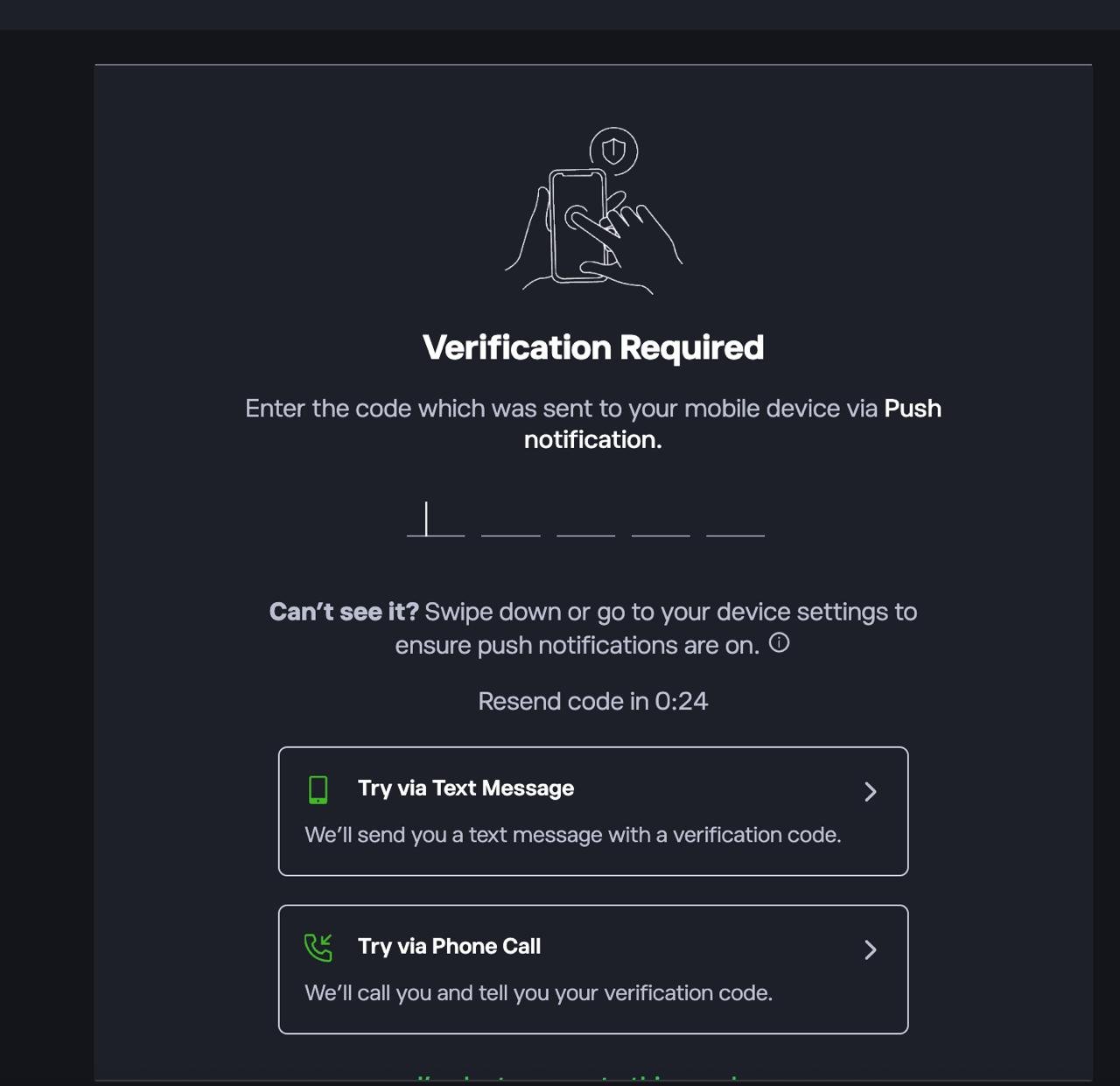
1. Log in to the platform
If prompted, complete 2FA by entering the code sent via push notification, SMS, or phone call.
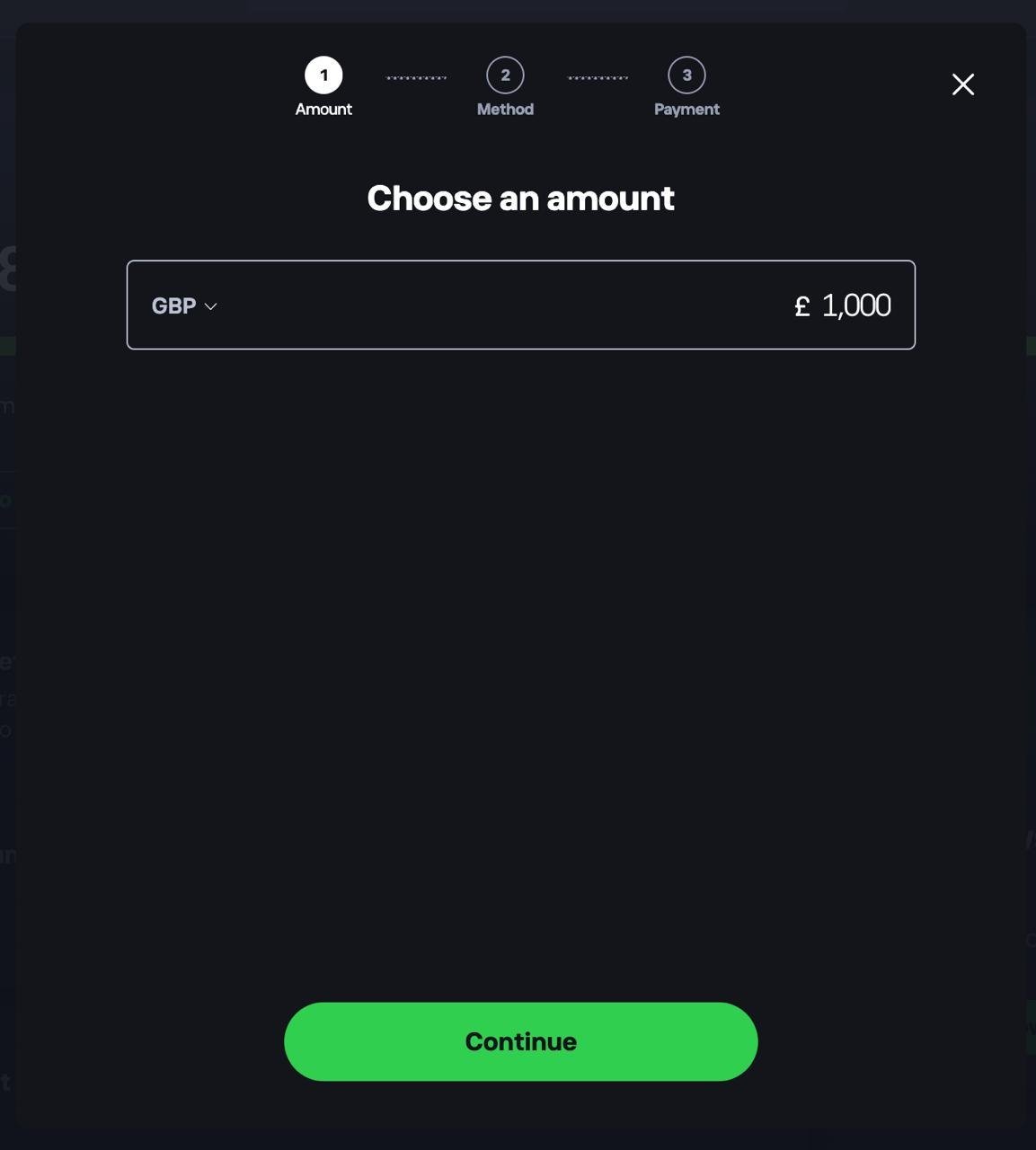
2. Deposit funds into your account
Head to your dashboard and choose to add funds. Select your currency, enter the amount you want to deposit, tap Continue, then choose a payment method.
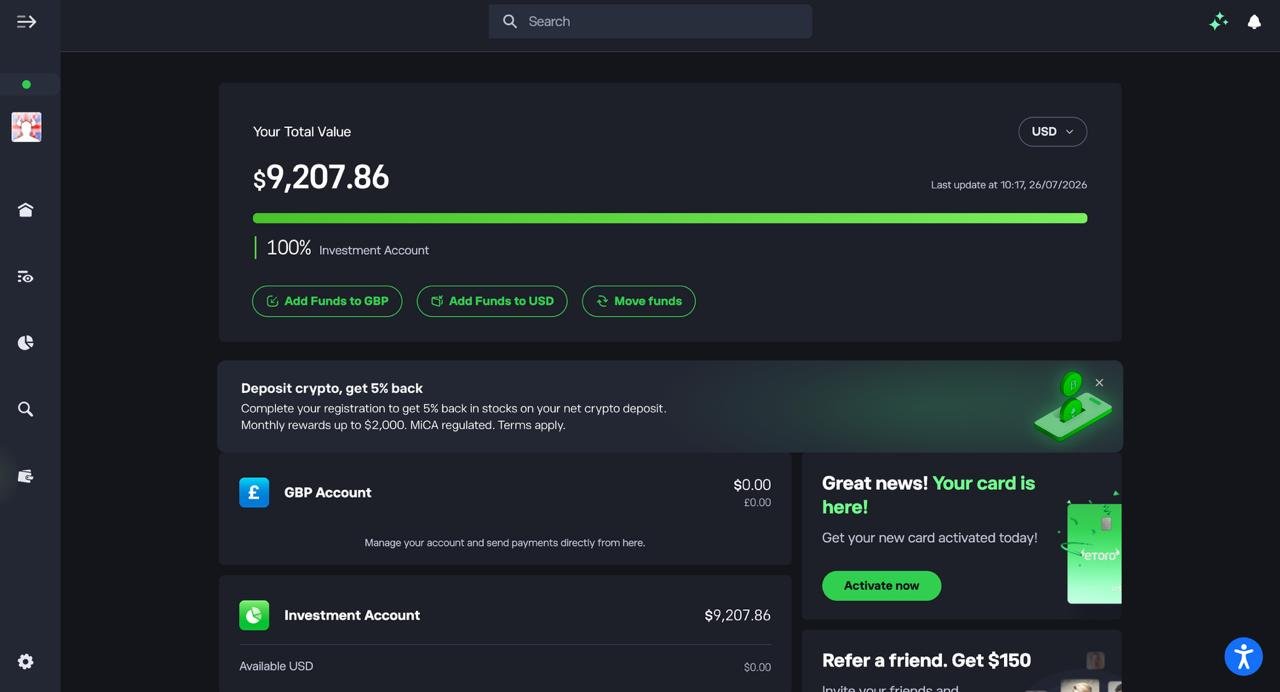
3. Confirm your funds are available
Check your dashboard to make sure your deposit has landed in your Investment Account before you start trading.
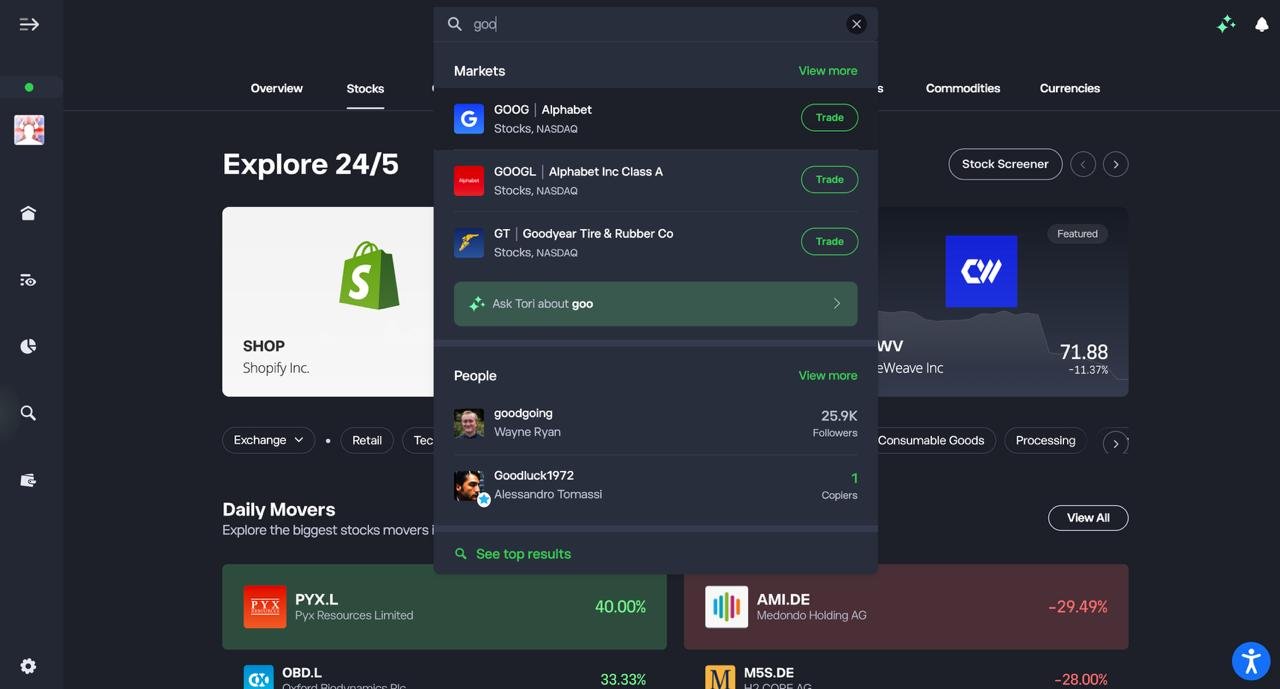
4. Search for the stock you want to trade
Use the search bar to type in the ticker or company name, then select it from the Markets results.
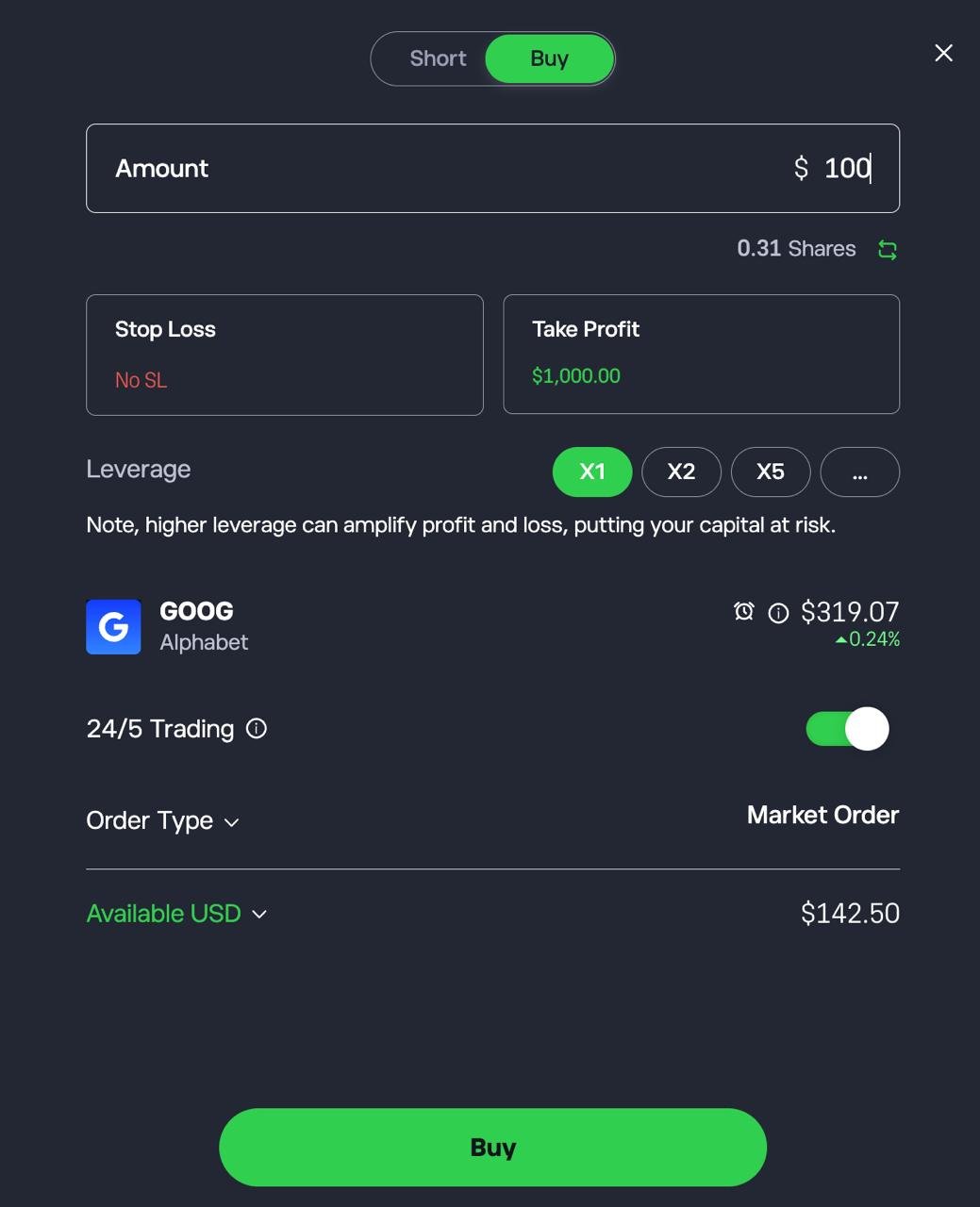
5. Set up and confirm your trade
Choose Buy or Short, enter the amount you want to invest, optionally set a Stop Loss and Take Profit, then tap Buy or Short to confirm.
What are CFDs and how do they work?
CFDs, or Contracts for Difference, are leveraged financial instruments that let you speculate on price movements without owning the underlying asset. For a step-by-step walkthrough, see our guide on how to trade CFDs in Australia.
When you trade a CFD, you’re entering a contract with a broker to exchange the difference between an asset’s opening and closing price. If the market moves in your favour, you profit. If it moves against you, you take the loss.
In Australia, CFD trading is regulated by ASIC, which imposes strict rules on leverage, margin close-outs, and risk warnings. Retail traders are capped at 30:1 leverage on major forex pairs, lower on indices, commodities, and shares.
CFDs can be used to go long or short, meaning you can trade rising or falling markets across forex, indices, shares, commodities, and crypto. What you’re trading is exposure, not ownership, and that distinction matters.
How is CFD trading different from buying shares?
The key difference is ownership versus speculation. When you buy shares, you own part of a company. You’re entitled to dividends, voting rights, and long-term capital growth. When you trade share CFDs, you never own the shares. You’re simply betting on price movement, usually over shorter time frames and often with leverage.
CFDs also come with ongoing costs that don’t exist in traditional investing. Holding a CFD overnight usually triggers a financing fee, and leverage magnifies both gains and losses. That makes CFDs more flexible but significantly riskier than buying shares outright. For long-term investors, CFDs are usually the wrong tool. For active traders who understand risk and position sizing, they can be effective.
| Feature | CFDs | Buying Shares |
|---|---|---|
| Ownership | No ownership of asset | Direct ownership |
| Leverage | Yes (up to ASIC limits) | No leverage |
| Ability to short | Yes | Limited or no |
| Overnight fees | Yes (financing costs) | No |
| Dividends | Adjusted, not received | Paid to shareholder |
| Risk profile | High | Lower (relative) |
What are the risks of CFD trading?
CFD trading is high risk by design, and the numbers make that clear. Most ASIC-regulated brokers disclose that around 70–80% of retail CFD accounts lose money, not because the platforms are broken, but because leverage magnifies mistakes faster than most traders expect. CFDs reward precision and discipline. They punish hesitation, overconfidence, and poor risk control.
Leverage can wipe you out quickly
Leverage lets you control a large position with a small deposit, but it cuts both ways. Under Australian Securities and Investments Commission rules, retail traders can use up to 30:1 leverage on major forex pairs, less on indices, shares, and crypto. A 1% adverse move on a fully leveraged position can translate into a 30% loss on your capital. Stack a few bad trades together and an account can unravel in days, not months.
Losses happen faster than you can react
CFD markets move quickly, especially during news events, earnings releases, or macro shocks. Prices can gap past stop-loss levels, particularly outside normal trading hours. Even with risk controls in place, slippage is real. Some brokers offer guaranteed stop-loss orders, but they cost extra and don’t eliminate risk entirely. They just cap it.
Margin calls and forced liquidations
When your account equity falls below required margin levels, brokers are required to intervene. Positions may be automatically closed to prevent further losses. This often happens at the worst possible time, locking in losses during volatility. You don’t get to negotiate. The system acts first.
Ongoing costs quietly eat returns
CFDs come with overnight financing charges, which apply whenever you hold a leveraged position past the trading day. These fees compound over time and can turn a “good call” into a losing trade if you hold positions too long. Share CFDs can also carry commissions on top of spreads, making frequent trading expensive.
You don’t own the underlying asset
With CFDs, there’s no ownership. No voting rights. No real dividends. Any dividend exposure is handled via cash adjustments, which can differ from what real shareholders receive. That makes CFDs unsuitable for long-term investing in Australia. They are trading instruments, not wealth-building tools.
How do you choose the best CFD trading platform?
The best CFD trading platform is the one that balances regulation, costs, execution quality, and usability for how you actually trade. Many platforms look similar, but small differences in fees and execution can have a big impact over time.
Check ASIC regulation first
Only consider brokers regulated by the Australian Securities and Investments Commission. ASIC oversight enforces leverage caps, margin close-out rules, and negative balance protection for retail traders. If a platform isn’t ASIC-regulated, it’s not worth the risk.
Focus on total trading costs, not just spreads
Tight spreads are meaningless if commissions, overnight financing, or currency conversion fees are high. Look at the all-in cost for the markets you trade most, especially if you hold positions overnight or trade share CFDs.
Match the platform to your trading style
Those seeking day trading platforms in Australia need fast execution and advanced platforms like MT4, MT5, or cTrader. Beginners benefit from simpler interfaces, strong education, and tools like guaranteed stop-loss orders. There’s no universal “best” platform.
Execution quality matters more than features
Slippage, order re-quotes, and platform stability during volatile markets matter more than marketing claims. Established brokers with a long operating history tend to perform better when markets get rough.
What are the pros and cons of CFD trading?
CFD trading has clear advantages, but those benefits come with equally clear trade-offs. Whether CFDs make sense depends on your experience level, time horizon, and tolerance for risk.
Pros and cons of CFD trading
- Ability to go long or short, letting you trade rising and falling markets
- Access to global markets from one account, including forex, indices, shares, commodities, and crypto CFDs
- Leverage allows capital-efficient exposure (within ASIC limits)
- No need to own the underlying asset, making entry and exit fast
- Useful for short-term trading and hedging strategies
- ASIC regulation enforces leverage caps, margin close-outs, and negative balance protection for retail traders
- High risk of loss, with around 70–80% of retail accounts losing money
- Leverage magnifies losses as quickly as gains
- Overnight financing fees apply to leveraged positions
- Share CFDs often include commissions on top of spreads
- No ownership benefits such as dividends or voting rights
- Margin calls and forced liquidations can lock in losses during volatility
Which CFD broker is best for your trading style?
The best CFD broker depends less on brand and more on how you trade, how often you trade, and how sensitive you are to costs and execution. Platforms are built with different traders in mind, and choosing the wrong fit usually shows up quickly in higher fees or poor fills.
If you’re an active or high-frequency trader
Active traders need tight spreads, fast execution, and minimal slippage. Brokers with ECN-style pricing, deep liquidity, and support for MT4, MT5, or cTrader are usually the best fit. Commission-based accounts often work out cheaper than spread-only pricing if you trade frequently. This style rewards precision and discipline, but it also exposes weaknesses fast.
If you trade forex and indices casually
If you trade a few times a week or are learning how to trade forex in Australia, spread-based brokers can make sense. Simpler pricing, strong charting, and reliable platforms matter more than shaving every fraction of a pip. Look for brokers with stable execution during volatile sessions and clear overnight financing rates.
If you focus on share CFDs
Share CFD traders should prioritise commission structures and financing costs. Some brokers are competitive on forex but expensive for equity CFDs, especially with per-share minimums. Market depth, extended trading hours, and access to US and Australian equities also matter more for this style.
If you’re a beginner
Beginners benefit from simple platforms, strong education, and built-in risk controls. Features like demo trading accounts, position-level stop-losses, and guaranteed stops help reduce early mistakes. Costs may be slightly higher, but usability and protection matter more at this stage. ASIC rules already cap leverage, but platform design still plays a big role in how much risk you actually take.
If you’re an experienced or professional trader
Experienced traders usually care about total cost, execution transparency, and platform flexibility. Advanced order types, algorithmic trading support, and granular risk controls matter more than tutorials or social features. Some brokers also offer professional accounts, but these remove certain retail protections, so the trade-off needs to be deliberate.
How do we test CFD trading platforms?
We test CFD trading platforms the same way real traders use them: with live accounts, real trades, and real money on the line. The goal isn’t to tick feature boxes. It’s to understand how each platform actually performs under normal and stressful market conditions.
Regulation and broker structure come first
Before testing anything else, we confirm the broker is regulated by Australian Securities and Investments Commission and holds a valid AFSL. We check the legal entity Australians are onboarded to, how client funds are held, and whether negative balance protection applies. If a broker fails here, it doesn’t make the list.
Real trading, not demo accounts
We open live accounts, fund them, and place real CFD trades across forex, indices, and share CFDs where available. Demo platforms are useful for layout, but they don’t reveal slippage, execution delays, or how margin calls are handled. Live trading does.
Costs are measured in practice, not marketing claims
We compare advertised spreads against what we actually see during normal market hours and around volatility. We track commissions, overnight financing, inactivity fees, and currency conversion costs. A platform with “low spreads” but high swaps scores poorly.
Platform performance under pressure
Execution speed, order reliability, and stability during fast markets matter more than design. We test market, limit, stop, and trailing stop orders, including how platforms behave during major news events. If orders lag, re-quote, or fail, it shows up immediately.
Tools, risk controls, and usability
We assess charting quality, indicators, alerts, mobile apps, and risk tools like guaranteed stop-loss orders. Platforms are judged on how easily traders can control risk, not how many features they advertise.
Support, funding, and withdrawals
We test deposits and withdrawals using Australian payment methods, timing how long funds take to arrive and leave. We also contact customer support with real questions to assess response time and accuracy.
Conclusion: What’s the best CFD trading platform in Australia?
There’s no single best CFD platform for everyone, but a few stand out for clear reasons.
Pepperstone is the strongest choice for active traders thanks to its tight spreads, fast execution, and professional-grade platforms.
IG remains the go-to for traders who value reliability and broad market access, while CMC Markets excels if advanced charting and risk tools matter most.
For beginners, eToro offers the easiest entry point with a simple interface and copy trading.
The right choice ultimately comes down to your trading style, cost sensitivity, and experience level. Start with ASIC regulation, then pick from the available trading platforms in Australia based on how you actually trade, not how you plan to trade one day.
Is CFD trading legal in Australia?
Yes. CFD trading is legal in Australia and regulated by Australian Securities and Investments Commission. Brokers must hold an AFSL and follow strict leverage and risk-disclosure rules.
How much money do you need to start CFD trading?
Most Australian CFD brokers have no minimum deposit, but starting with at least $200–$500 is more realistic to manage margin and risk effectively.
Can you lose more than your deposit trading CFDs?
No. Under ASIC rules, negative balance protection applies to retail traders, so you can’t lose more than the money in your CFD account.
Are CFDs better than buying shares?
CFDs aren’t better, just different. They suit short-term trading and hedging, while buying shares is generally better for long-term investing.
What is the safest CFD trading platform in Australia?
The safest platforms are those regulated by ASIC, with segregated client funds and a long operating history. Brokers like IG, Pepperstone, and CMC Markets are widely regarded as among the safest for Australians.
